
Penn State Hershey receives $200,000 QED Proof of Concept Award
Work done by Penn State College of Medicine's Joyce Tombran-Tink to identify a potential treatment for diabetic retinopathy was recently awarded $200,000 through the University City Science Center's QED Proof-of-Concept Program. This is the first QED Award for Penn State Hershey and is one of two awardees out of 13 finalists reviewed.
Twenty-one universities and research institutions in Pennsylvania, New Jersey and Delaware participate under a common agreement that defines matching funds and intellectual property management. Since the QED Program's launch in 2009, the regionally competitive proof-of-concept program supporting technology commercialization has awarded $3 million to 16 projects in Pennsylvania, New Jersey and Delaware.
Tombran-Tink is a professor of neural and behavioral sciences at the College of Medicine. The QED Program award gives her targeted advice from a team of business advisors and $100,000 to explore the commercialization potential of her discovery, money that will be matched by the college's Office of the Vice Dean for Research and Graduate Studies, for a total award of $200,000.
Over 350 million individuals world-wide suffer from diabetes with rates expected to rise in the coming years due to the obesity pandemic. Ten percent of these individuals suffer from mild to severe loss of vision known as diabetic retinopathy which damages neurons in the retina and causes hemorrhaging in the eye. Currently treatment options are costly and only reduce certain symptoms but do not provide treatment.
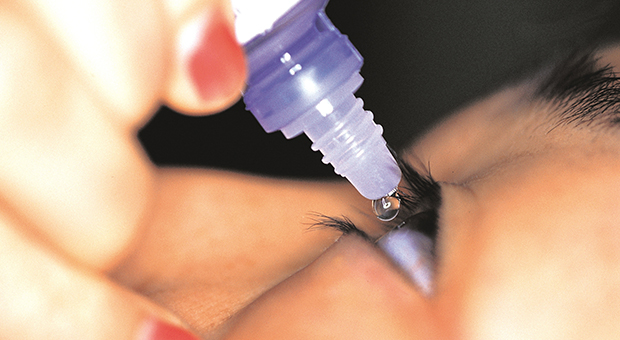
Tombran-Tink identified a peptide derived from pigment epithelium-derived factor, or PEDF, that prevents degeneration of neurons through reduction of inflammation and vascular leakage in the retina in two mouse models of retinal degeneration. The peptide can effectively be administered as an eye drop, as a slow release device or by systematic infusion.
The identified peptide and related derivatives have widespread protective effects on neurons. This technology could potentially benefit millions of patients with neurodegenerative conditions such as age related macular degeneration, amyotrophic lateral sclerosis, spinal cord injury or Alzheimer's. The technology promises to reduce the burden on family members, caretakers, and the health care system.
If you're having trouble accessing this content, or would like it in another format, please email Penn State Health Marketing & Communications.