
A beacon of hope and healing
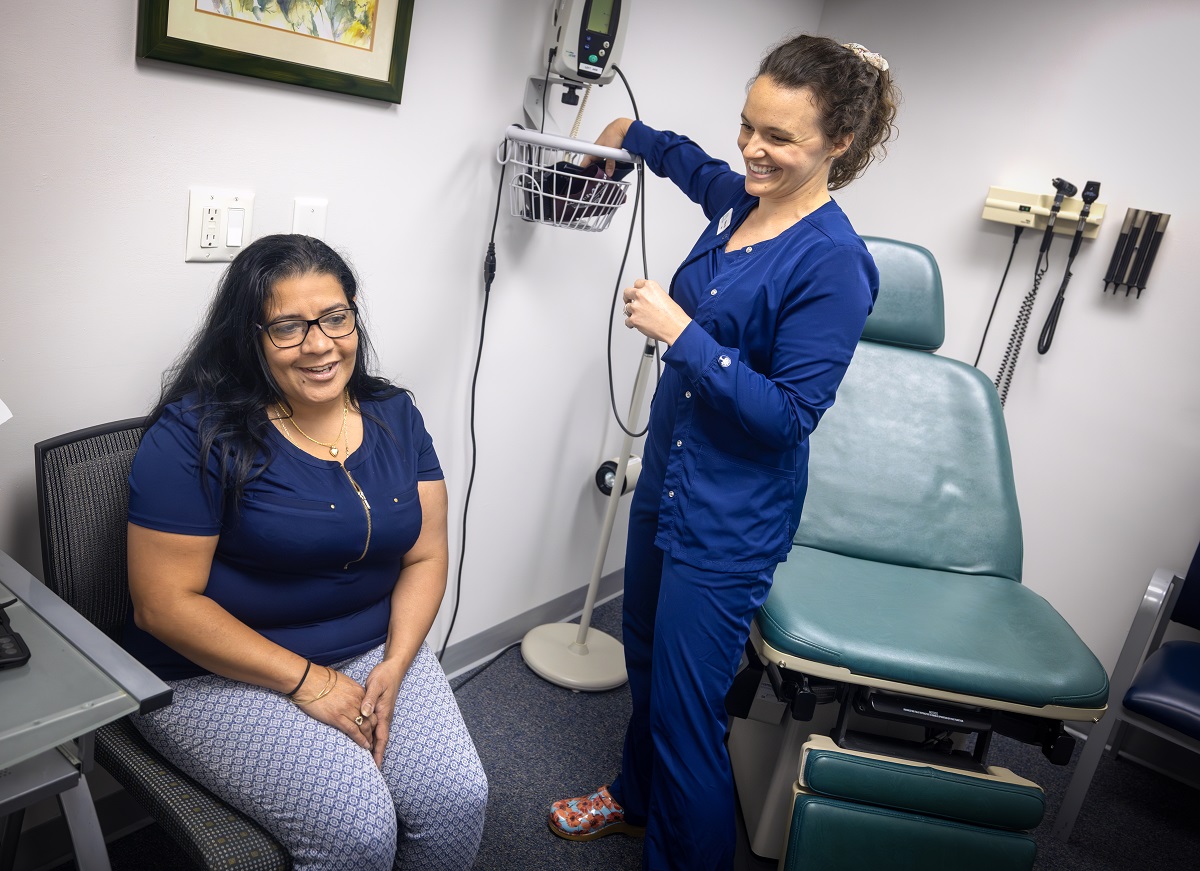
For decades, Jeanette Van Deusen, 52, had health insurance through her job. After her husband’s death, she returned to her hometown in central Pennsylvania to be near family. However, she wasn’t able to find a job that provided insurance and couldn’t afford to see a doctor or refill her prescriptions.
Her cousin recommended Beacon Clinic, a free primary health care clinic in Harrisburg’s Uptown neighborhood. There, doctors got Van Deusen back on medication for her high blood pressure and gave her a cuff to monitor her readings between checkups.
View a gallery of photos from Beacon Clinic:

“I’m so grateful I found Beacon Clinic,” Van Deusen says. “They helped me stay on my medication and directed me to other resources I didn’t even know I needed. They open so many doors for you.”
Watch this video about Beacon Clinic:
‘FREE CARE IS NOT LESS-THAN CARE’
With blue and green walls lined with artwork, tables topped with complimentary personal care products and a fridge full of healthy snacks, Beacon Clinic is a welcoming place. Celebrating its 10th anniversary in 2025, the clinic serves uninsured and underinsured adults in Cumberland, Dauphin and Perry counties. Beacon Clinic cares for people of all backgrounds. Patients speak more than 40 languages and come from more than 50 countries.
Dr. Bernadatte Gilbert, a family medicine physician at Penn State Health, volunteers her time to help people manage acute and chronic health problems such as high blood pressure, type 2 diabetes, asthma and arthritis.
For Gilbert, a Harrisburg native, improving community health is personal.
“My Mom always says if you can help one person, you’ve done what you need to do,” Gilbert says. “I keep that in mind every time I go to Beacon Clinic.”
At the clinic’s dispensary, volunteers filled nearly 4,000 prescriptions last year. Thanks to a partnership with the Dispensary of Hope and local Harrisburg Pharmacy, patients can access any medications not in stock at no cost to them.
The clinic also refers patients to specialty providers – dentists, eye doctors, neurologists, orthopedists, cardiologists and obstetrician-gynecologists – who offer their services free of charge.
“Free care is not less-than care,” says Debra McClain, executive director of Beacon Clinic.
TOUCHING GENERATIONS AHEAD
Beacon Clinic offers more than primary and preventive care and disease prevention. It also offers dermatology specialty clinics.
“We’ve helped patients with psoriasis, acne, pigmentary disorders, atopic dermatitis, fungal infections, and we’ve even caught a few skin cancers,” says Dr. Matthew Helm, a Penn State Health dermatologist who volunteers at the clinic. “Wait times at dermatology offices can be months long, so our Beacon Clinic patients are grateful that we can help them so quickly.”
Steve Gill, a 57-year-old carpenter and roofer, has had several basal cell carcinomas removed at the clinic. He suspects he developed those skin cancers from many years of working in the sun.
“I’m one of those people who falls between the cracks,” he says. “I’m self-employed and don’t make enough to afford the high cost of insurance.”
Now, Gill refers family members to Beacon Clinic. So does Van Deusen.
Access to health care is crucial, says Olivia Alcaraz, a nurse and clinical director at Beacon Clinic. “You’re not just helping the individual – you’re also helping their family and generations to come.”
MEDICINE ON YOUR PLATE
Dr. Leesha Helm, a family medicine physician at Penn State Health Medical Group – Nyes Road in Harrisburg and associate medical director at Beacon Clinic, began volunteering at the clinic when she was a resident at Penn State College of Medicine.
“I quickly learned that patients and their families needed something that would ultimately impact all of their health outcomes – sustainable access to nutrition and food,” she says.
Together with Penn State College of Medicine and Beacon Clinic staff, Helm started the Food as Medicine program at the clinic in 2019. The initiative improves food access and food security through education and an on-site pantry with nonperishable and frozen foods.
“This is one of the few free clinics in our area with a strong nutrition education program and food insecurity support, which is crucial for the unique population we serve,” she says.
Medical students from Penn State College of Medicine also play an important role in the clinic’s operation. Among their efforts was analyzing appointment no-show rates and recommending a text messaging app to remind patients about their visits. After this change was implemented, attendance improved.
Beacon Clinic also helps patients enroll in health insurance, including Medicaid, and connects them with transportation and housing.
“We aim to have holistic appointments so that by the time patients walk out of here, we’ve addressed multiple social determinants of health to promote their well-being,” says clinical director Olivia Alcaraz.
Expanding access to quality health care is a key part of Penn State Health’s commitment to improving wellness and disease prevention. Learn more in the Penn State Health Community Health Needs Assessment and Implementation Strategy.
If you're having trouble accessing this content, or would like it in another format, please email Penn State Health Marketing & Communications.