
Penn State Health Milton S. Hershey Medical Center joins surgical stroke initiative targeting deadliest brain bleeds
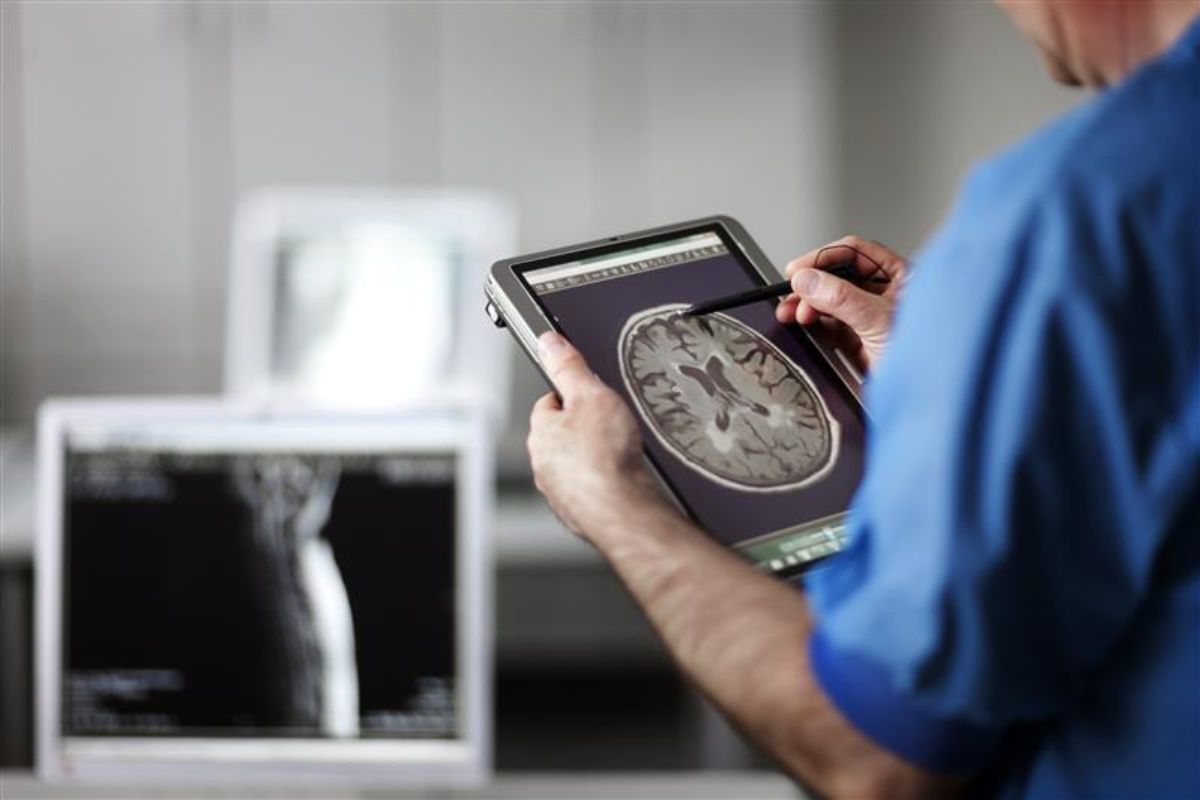
The American Heart Association surgical quality improvement effort is focused on hemorrhagic stroke treatments
Each year, nearly 800,000 people in the U.S. experience a stroke — and while hemorrhagic strokes make up only about 13% of those cases, they account for more than 40% of stroke-related deaths.[1] Historically, treatment options for these devastating brain bleeds have been limited by a lack of standardized surgical approaches.
Penn State Health Milton S. Hershey Medical Center is proud to join a new American Heart Association initiative to change that. The nationwide initiative was developed to accelerate the adoption of effective surgical approaches, including minimally invasive techniques, to improve outcomes for people affected by intracerebral hemorrhage (ICH).
The Hemorrhagic Stroke Surgical Quality Improvement Initiative, supported financially by Stryker, will identify and amplify national models of effective ICH care, including the use of minimally invasive parafascicular surgery (MIPS). MIPS is a minimally invasive procedure that uses a tubular retractor to navigate through the brain’s natural folds, along with a powered instrument designed to remove clots and help prevent damage. Research has shown that when performed within 24 hours of a brain bleed, MIPS may lead to better recovery outcomes at six months compared to standard treatments.[2]
“Advancing stroke care depends on our ability to share data and learn quickly,” said Dr. Scott Simon, co-medical director of the Penn State Health Comprehensive Stroke Center and professor of neurosurgery at Penn State College of Medicine. “We are proud to be the only site selected in Pennsylvania to be part of this initiative aimed at lessening the severe impact of hemorrhagic stroke and supporting better recovery for patients.”
Milton S. Hershey Medical Center joins 15 hospitals across the U.S. to participate in a learning collaborative, using data from the Association’s Get With The Guidelines® – Stroke registry, which tracks approximately three-quarters of the nation’s stroke hospitalizations. This cohort of sites will analyze ICH care data and clinical workflows to identify successful models that could be scaled nationally. Criteria for site selection included demonstrated leadership in MIPS, infrastructure readiness and interest in expanding ICH surgical options.
The integration of academic research through Penn State College of Medicine is a key differentiator that supports Milton S. Hershey Medical Center’s leadership in stroke care. This research foundation strengthens the Medical Center’s ability to adopt and evaluate emerging techniques like MIPS and contribute meaningfully to national data and learning collaboratives.
For more information, visit heart.org/ICHSurgical.
[1] Stroke Facts. Centers for Disease Control and Prevention. October 24, 2024. https://www.cdc.gov/stroke/data-research/facts-stats/index.html. Accessed May 28, 2025; Andersen K, et al. Hemorrhagic and Ischemic Strokes Compared: Stroke Severity, Mortality, and Risk Factors. Stroke. April 9, 2009. 40(6). https://doi.org/10.1161/STROKEAHA.108.540112.
[2] Pradilla G, et al. Trial of Early Minimally Invasive Removal of Intracerebral Hemorrhage. NEJM. April 10, 2024. 390(14):1277-1289. https://www.nejm.org/doi/full/10.1056/NEJMoa2308440.
If you're having trouble accessing this content, or would like it in another format, please email Penn State Health Marketing & Communications.