
Turning corner stores into health hubs
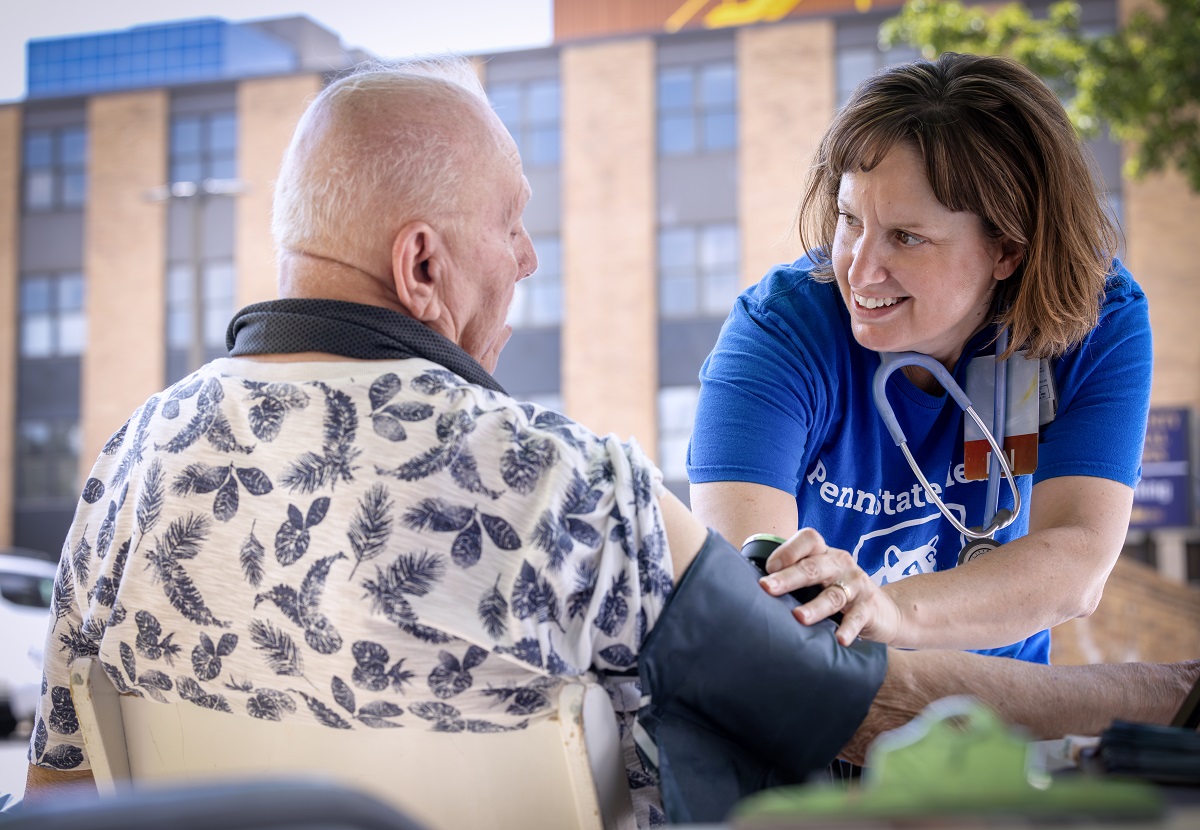
When Milagrosa “Miracle” Oquendo Santiago shows up outside New Heightz Grocery Store in Reading on a hot July day, she and Angie Shuman, Penn State Health community health nurse, hug and chat like old friends.
“We’re like family,” says Santiago, 61. “Angie is like a big sister to me.”
Shuman checks Santiago’s blood pressure at New Heightz on the second Wednesday of every month. When her numbers are high, Shuman gently reminds Santiago to take her hypertension medication. The nudge helps. Santiago has a lot to keep track of as she cares for her husband, who recently suffered a stroke, and volunteers weekly at a neighborhood food pantry. Shuman also offers her and anyone who stops by her table a free water bottle, cooling towel, sunscreen and first aid kit.
[Hover over image below to reveal photo gallery controls.]
Next, Santiago heads over to a table with nutrition education staffed by The Food Trust, a national nonprofit headquartered in Philadelphia that works to make nutritious food accessible to all. That day’s lesson: the benefits of calcium. Food Trust team members are sharing tips as part of an educational series focused on eating nutritious foods, cutting back on sodium and sugar, and stretching food dollars. They’re also handing out calcium-rich cheese sticks and $4 coupons to use toward fresh fruits and vegetables at New Heightz or other locations throughout the city, such as grocery stores, farmers markets, farm stands or public housing and community sites.
Santiago plans to buy bananas. She’ll share them with her sister, Geraldina Oquendo, 60, who is recovering from knee replacement surgery. Oquendo also has hypertension and stops by for blood pressure checks with Shuman.
“Angie has helped a lot of people,” says Santiago. “She looks out for everybody over here.”
Smart eating, smart screening
The Healthy Corner Store Initiative meets people at convenience stores and bodegas in communities across the United States, including Philadelphia; Camden, New Jersey; Baltimore; Wichita, Kansas; and Reading. In areas with high food insecurity and low food access, many families rely on these stores. They don’t live within walking distance of a supermarket or farmers market that sells fresh produce.
The Food Trust partners with corner store owners to help them turn their shops into healthy community hubs with nutrition education and foods like fresh and frozen fruits and vegetables, whole grains and low-fat dairy products. They provide stores with training, equipment and marketing materials to help them promote healthy options.
In Reading, that mission gained momentum when Jennifer Stoltzfoos, a program manager for the Community Nutrition and Healthy Corner Store Initiative teams at The Food Trust, connected with Shuman. They realized they were serving many of the same communities and could do more by teaming up at the monthly store events. Now, those events bring together food education and free health checks – all in one place.
“Food is medicine,” says Stoltzfoos. “We can talk about nutrition and provide people with incentives, but tying it directly to some real numbers helps people kickstart those changes.” By eating a balanced diet, people can improve their blood pressure, boost other health markers and reduce obesity.
While The Food Trust covers healthy eating, Shuman talks with people about other healthy lifestyle habits, such as quitting smoking or starting an exercise routine.
“It’s like a trickle effect where someone might cut out soda at the beginning and then try to walk more,” says Stoltzfoos. “People start to become more comfortable asking about their health, too.”
Care that connects communities
The Food Trust partners with community-minded store owners like Moises Abreu of New Heightz Grocery Store. He offers free healthy lunches for the community every Wednesday at noon. Nearly two dozen people line up for a typical weekly lunch, including regulars like Santiago and Oquendo, who affectionately call him “Mo Mo.”
Abreu sees the store as more than a place to shop – it’s where people connect. A customer once told him New Heightz was his first stop for a meal after being hospitalized for a mental health crisis.
“These relationships are the reason why I show up, because they show up,” says Abreu. “This is the community coming together and sharing a moment together.”
Every community member has unique needs. That’s why Shuman asks questions to find out how she can help. If someone struggles to remember to take medication for a chronic condition such as high cholesterol or type 2 diabetes, she might give them a pill organizer or help them set up phone reminders. If they need help refilling a prescription, she might even call their doctor or pharmacy.
“I try to provide individualized care for each person,” she says. “This event incorporates all three of the top-priority community health needs that Penn State Health focuses on: mental well-being, food and nutrition security, and physical well-being.”
People trust and connect with Shuman. In communities across central Pennsylvania, she provides a wide variety of services, including health education, flu vaccines, cholesterol and blood sugar (A1C) screenings, and first aid. She also connects people to community resources for basic needs like food, housing and transportation – often called social determinants of health.
“Angie shares encouraging words and doesn’t make our participants feel bad about their health,” says Stoltzfoos. “She’s so empathetic and encourages them to look out for themselves. She lets them know she cares about them.”
Expanding access to food and nutrition security is a key part of Penn State Health’s commitment to improving health equity. Learn more in the Penn State Health Community Health Needs Assessment and Implementation Strategy.
If you're having trouble accessing this content, or would like it in another format, please email Penn State Health Marketing & Communications.