
Penn State Health Milton S. Hershey Medical Center again achieves perfect three-year survival rate for heart transplant patients
Achievement places the program among the best in the nation
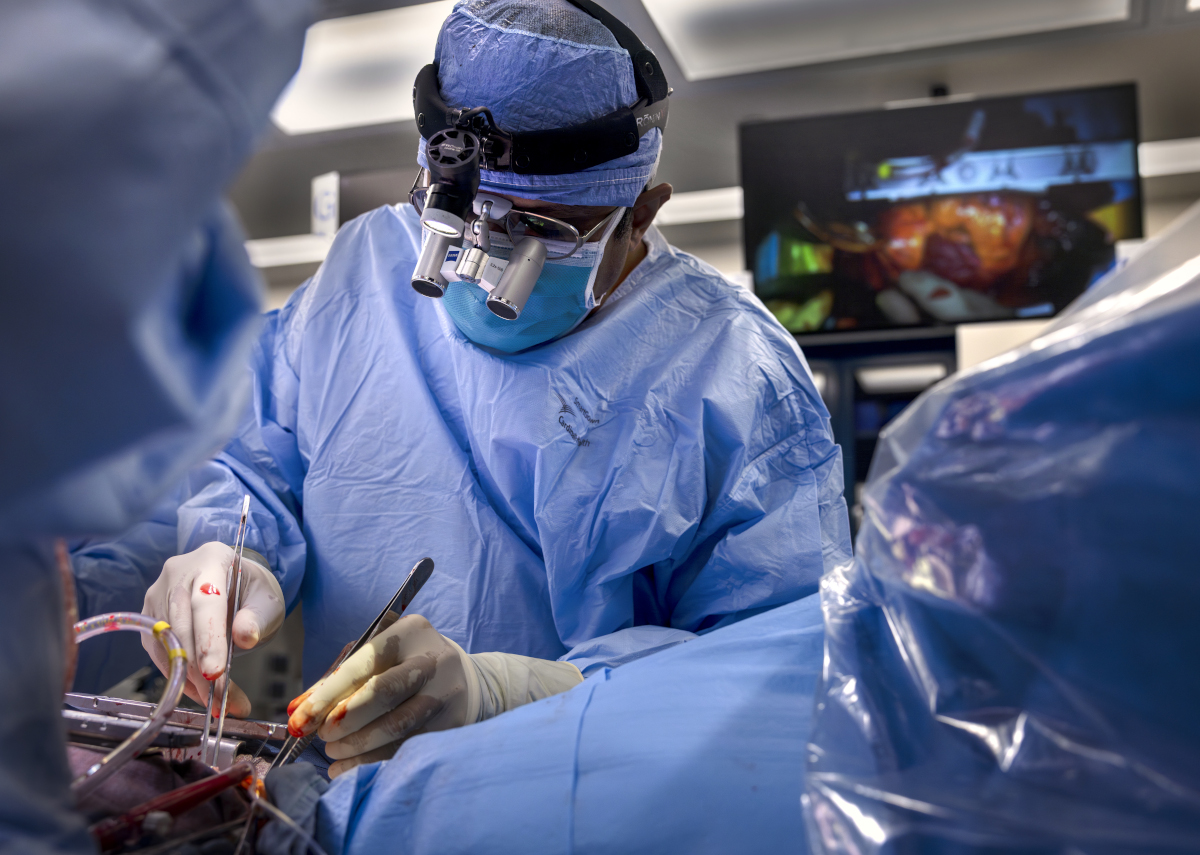
For the second time, the heart transplant program at Penn State Health Milton S. Hershey Medical Center has achieved a 100% three-year survival rate, placing the program among the best in the nation.
According to newly released data from the Scientific Registry of Transplant Recipients, every patient who received a heart transplant at Milton S. Hershey Medical Center between January 2020 and June 2022 was alive three years later. The national average heart transplant survival rate for this time period was 85%.
This achievement represents the nation’s best performance for risk-adjusted mortality and underscores the exceptional quality and safety of care delivered by the Penn State Heart and Vascular Institute team who has performed 609 transplant surgeries since 1984.
The program also ranks among the nation’s best for observed and expected pre-transplant mortality, recording zero waitlist mortality during the July 2023 to June 2025 rating period – meaning every patient awaiting a heart transplant survived. This milestone highlights the strength of the program’s comprehensive care model, from advanced heart failure management and mechanical circulatory support through transplantation, recovery and lifelong follow-up care.
“These outcomes reflect the strength of our comprehensive approach to advanced heart failure, which focuses on optimizing patients well before and throughout the transplant process—not just during surgery,” said Dr. Behzad Soleimani, chair of the Department of Surgery at Milton S. Hershey Medical Center and director of the Penn State Heart and Vascular Institute. “By coordinating care across specialties and maintaining patients in the best possible condition, we are able to achieve exceptional waitlist survival and outstanding long-term transplant outcomes.”
Penn State Health offers a full range of advanced, comprehensive heart care across each of its five hospitals and is home to the region’s only heart transplant center. Patients benefit from an integrated, multidisciplinary approach that spans prevention, diagnosis, medical management and complex surgical intervention for cardiovascular disease. Surgeons in the Heart and Vascular Institute are skilled in innovative surgical treatments, including heart transplant surgery and advanced mechanical circulatory support, including HeartMate 3 implantation and left-, right- or biventricular assist devices used to bridge patients to transplantation.
If you're having trouble accessing this content, or would like it in another format, please email Penn State Health Marketing & Communications.