
Penn State Health introduces new treatment for movement disorder patients
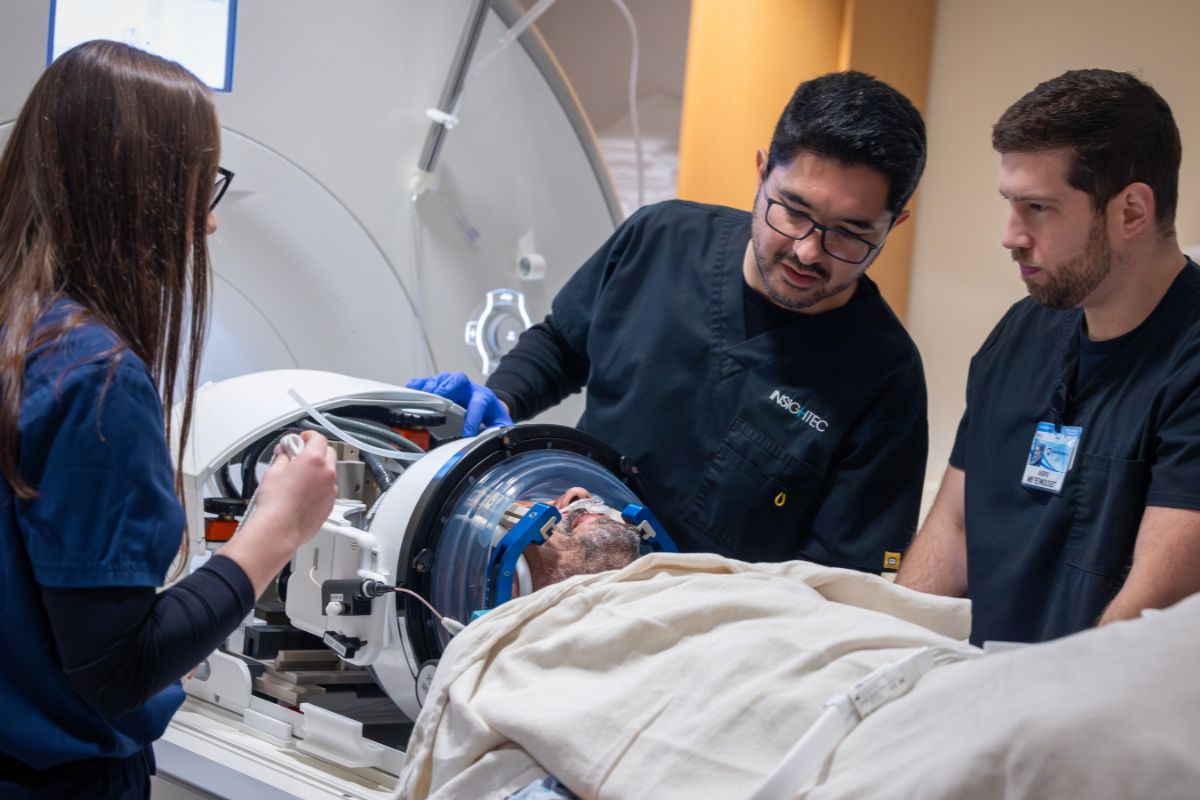
Advanced MRI-guided technology provides a new option for patients with essential tremor and Parkinson’s disease
Penn State Health is now offering focused ultrasound, an advanced, incisionless treatment option for patients with essential tremor or tremor-dominant Parkinson’s disease whose symptoms have not improved with medication.
The treatment uses sound waves guided by MRI to precisely target a small area deep in the brain responsible for tremor. Because the procedure does not require surgical incisions or permanent implants, most patients experience a lower risk of infection and bleeding and can return home the same day.
“Focused ultrasound is transforming how we treat tremor disorders,” said Dr. Pratik Talati, functional neurosurgeon and director of focused ultrasound for Penn State Health Neurosurgery. “Patients who have struggled with debilitating tremors for years can experience significant improvement within hours, allowing them to return to everyday activities like eating, writing and drinking.”
Hold cursor over image below to reveal photo gallery controls.

Focused ultrasound is offered through the Movement Disorders program, part of Penn State Neuroscience Institute. The program provides comprehensive, specialized care for patients with complex neurological conditions that affect movement, including essential tremor and Parkinson’s disease. Fellowship-trained neurologists and neurosurgeons work collaboratively to deliver advanced diagnostics, individualized treatment plans and access to innovative therapies. More information about the program can be found here.
If you're having trouble accessing this content, or would like it in another format, please email Penn State Health Marketing & Communications.