
Giving kids a new outlook for the future
Penn State Health’s free vision clinics help local students see – and succeed
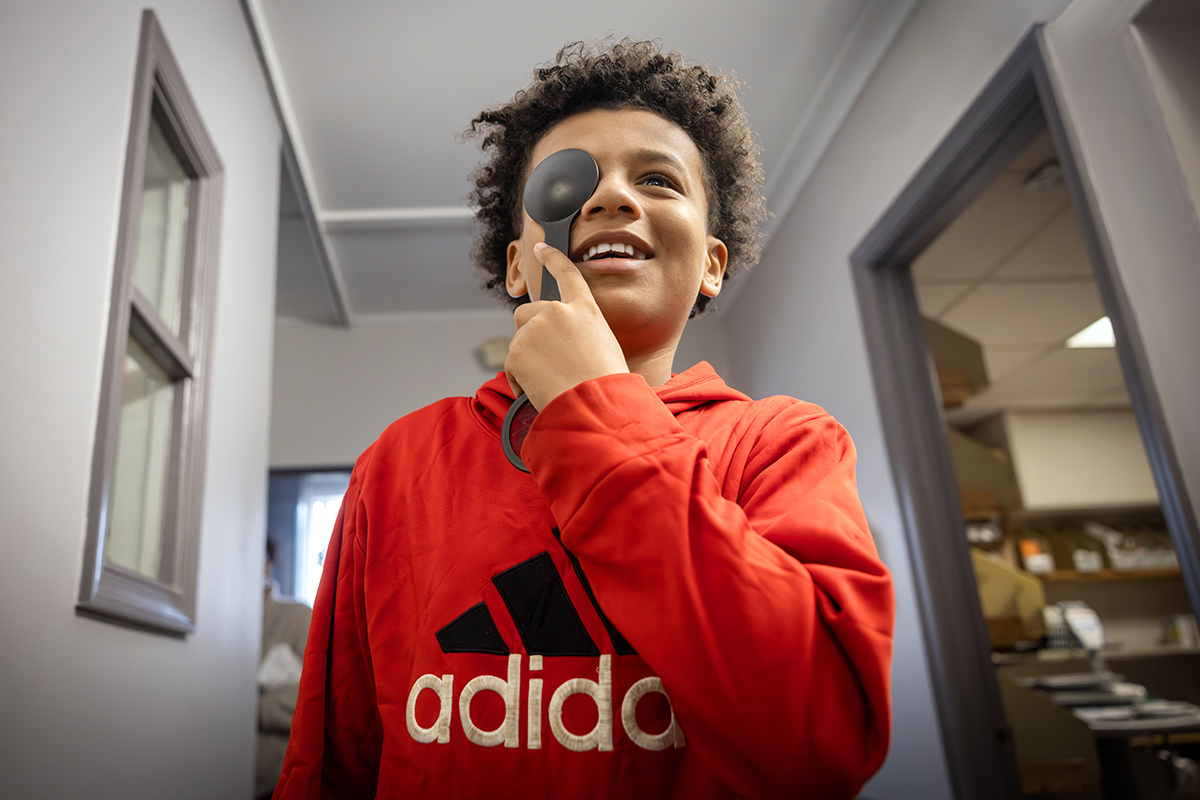
When 11-year-old Nazier Rufe left school with new glasses on a spring afternoon, he immediately FaceTimed his mom to show her how the frames fit his face.
Seeing his excitement through the screen, Ashlynn Rufe of Lebanon thought about what might come next for her son – new success in school and basketball, a sport he’s played since he started walking.
“In basketball, you need to be able to see the scoreboard, players and the court,” she said.
Nazier is also a good student. “He won the spelling bee last year, but not this year,” she said. “I’ve been wondering if maybe he’s sitting too far back and can’t read new words on the board as well as he used to.”
Nazier is one of about 60 students to receive free eye exams and glasses each year through a collaboration between Penn State Health, the Lebanon School District and community partners like the Lebanon Free Clinic. The program is funded by Highmark. Since 2018, it has helped reduce barriers to eye care and boost achievement for students in communities with fewer resources.
Nazier was overdue for an eye test and a new glasses prescription. Ashlynn’s work schedule as a single parent made scheduling appointments difficult. Without vision insurance, the cost of eye care was another obstacle.
“I’m happy, thankful and grateful that my son participated in this program and was able to get a free pair of glasses,” Ashlynn said.
Hold cursor over image below to reveal photo gallery controls.

Help starts at school
The program begins at school, when students don’t pass routine vision screenings. Teachers also alert school nurses about students who have trouble seeing in class. Some students squint, complain of headaches or have trouble focusing.
Toni Henning, nurse coordinator at the Lebanon School District, refers these students and their parents to Tara Simmons, a community health nurse at Penn State Health.
Simmons coordinates no-cost optical exams for students three times a year. The Lebanon Free Clinic in downtown Lebanon lends their space for these events.
When students arrive, they receive a Spot Vision screen, which detects problems like nearsightedness, farsightedness and astigmatism. A technician then checks their distance vision, color, depth perception and eye pressure. An eye doctor examines the child’s overall eye health and glasses prescription.
If the student needs glasses, an optician fits them for the frames of their choice from dozens of styles at the clinic. Within three weeks, the free eyeglasses are delivered to the child’s school.
“This program can give kids a foot through the door to more consistent eye care,” said Dr. Megan Ruben, an ophthalmologist at Penn State Health who volunteers at the clinic. “It’s free, local and reduces barriers to care when it’s in their community and coming right to them.”
Catching problems early
Most children in the vision screening program simply need new glasses, but some have more serious eye health issues. Simmons connects those children with Penn State Health ophthalmologists for follow-up care.
“We saw a child last year who was blind in one eye,” Simmons said. “Nobody knew until he came here.”
The elementary and middle school years are critical for catching and correcting amblyopia, a visual disorder that affects 2% to 5% of kids. In amblyopia, the brain favors one eye, causing poor vision in the other.
“If a glasses prescription isn’t provided or a muscle alignment isn’t corrected, amblyopia can lead to permanent rewiring of the brain that prevents that child from having binocular function – the ability to use both eyes simultaneously,” Ruben said. “This can affect their depth perception, their ability to see, and eventually, to drive.”
Studies have consistently shown that the earlier amblyopia is detected and treated, the greater the likelihood of success. Ruben’s team is researching how socioeconomic factors may contribute to unresolved amblyopia in children – helping improve early intervention.
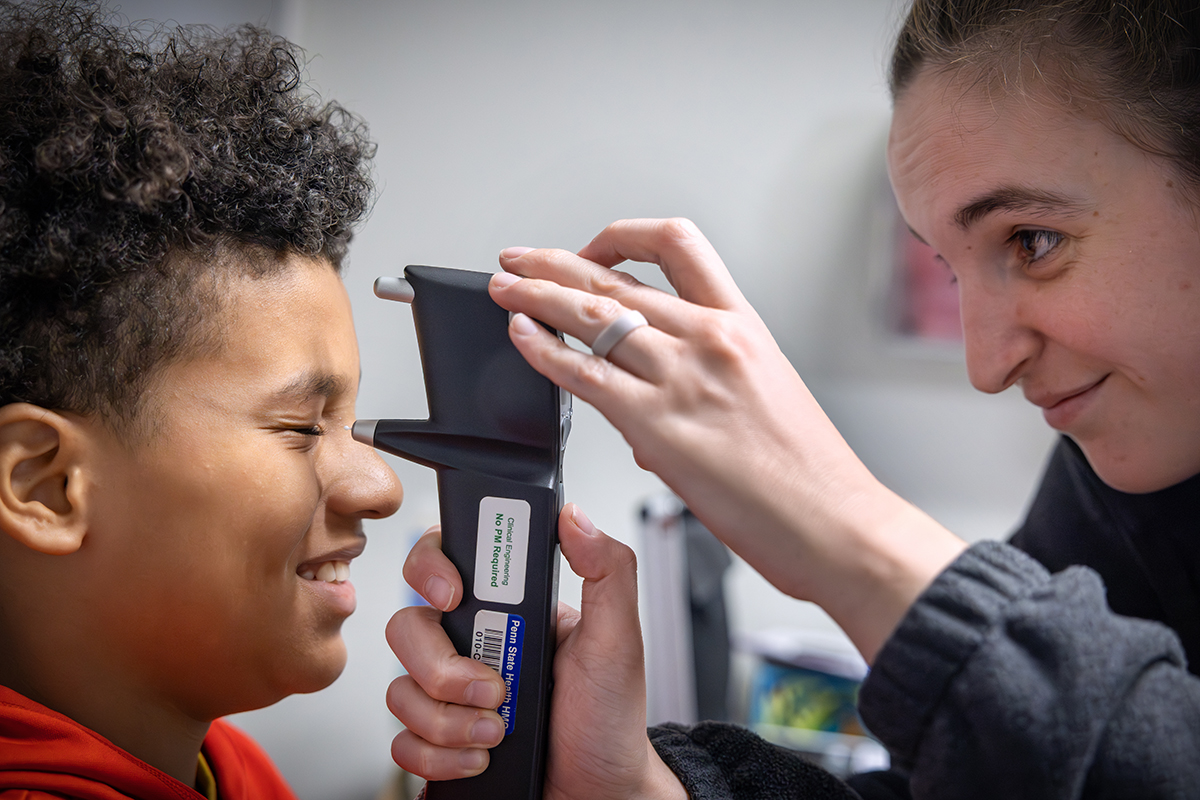
Megan Reardon, right, a Penn State Health ophthalmic technician, checks Nazier Rufe’s eye pressure during the Vision Clinic.
Building confidence in the classroom
Awanda Robles, 18, was referred for a vision exam by a teacher who noticed she was struggling to see the whiteboard in class.
“I have a hard time seeing things from a distance,” Robles said. “My friend will point at something, and I’ll be like: ‘What are you pointing at? I can’t see that.’”
Without vision insurance, she didn’t think getting glasses was possible until she learned about the clinic. Now, she looks forward to seeing better as she finishes her senior year of high school and completes the medical assistant program at Lebanon County Career and Technology Center.
“When kids receive new glasses, they can see instructional materials clearly,” Henning said. “Their reading fluency, comprehension, confidence and behavior all improve.”
That impact reaches beyond the classroom, helping students discover their strengths and opportunities.
“When kids can learn, they can find out where they belong in the world,” Simmons said.
For Ruben, offering free children’s eye exams is an easy decision.
“With just a little bit of our time, we can make a huge impact on a child’s trajectory in life,” Ruben said.
Expanding access to quality health care is a key part of Penn State Health’s commitment to advancing health equity. Learn more in the Penn State Health Community Health Needs Assessment and Implementation Strategy.
If you're having trouble accessing this content, or would like it in another format, please email Penn State Health Marketing & Communications.