
Saving lives through Drug Take-Back and substance use education
Penn State Health and Penn State College of Medicine are helping prevent medication misuse and connecting people to addiction care
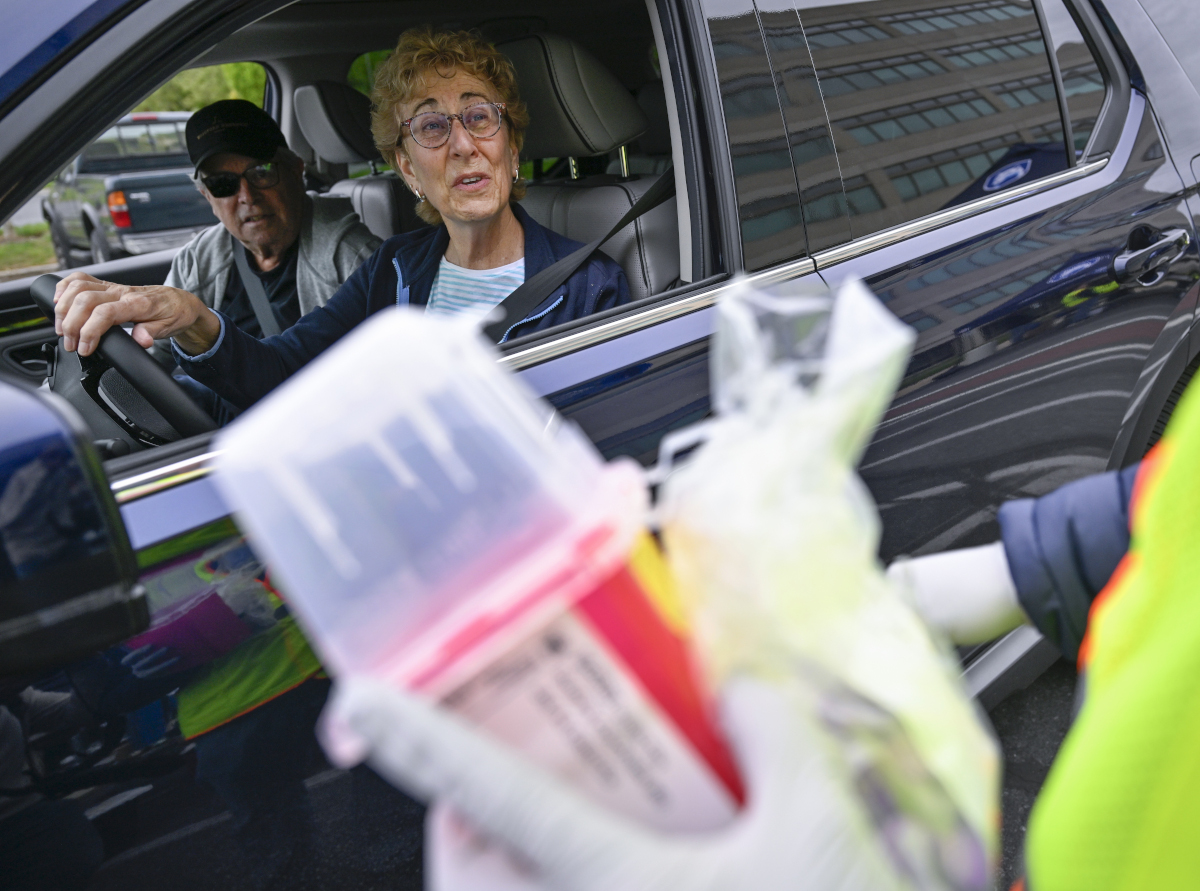
On a windy April Saturday in Hershey, drivers line up to hand off bags and boxes of pills and needles to Penn State Health pharmacy staff members and a friendly police officer.
For Rhonda Ford of Jonestown, the drive-through at Penn State Health’s National Prescription Drug Take-Back Day event brought relief.
“I lost my pets, and I had a whole bunch of their old medications,” she said. “I got rid of those today.”
Seeing her furry friends’ names on the prescription labels, Ford felt a pang of grief. But as a military veteran trained in hazardous materials, she knew the medications needed to be disposed of safely. One of them, gabapentin, can be habit-forming and dangerous if misused. If she flushed the pills down the toilet, they could contaminate the local water supply.
Penn State Health offers a safe, convenient way to discard medications and sharps through the twice-yearly drug take-back events. Year-round, it also partners with the Penn State Addiction Center for Translation at Penn State College of Medicine to support programs that reduce harm from drugs, helping prevent overdoses and connecting people to addiction care.
Hold cursor over image below to reveal photo gallery controls.

Safer disposal of pills and sharps
Each spring and fall, Penn State Health holds Drug Take-Back Day events at multiple locations in partnership with the U.S. Drug Enforcement Administration, local townships and police departments. Since 2015, the health system has collected nearly 8,000 pounds of expired or unused medications and more than 320 large sharps containers filled with used needles and syringes.
“It’s important to discard prescriptions when you’re done with them so they don’t get into the wrong hands,” said Kimberly Cimarelli, director of inpatient pharmacy services at Milton S. Hershey Medical Center and one of the organizers for the health system’s Drug Take-Back Day events.
Community members can also safely dispose of medications throughout the year in secure medication drop boxes on the Penn State Health Milton S. Hershey Medical Center campus at:
- 30 Hope Drive, inside Entrance B
- Penn State Cancer Institute, near the pharmacy by the main entrance
- University Physicians Center lobby, Door 4, near the pharmacy
Penn State Health also accepts used sharps during Drug Take-Back Day – a growing need as more people use injectable medications such as insulin and GLP-1 therapies.
Michael Hamilton of Hummelstown came for that reason. Since starting a daily injectable osteoporosis medication, he had been looking for a safe way to get rid of the auto-injectors.
“Even the doctors that are giving me the injector pens didn’t know where I could get rid of them,” he said.
Improper disposal of sharps isn’t just inconvenient – it can be dangerous. “One of the biggest risks is needlestick injuries for patients and sanitation workers, as used needles can spread bloodborne disease,” said Stephanie Sheppard, a Penn State Health pharmacist who volunteered at Drug Take-Back Day.
Improving mental well-being is a key part of Penn State Health’s commitment to advancing health equity. Learn more in the Penn State Health Community Health Needs Assessment and Implementation Strategy.
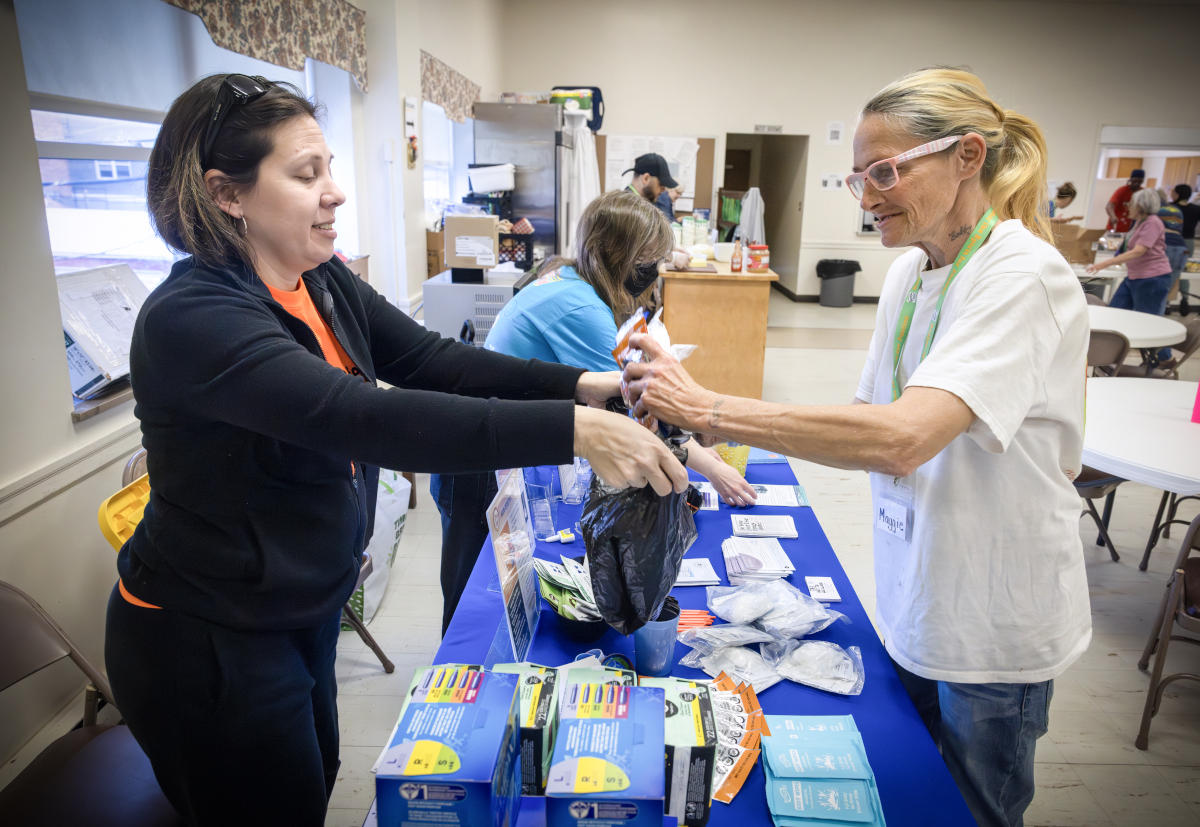
Melinda Zipp, left, of the Lancaster Harm Reduction Project, helps Maggie Phillips of Harrisburg pick up items from a resource table before a community breakfast.
Meeting people where they are
That focus on drug safety extends to community outreach. The Penn State Addiction Center for Translation works to connect research, clinical care, education and community programs. It provides practical tools and education to reduce the risks of drug use while respecting the rights and dignity of people who use drugs.
Coordinator Sarah Ballard travels across central Pennsylvania offering free supplies and support to this often-overlooked population. Items include wound care kits, electrolyte packets, naloxone medication that reverses opioid overdoses, drug test strips that can detect deadly contaminants like fentanyl and veterinary tranquilizers, and educational materials about substance use and treatment. She also distributes hygiene kits, safer sex supplies and menstrual products.
“Drug use is so heavily stigmatized that many people who use drugs are afraid to seek help from health care facilities,” Ballard said. “I let people know I’m here to help them, they can tell me anything, and I can give them resources to support their health and safety.”
Contact the Penn State Addiction Center for Translation to request education sessions, overdose reversal training or a table at a community event.
Ballard’s table drew steady interest at a Saturday community breakfast hosted by Gather the Spirit for Justice, a nonprofit organization serving Harrisburg’s Allison Hill neighborhood. Visitors picked up items and learned how to use Narcan nasal spray in case they witnessed an overdose. Ballard listened to their personal experiences without judgment and connected them with care and services.
Margaret Nace of Harrisburg volunteers at the weekly breakfasts, helping hand out supplies. She knows firsthand how important secure medication storage can be. During a time when she struggled to find secure housing, she relied on medication lock boxes to keep her prescriptions safe.
“When I was homeless, I didn’t trust my medication being out where other people could get to it,” Nace said.
She’s given lock boxes to friends and family members and says volunteering has been an important part of her recovery from drug use. She found stable housing this spring and has been drug-free for more than a year.
“I like myself better now that I’m clean, and volunteering here has really helped me stay clean,” she said.
Learn about “Health to Go” vending machines that provide free health and wellness items.
If you're having trouble accessing this content, or would like it in another format, please email Penn State Health Marketing & Communications.