Mar 18, 2026
New study identified which shoulder replacement patients were more likely to return to the hospital in Pennsylvania within 30 days
A new study in 15- to 25-year-olds finds that ADHD treatment improves outcomes for young people with ADHD and substance use disorder but they are less likely to receive ADHD medication.
Artificial intelligence (AI) is changing the field and practice of medicine, including legal liability and the perception of who is at fault when a patient experiences harm.
A team of engineers and surgeons collaborated to build a new class of foam-like biomaterial
Mar 10, 2026
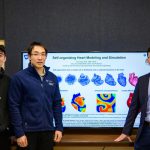
Researchers have created ‘digital twin’ hearts that can help doctors analyze treatment through simulation.
Mar 5, 2026
A team of researchers from Penn State College of Medicine has found that previous COVID-19 infection is a significant risk factor for kidney disease.
Mar 4, 2026
A Pennsylvania woman returned to school hoping to deepen her knowledge of the health science field and make an impact. Now, she is doing exactly that by helping Penn State teams who are doing research on pediatric cancer.
Mar 1, 2026
Michael Katzman, MD, faculty member, and Allison Krebs, MS, graduate teaching assistant, were recognized through the “Exceptional Moments in Teaching” program for the month of March.
Feb 26, 2026
In 1976, Penn State physicians marked a major milestone in cardiac care when a patient who could not be weaned from a heart-lung machine became the first successful clinical recipient of the Penn State Heart-Assist Pump.
Feb 25, 2026
Corinne Augusto, a graduate student in Penn State College of Medicine’s neuroscience doctoral program, has received a highly competitive fellowship from the National Institute of Neurological Disorders and Stroke to support her research training.