Dec 19, 2018
From his clinical and academic vantage points, Dr. Todd Felix didn’t realize how much today’s competitive health care marketplace impacts the mission of Penn State Health.
Dec 12, 2018
Kirsteen Browning, PhD, was recently appointed associate director of the MD/PhD Medical Scientist Training Program at Penn State College of Medicine.
Dec 10, 2018
Jordan Krebs, a student in Penn State College of Medicine's MD/PhD program, is part of the inaugural class in a new training program on eukaryotic gene regulation.
Dec 5, 2018
Combining low doses of a toxic herbicide with sugar-binding proteins called lectins may trigger Parkinsonism -- including symptoms like body tremors and slowing of body motions -- after the toxin travels from the stomach to the brain.
Dec 3, 2018
Dr. Debra Byler, an associate professor in the Department of Pediatrics, vice chair of pediatric education and associate professor in the Department of Neurology, is featured in the December Penn State College of Medicine’s “Exceptional Moments in Teaching” program.
Nov 27, 2018
A research team at Penn State College of Medicine will study universal school based screening of adolescents for major depressive disorder with the help of a three-year, $2 million funding award from the Patient-Centered Outcomes Research Institute (PCORI).
Nov 8, 2018
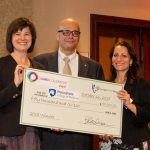
A clinical trial led by Dr. John Elfar, an orthopedic surgeon at Penn State Health Milton S. Hershey Medical Center and Penn State College of Medicine, won the 2018 CureAccelerator Live! philanthropic pitch event on Oct. 17.
Nov 7, 2018
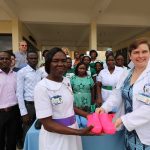
Penn State College of Medicine student Becky Koob took the old adage “walk a mile in another’s shoes” literally when she volunteered at a hospital in Kofordua, Ghana, last summer.
It may be tempting for parents or coaches to urge young children to specialize in one sport early on to help maximize their chance at making it to the big leagues, but that might not be the best path to success.
Nov 1, 2018
Dr. Sarah Ramirez, an assistant professor in the Department of Family and Community Medicine, is featured in the November Penn State College of Medicine’s “Exceptional Moments in Teaching” program.