Mar 18, 2026
Artificial intelligence (AI) is changing the field and practice of medicine, including legal liability and the perception of who is at fault when a patient experiences harm.
Mar 10, 2026
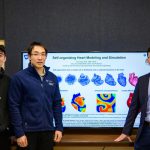
Researchers have created ‘digital twin’ hearts that can help doctors analyze treatment through simulation.
Mar 5, 2026
A team of researchers from Penn State College of Medicine has found that previous COVID-19 infection is a significant risk factor for kidney disease.
Mar 1, 2026
Michael Katzman, MD, faculty member, and Allison Krebs, MS, graduate teaching assistant, were recognized through the “Exceptional Moments in Teaching” program for the month of March.
Feb 11, 2026
Donald H. Bucher, vice chair of advanced practice at Penn State Health Milton S. Hershey Medical Center and an assistant professor at Penn State College of Medicine, has received the 2026 American Association of Nurse Practitioners State Award for Outstanding Contributions for Pennsylvania.
Feb 5, 2026
A new national survey, led by researchers at the Penn State College of Medicine and the University of Pittsburgh, found that nearly three-quarters of clinicians encountered significant obstacles when starting buprenorphine treatment for patients using fentanyl.
Feb 2, 2026
Audrey Kulaylat, MD, MS, faculty member, and Cameron Burmeister, MD, MS, fellow, were recognized through the “Exceptional Moments in Teaching” program for the month of February.
Jan 29, 2026
A new study from Penn State College of Medicine researchers finds that an immune cell usually involved in fighting infections and promoting wound healing become overly activated in failing human hearts, causing damage.
Jan 14, 2026
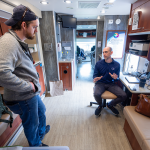
The Hospital and Healthsystem Association of Pennsylvania is spotlighting Penn State College of Medicine's LION Mobile Clinic, an innovative, student-supported initiative that brings health care directly to communities across Pennsylvania.
Jan 13, 2026
Penn State Health Milton S. Hershey Medical Center is expanding its ability to safely care for patients with rare, high risk infectious diseases as part of its ongoing role as a Level 2 Special Pathogen Treatment Center, thanks to a new $500,000 federal grant.