
Penn State Health Feb. 6 town hall highlights progress on goals, financial performance
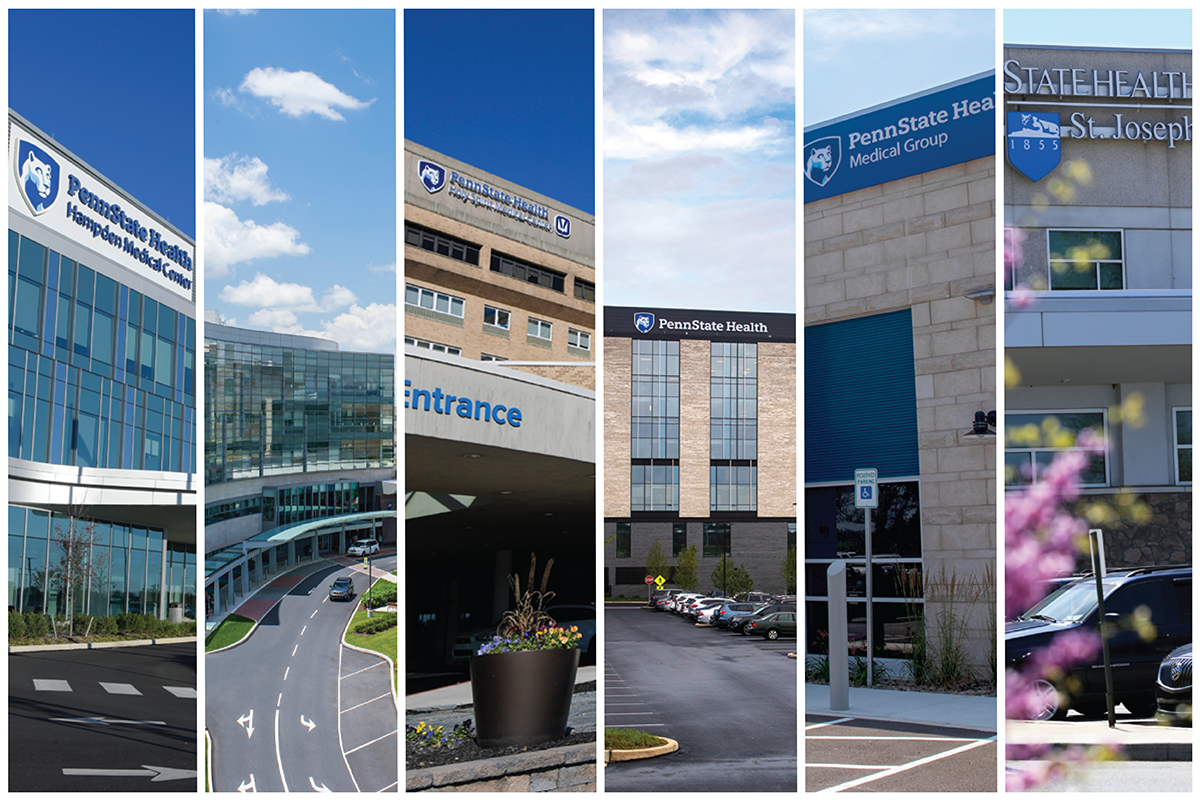
Penn State Health is making progress on its organizational goals and turning a corner financially after a challenging fiscal 2023, but more work remains, health system leaders said.
During a quarterly town hall meeting with employees on Feb. 6, executives discussed a wide array of topics, from patient experience scores to kiosks at outpatient facilities.
- View the replay here.
“We need to continue to improve our core operations in the latter half of 2024 and beyond,” Paula Tinch, executive vice president of finance and chief financial officer at Penn State Health, told employees. “Stretch ourselves to challenge the status quo.”
Among the key takeaways:
Heart transplant program turns 40
February is American Heart Month, and this year marks the 40th anniversary of the heart transplant program at Milton S. Hershey Medical Center, said Steve Massini, CEO of Penn State Health. Surgeons from the program have performed 589 transplants since its inception. Its oldest living patient is 86 years old, a man who received a heart transplant in 1989.
- Watch a video featuring Doug Garban, a State College man who received a heart transplant from Hershey Medical Center 20 years ago.
Organizational goals progress
Massini discussed the health system’s progress toward the fiscal year 2024 organizational goals:
- Quality and safety: All hospitals and Penn State Health Medical Group have transitioned to Vizient, a health care services company that conducts annual quality and safety rankings. This enables Penn State Health to compare its entities to each other as well as to like-sized hospitals.
- Patient experience: The health system remains above target on its goal to improve patient experience, though scores dipped slightly in December.
- Academic mission: College of Medicine medical students will begin clinical rotations at Penn State Health community hospitals and outpatient practices in March.
- Operations: The average length of stay for patients decreased to 5.64 days as of Dec. 31.
Financial performance
The health system had made progress on its financial performance over the previous fiscal year, but after pulling out a one-time settlement amount, operating expenses remain higher than revenues, Tinch said.
“We can’t continue to do things in the ways we’ve always done them,” she said. “We want to continue to challenge ourselves.”
She highlighted a few other examples:
- A leader at Penn State Health St. Joseph Medical Center brought in an additional $40,000 in revenue by identifying services the clinic had performed but for which it hadn’t billed. A Penn State Health outpatient location identified $200,000 in additional revenue in a similar way.
- If Penn State Health decreased its supply waste by half a percent to 1%, it would save $2 million to $4 million a year. Staff can find opportunities by monitoring expiration dates on supplies, not over-ordering and stockpiling or using disposables when a reusable option is available and appropriate for care.
“I encourage you to continue to work with your leaders and bring those ideas forward because certainly it’s going to continue to take all of us to move forward in a positive manner,” Tinch said.
Engagement survey and annual training
Press Ganey will email Penn State Health employees a link to an engagement survey Monday, March 4, said David Swift, chief human resources officer. Staff will have until Monday, March 25, to complete it. Also, the annual training required of all employees in the health system opens on Monday, Feb. 12, and closes Monday, May 13.
If you're having trouble accessing this content, or would like it in another format, please email the Penn State College of Medicine web department.