
Penn State Health May 29 town hall highlights progress on performance, financial goals
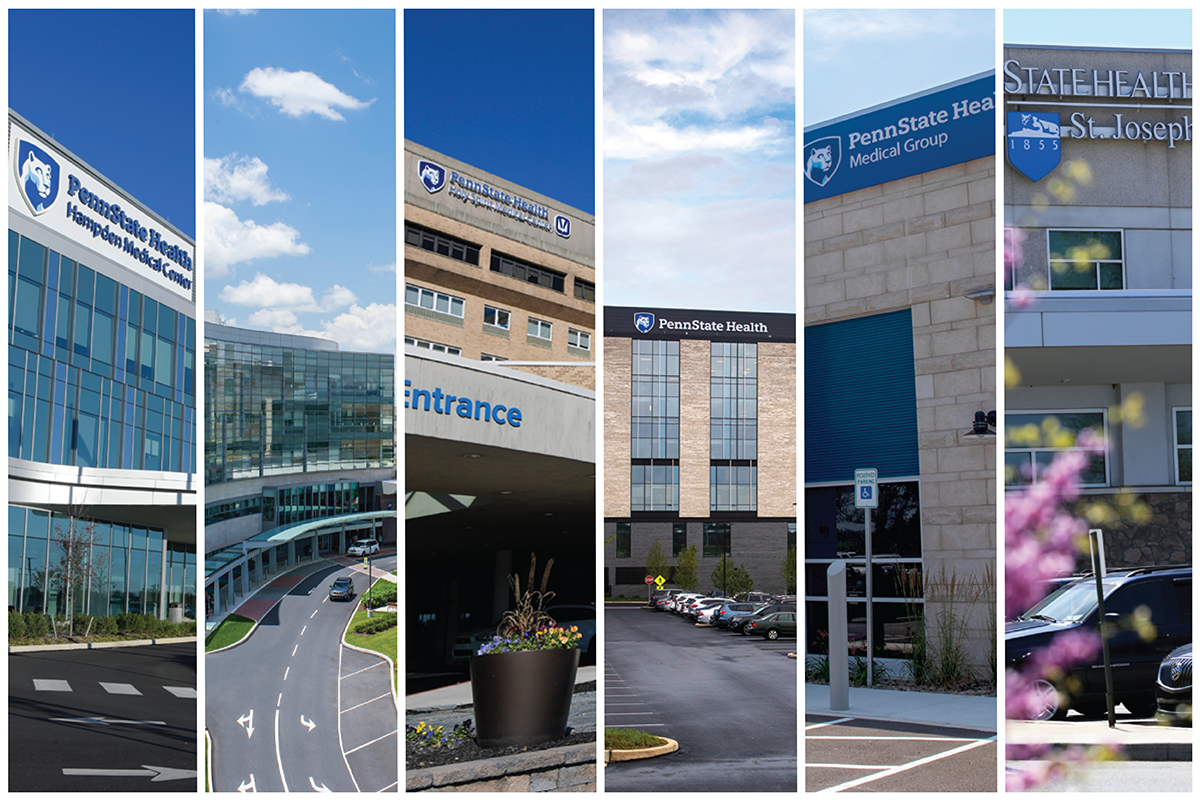
Penn State Health leaders discussed the health system’s progress on financial and performance goals at its quarterly town hall meeting May 29 with employees from throughout the health system.
- Click here for a replay of the forum.
Among the key takeaways:
‘We’ve done some incredible things’
Steve Massini, CEO of Penn State Health, highlighted activities surrounding National Hospital and Health System Week, National Nurses Week and National Emergency Medical Services Week.
“We’ve done some incredible things over this past year,” he said. He noted the health system was named among the top 30 most trusted health care brands by Becker’s Hospital Review, and Milton S. Hershey Medical Center received a three-star rating for excellence in coronary artery bypass grafting surgery by the Society of Thoracic Surgeons.
Financial picture
The health system’s financial performance picture continues to improve, said Paula Tinch, executive vice president and chief financial officer. Its net operating margin is 1.7%, which includes recognition of some one-time settlement funds.
“Overall, we have had some solid volumes over the last two months,” Tinch said. “We have been generating better results over the last few months, and certainly, that is a trend that we want to see continue.”
Organizational goals
David Swift, senior vice president and chief human resources officer at Penn State Health, discussed the health system’s progress on its organizational goals:
- Quality and Safety – The health system is meeting all three components of this goal. It underscores the level of performance across the entire system, which is very good, and particularly Milton S. Hershey Medical Center, which is nearing top decile performance already, according to Dr. Kenneth Wood, chief medical officer.
- Patient Experience – Patient experience scores have increased from fiscal year 2023 by 1.6% as of March 31 and are at 72.6, just shy of the 72.7 goal. An operational performance bonus for all employees is tied to that score.
- Academic Mission – Third-year medical students began clinical training in community hospitals and outpatient practices in March, which puts the health system at the threshold of achieving that goal. “We will continue to train and educate medical students in the community hospitals, which is really a prelude for what I would envision is us moving graduate medical education programs into those areas as well,” Wood said.
- Operations – Length of stay for hospital patients is on target, decreasing to an average of 5.7 days.
- Employee Engagement – The health system exceeded its participation goal for its annual survey but did not meet its target for performance in either the employee or physician/advanced practice provider (APP) surveys.
Your voices
For the employee engagement goal, Swift noted 78% percent of employees and 51% of physicians and APPs responded in the annual survey from vendor Press Ganey. However, scores dropped overall.
Among the results:
- Employees rated Penn State Health at 3.80 out of 5, a drop of .08 from the 2022 survey, placing it in the 17th percentile nationally for health care systems.
- Physicians and APPs rated the health system 3.61 out of 5, a decrease of .02 from the 2022 survey, which is in the 19th percentile nationally.
“We are all appreciative that you used your voices,” Swift said. “Now it is incumbent upon us. You should be hearing results from your leadership on a local level over the course of the next month, month and a half.”
Danielle Iovino, director of human resources strategy and organizational development, said focus groups with employees helped the health system choose three key areas on which to focus to improve employee engagement ― relationships, trust and visibility; diversity and inclusion; and communication.
Leaders will develop action plans to improve each of these areas in the coming weeks and months.
GROW Career Pathways
Marissa Aulenbach, workforce development program manager, discussed the GROW Career Pathways portfolio, a package of learning and development programs available to all employees on the health system Infonet.
“Many of them are direct pay programs, so that removes the financial burden off the individual who wants to go back to school,” Aulenbach said.
Grow Career Pathways includes three different ladders:
- Strategic partnerships with Penn State and local educational partners like Harrisburg Area Community College
- Internal Penn State Health career mobility
- K-12 strategic partnerships, which includes education and shadowing at local schools near Penn State Health locations
If you're having trouble accessing this content, or would like it in another format, please email the Penn State College of Medicine web department.