
Recognize hazards at work and at home
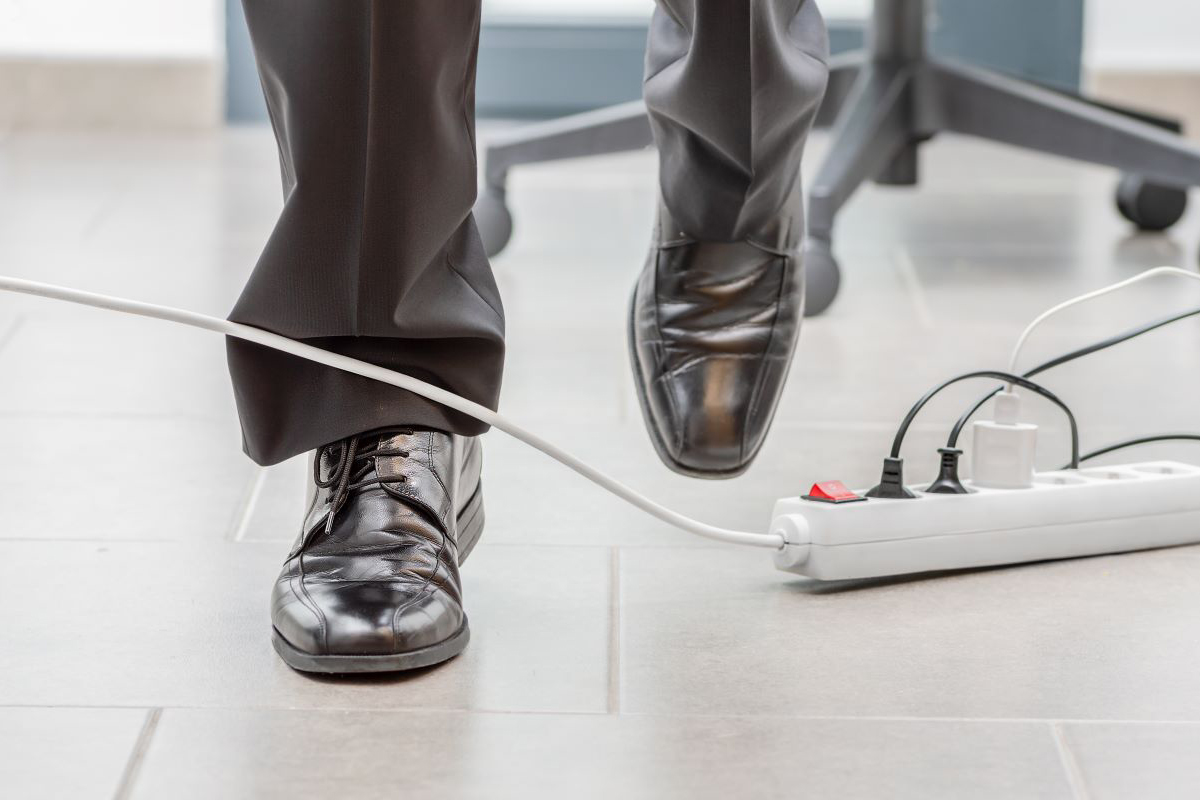
Even in familiar surroundings, whether at work or at home, keeping an eye out for hazards can help you identify and avoid them before an injury occurs. Take a fresh look at your surroundings on a regular basis, and know the process for reporting hazards and safety concerns at your work location.
Here are some work hazards and tips to avoid them:
- Pay attention to your surroundings. Avoid distracted walking. Use extra caution in high traffic areas, around corners and near doorways. Use the mirrors or ceiling “bubbles” when pushing or pulling equipment through the hallways. For motorized vehicles traveling the hallways, slow down and use the horn for awareness.
- Check workstations for exposed cords and other tripping hazards. Remove items stored under your desk. You need that leg space for your comfort and these items become tripping hazards.
- Organize your work space. When you have to stack materials, do so in a way that prevents sliding, falling or collapsing. Whether you are stacking pallets or file folders, do it with an intent to make your area a safe environment.
- Close open file drawers and cabinet doors. Open one at a time. A bump on the head is a sore reminder to close those cabinet doors.
- Store items (beds, machines, carts) to safe and appropriate places. This is such an important action. Not only will this help reduce injuries from trips and falls, but it helps to maintain clear paths of egress for emergency situations.
- Driving on campus presents a dire hazard to our employees, patients and visitors when we do not pay attention to speed limits and cross walks. Pedestrians have the right-of-way.
Bring it home:
- Take a safety walk around your home with your family and look for potential hazards. Not just from an adult’s perspective, but ask your children to help identify their safety concerns as well. A common hazard could be safe egress for your family and your pets.
- Arrange furniture so there is always enough room for normal traffic.
- Store tools, equipment and chemicals in areas with restricted access to children and pets.
By learning how to identify existing and potential safety hazards, you are better equipped to create safer environments at work and home. Safety is everyone’s responsibility.
If you're having trouble accessing this content, or would like it in another format, please email the Penn State College of Medicine web department.