
Teleobservation promotes patient, employee safety, provides staffing flexibility
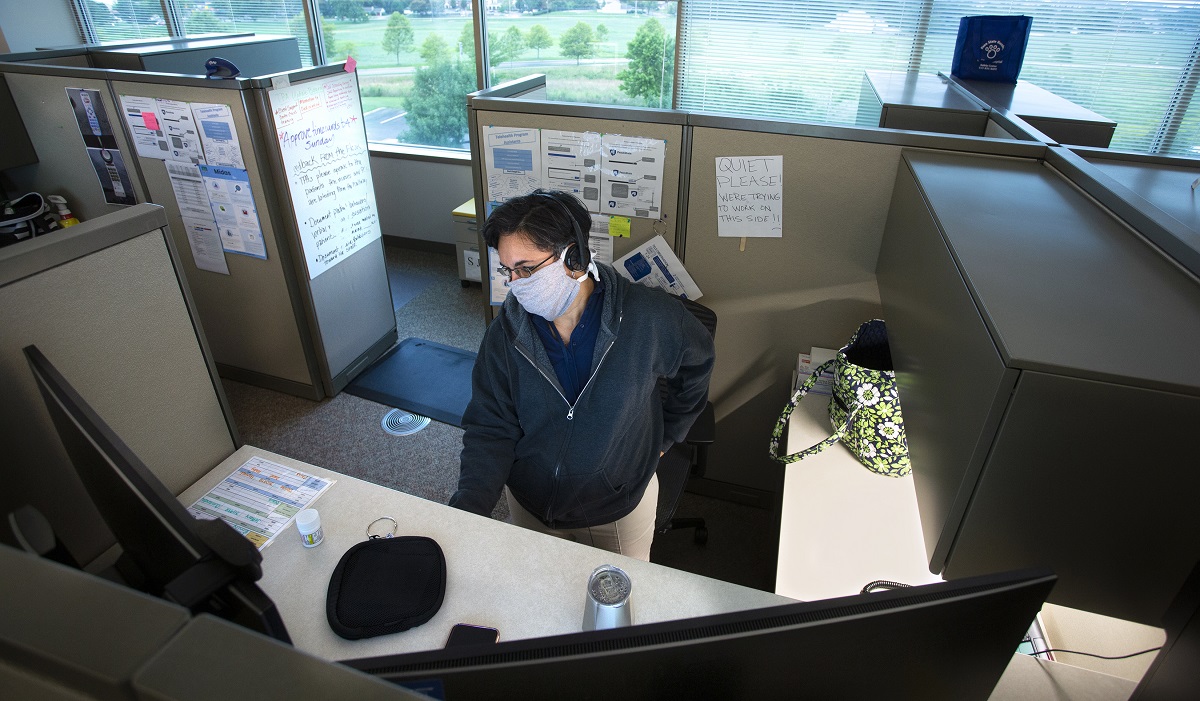
In May, Hershey Medical Center piloted a teleobservation program on 4 Acute Care. The technology was used to monitor six patient beds to reduce patient falls and device dislodgements, protect patients who are at risk of elopement and guard against threats to staff.
“On 4 Acute Care our leadership team has worked closely with our charge nurse to identify patients who would benefit from the extra layer of continuous observation,” said Tammy Fasnacht, a nurse manager, in 4 Acute Care. “In turn, the teleobservation program has allowed our unit to reallocate our patient care assistants back onto the unit in a clinical capacity.”
Teleobservation, the use of 24-hour virtual patient monitoring, plays an important role in ensuring patient and staff safety and provides flexibility for employees.
In June, the Medical Center expanded the use of teleobservation to three beds on 5 Acute Care and three beds on 6 Acute Care. Staff who are specially trained work around the clock and can observe and intervene on up to six patients at a time to prevent serious safety events.
Teleobservation also offers increased efficiencies and staff continuity, and it can cut down on alert fatigue and unnecessary interventions.
Presently, teleobservation is offered at the Medical Center. However, as Penn State Health Virtual Health expands, this program will be a core offering at other Penn State Health facilities including the St. Joseph Medical Center and the new Hampden and Lancaster hospitals.
If you're having trouble accessing this content, or would like it in another format, please email the Penn State College of Medicine web department.