
The Medical Minute: Latest treatment options offer relief from seizures for people with epilepsy
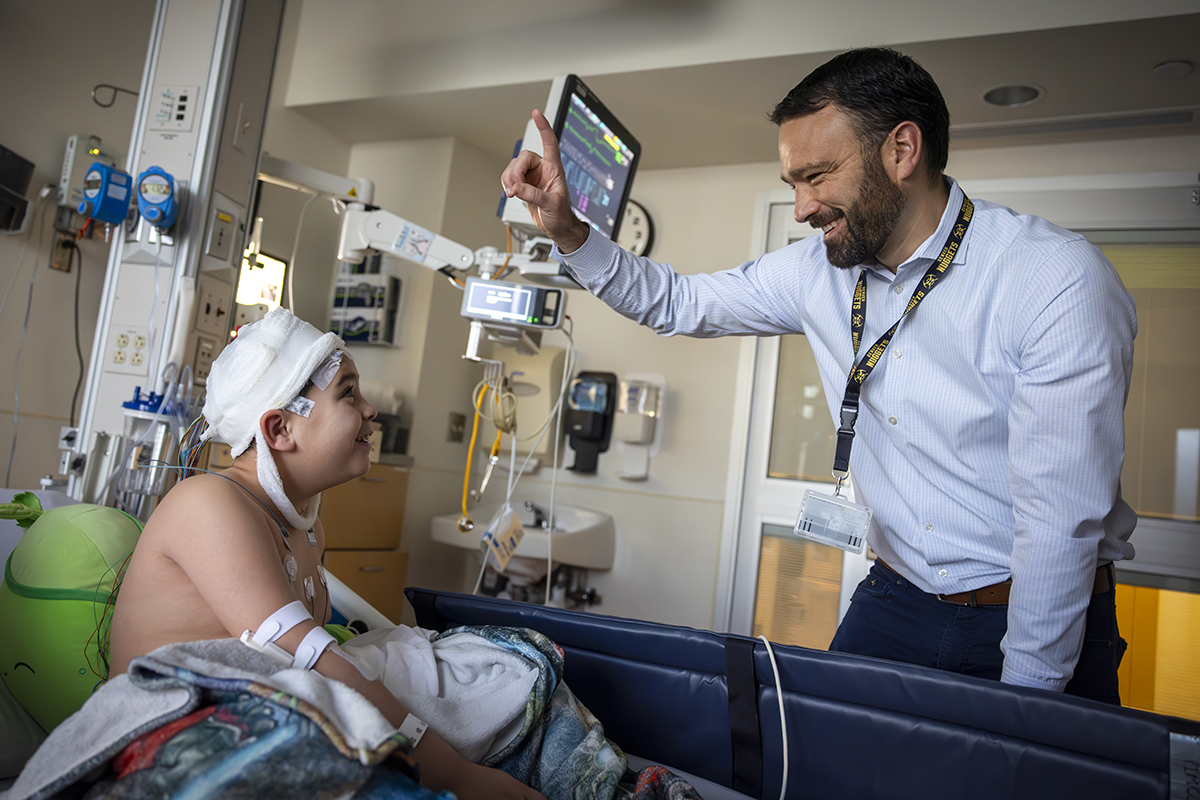
At 14 months old, Maverick Ranco started making strange faces by rolling his eyes straight up into his head. Before long, his parents realized he wasn’t trying to make them laugh – or doing it on purpose at all. Then, out of nowhere, he started slumping to the floor like a rag doll.
“It was like the scene in the movie ‘Toy Story’ when Woody says, ‘Andy’s coming!’ and the toys just drop,” says Ezra Ranco, Maverick’s father.
Maverick, who lives in Harrisburg, was having drop seizures. He is one of the 456,000 kids in the United States with epilepsy, a brain disorder that causes seizures. Nearly 3 million adults are affected, too. Seizures can disrupt everyday life and increase the risk of injuries and accidents.
Although epilepsy isn’t curable, new treatments can help kids and adults live better with fewer seizures.
“There have been many innovations, especially in epilepsy surgery, that allow us to treat patients in less invasive, safer and more effective ways – even patients who wouldn’t have been candidates for treatment in the past,” said Dr. Brent O’Neill, a pediatric neurosurgeon and director of pediatric epilepsy surgery at Penn State Health.
November is National Epilepsy Awareness Month. Here’s what to know about the latest treatments for kids and adults with epilepsy.
What is epilepsy?
Epilepsy is a neurological disorder that causes seizures in response to changes in the brain’s electrical activity.
About 60% of people with epilepsy have focal epilepsy. These seizures start in one brain area, or focus, and often affect one side of the body. Generalized seizures affect both sides of the brain and body at once.
What are the signs of epileptic seizures?
During a seizure, kids or adults might experience:
- Loss of awareness or consciousness
- Repetitive movements like picking at clothing
- Drooling or frothing at the mouth
- Grunting or snorting
- Staring or blinking
- Strange tastes, smells or sounds
- Visual hallucinations or seeing flashing lights
- An out-of-body sensation
- Teeth clenching, tongue biting or lip smacking
- Rigidity followed by jerking movements
- Shaking of the entire body
- Sudden slumping and falling
- Loss of bladder or bowel control
What causes epilepsy?
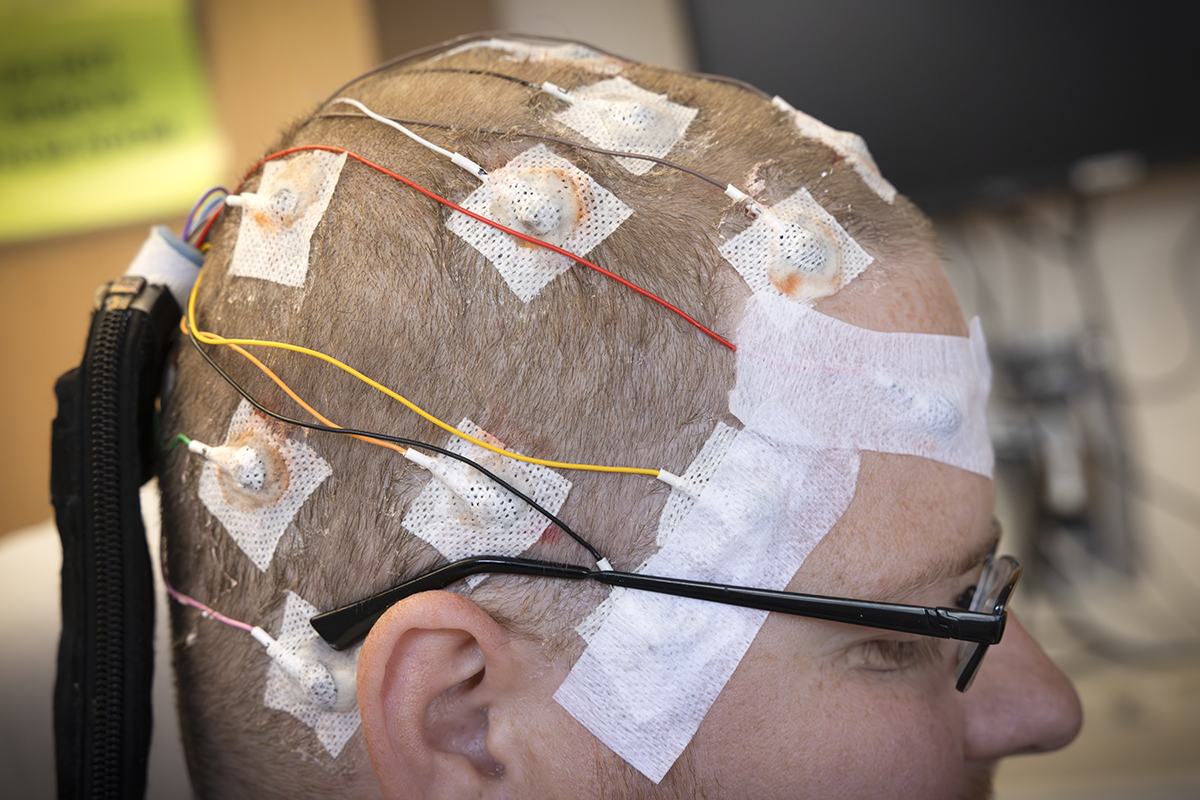
Joshua Mazzaferro of Bedford is prepared for an EEG to evaluate his epilepsy at Penn State Health Milton S. Hershey Medical Center.
Genetic factors, structural problems in the brain, injuries and infections can all contribute by altering electrical activity in the brain. What causes seizures can differ from person to person. Stress, poor sleep, hunger or flashing lights are common triggers, although some seizures have no known triggers.
How is epilepsy diagnosed?
Epilepsy testing typically starts with an electroencephalogram (EEG). Electrodes placed on the scalp help doctors detect abnormal electrical activity in the brain.
Penn State Health’s inpatient Epilepsy Monitoring Unit offers 24-hour video-EEG monitoring, typically for four days, to determine the exact location in the brain where seizures start. The Penn State Health Epilepsy Center at Milton S. Hershey Medical Center is accredited as a Level 4 center, the highest level of care, by the National Association of Epilepsy Centers.
More imaging tests might be recommended. Magnetic resonance imaging (MRI) helps identify structural causes for seizures. Positron emission tomography provides detailed information about the brain’s metabolic activity and function even when the MRI is normal.
How is epilepsy treated?
- Anti-seizure medications
The first step is anticonvulsant medication to prevent or reduce seizures. They work for most people, but not all.
“One in three patients will not respond to anti-seizure medication, even if they take an appropriate medication and take it the right way,” said Dr. Alain Lekoubou Looti, a neurologist and interim chief of the Division of Epilepsy at Penn State Health Milton S. Hershey Medical Center. “That number hasn’t changed over the years, despite new drugs coming on the market.”
If medication doesn’t work, doctors might recommend other treatment options – some well-established, others newer:
- Surgery. Once doctors find the brain tissue where seizures occur, often in the temporal lobe or frontal lobe, they can remove it, disconnect it from the rest of the brain or burn it using laser ablation – the newest, fastest-growing surgical option. More than half of patients become seizure-free post-surgery.
Resection surgery helped Noah Staley, 18, a high school senior from Lancaster, get back on track. His seizures began at age 15. Medication didn’t help and left him groggy. He struggled to focus at school and in practice for swimming, track and cross-country.
Since his surgery in 2024, he hasn’t had a seizure. “He’s getting As and Bs this semester, applied to college, got his driver’s permit and is living a totally normal life,” says his mom, Kristin Staley.
- Neuromodulation. A tiny device surgically implanted into the brain, skull or vagus nerve in the neck delivers electrical pulses to help control seizures.
Maverick Ranco, now age 2, received a vagus nerve stimulation device along with a brain surgery to divide the corpus callosum, a bundle of nerve fibers involved in seizures, this fall. He went from 12 seizures a day to one or two.
“We’re less fearful and anxious now because those drop seizures were causing him to get hurt,” says Christy Ranco, Maverick’s mother. “He was getting bruised and banged up, or he would get a bloody lip or cuts from falling.”
Maverick is also catching up on speech and development that were interrupted by his seizures. “Now, he has more time to play and learn, and he can sustain his focus and do activities with us,” Christy says.
- Dietary therapies. A high-fat ketogenic diet or modified Atkins diet can help patients control seizures. Research suggests these diets may work by influencing brain chemistry, improving sleep or improving the balance of gut bacteria. Patients start the diet in the hospital for three to four days before continuing at home.
More treatment breakthroughs are on the horizon. Researchers around the world are studying novel approaches, such as gene therapies and stem cell treatments, to help more patients with epilepsy in the future.
The Rancos say connecting with other families affected by epilepsy can be helpful. The Epilepsy Association of Western and Central PA and Parent to Parent of Pennsylvania offer resources and support.
Find a Penn State Health epilepsy expert near you.
Related content:
- Seizures may increase dementia risk for young stroke survivors
- McInerney reaches milestone of 900 deep brain stimulation device implants
- Joseph Medical Center implements new seizure care technology
Explore clinical trials on epilepsy at Penn State College of Medicine.
The Medical Minute is a weekly health news feature produced by Penn State Health. Articles feature the expertise of faculty, physicians and staff, and are designed to offer timely, relevant health information of interest to a broad audience.
If you're having trouble accessing this content, or would like it in another format, please email Penn State Health Marketing & Communications.