
The Medical Minute: The new Food Pyramid: Where protein fits on your plate

Has the U.S. Department of Agriculture flipped everything you thought you knew about nutrition on its head? At first glance, the newly released dietary guidelines featuring a new food pyramid may seem like a protein-first approach to eating well. However, registered dieticians and public health experts say the basics are largely the same as the advice author Michael Pollan shared in his book “Food Rules.”
“Eat food. Not too much. Mostly plants.”
Dr. Susan Veldheer, associate professor of family and community medicine and public health sciences at Penn State College of Medicine, says although the new guidelines increase the daily protein recommendation from .8 grams per kilogram of body weight to 1.2-1.6 grams per kilogram of body weight, they still keep the prior guidance of limiting saturated fats to 10% of daily calories. The recommendations continue to encourage five servings of fruits and vegetables each day and reduce grains to two to four servings, with an emphasis on whole grains.
So how do you increase your protein without increasing saturated fat? The answer, she says, lies in the other new focus — eating whole foods and minimizing ultra-processed foods.
Ultra-processed foods are industrially manufactured products made mostly from refined ingredients and additives. Examples include sodas, chips, cookies, candy, lunch meats and frozen meals.
“Americans already eat more saturated fat than recommended, so red meat and full-fat dairy can’t be your only protein sources,” Veldheer says. “You need to find protein sources that are leaner and lower in saturated fat or plant-based. This is particularly important if you are concerned about heart health, managing diabetes, or trying to lose or maintain weight, which most people are.”
How Much Protein Do I Need?
The new dietary guidelines increase the general recommendation for daily protein intake, but Angelina Sickora, a registered dietician and clinical nutrition
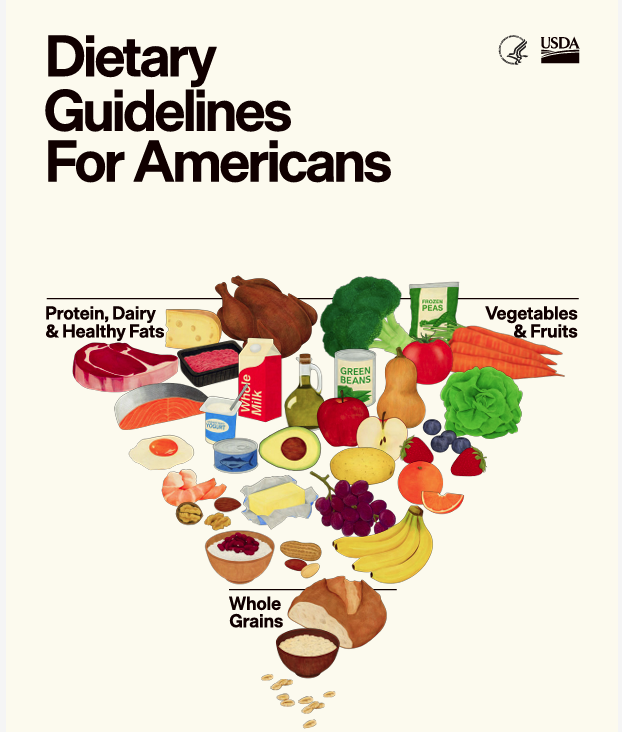
The new 2025-2030 Dietary Guidelines for Americans introduces a redesigned food pyramid that emphasizes whole foods, protein, dairy and fats.
manager at Penn State Health St. Joseph Medical Center, reminds us the guidelines are only a framework – not a prescription.
“Individual protein needs vary greatly based on age, health status, medications people are on and specific conditions they may have,” Sickora says. “What works well for one person may not work well for everyone. That’s why we recommend meeting with a registered dietician for personalized recommendations.”
Veldheer and Sickora agree most Americans get more than enough protein, even considering the recent changes. The focus, they say, should instead shift to getting protein from less processed and more plant-based sources.
What are the Best Protein Sources?
Protein can now be found in everything from cereal to coffee to soda. Veldheer says most whole foods contain some protein. Both plants and animals have amino acids – the building blocks of protein – so meat doesn’t have to be the sole dietary source.
“Think of it like a coin bank that you need to fill each day. It doesn’t really matter if some amino acids come from broccoli and whole grains and some from steak and yogurt,” Veldheer says. “When you eat steak and yogurt, you get all the different types of amino acids at once, but plants have these protein building blocks too.”
To keep saturated fat in check, Veldheer says plant-based protein must be the focus. She recommends beans, chickpeas, lentils, nuts, quinoa and soy as high-protein options, but encourages patients to consider the protein they can get from other sources, such as leafy greens, whole grains, and fruit as well.
Although protein is ubiquitous in processed foods, Sickora says natural sources are easier to digest and don’t come with additives or sugars.
“Using whole foods to get your nutrients is much better. When you’re introducing protein powders or fiber supplements, they come with additives. When you focus on nutrient-dense food, it cuts all that out,” Sickora says. “You don’t need protein in your water. Water is for hydration.”
Learn about nutrition education at Penn State Health.
What About Fiber?
Protein may be getting all the buzz right now – bolstered by social media influencers – but it needs a counterbalance: fiber.
“Protein is extremely important for your body, for repairing and supporting healthy tissues, but fiber is really important for gut health. They both play an important role,” Sickora says.

Angelina Sickora, right, says most Americans eat more than enough protein and should focus instead on getting it from less processed sources.
Unlike protein, most Americans aren’t getting enough fiber. Veldheer says focusing on whole foods and plant-based protein helps satisfy both dietary needs.
“All plant-based foods contain fiber. So focus on eating the whole version of a food – eat an apple, not an apple sauce or juice,” Veldheer says. “If we embrace the concept of eating less processed foods and more whole foods, the narrative shifts because whole foods equal fiber. When companies process food, they often remove the fiber.”
How to Shop the New Pyramid
As you enter the supermarket, Veldheer says shopping the perimeter will help you hit the right food categories. Start with fruits and vegetables, either fresh or frozen, then add protein from the meat, dairy and eggs departments. Venture into the center of the store for minimally processed foods like olive oil, whole grains, and canned fruits and vegetables in water or juice with little to no added salt or sugar.
The new Food Pyramid isn’t about eating more protein – it’s about choosing more whole foods and letting balance, not trends, guide what you eat.
Related content:
- The Medical Minute: Vitamin supplements versus a balanced diet? No contest
- The Medical Minute: Intermittent fasting — foolproof or fad?
- Video: Which is the best heart healthy diet?
The Medical Minute is a weekly health news feature produced by Penn State Health. Articles feature the expertise of faculty, physicians and staff, and are designed to offer timely, relevant health information of interest to a broad audience.
If you're having trouble accessing this content, or would like it in another format, please email Penn State Health Marketing & Communications.