
The Medical Minute: Latest treatments help ease essential tremor symptoms
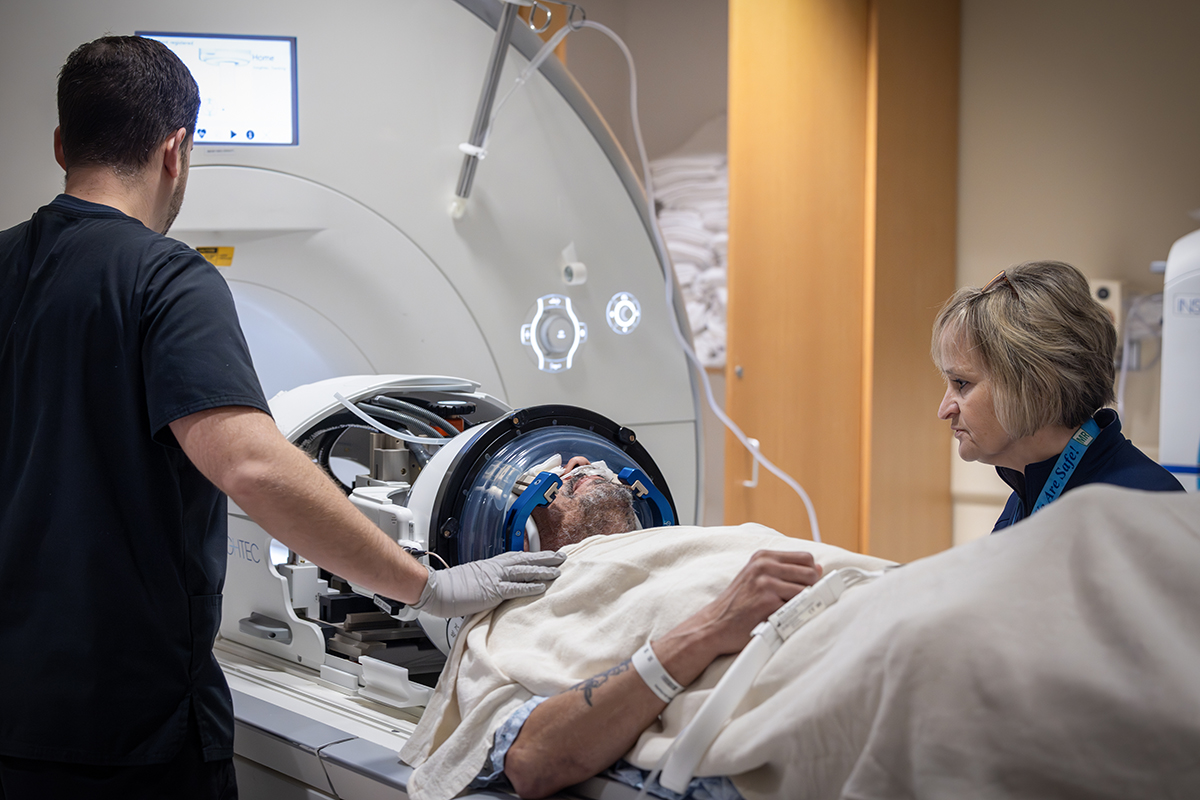
About a decade ago, Joan Riggs, a 64-year-old from Lemoyne, started to have shaky hands. At first, it was an annoyance. However, as the tremors worsened, they kept her from doing the activities she enjoyed most.
She stopped working as a nurse. She couldn’t enjoy her favorite hobbies, journaling and cross-stitch, because they require steady hands. Even eating and drinking became difficult.
“I was always spilling food and making a mess on the floor, and just getting a fork or spoon to my mouth was so frustrating,” she said. “I started eating mostly finger foods and not really sitting down to an actual dinner of any kind.”
Riggs was struggling with essential tremor, a neurological movement disorder that affects about 1.1 million adults in the U.S., according to research published in the journal Tremor and Other Hyperkinetic Movements.
What is essential tremor?
Essential tremor is a brain condition that causes uncontrollable, rhythmic trembling. Shaky hands are a common symptom.
“Hand tremors often emerge when people try to do regular activities: eating, drinking, shaving or applying lipstick,” said Dr. Pratik Talati, a functional neurosurgeon and director of focused ultrasound for Penn State Health Neurosurgery. “These movements can be very disruptive to people’s lives.”
Symptoms often start between ages 36 and 40, according to research published in Clinical Parkinsonism & Related Disorders.
Some people notice that their tremors subside for a short time when they drink alcohol. That’s because alcohol slows movement by impairing nervous system activity, Talati said. However, he warns that drinking is not a treatment strategy. In the long run, excess alcohol can harm brain function and make movement problems worse.
Is essential tremor related to Parkinson’s Disease?
While both conditions cause tremors, they appear and progress differently.
“Essential tremor patients often have no tremor at rest, but it appears when they start doing things,” Talati said.
In Parkinson’s, the opposite occurs. “Parkinson’s patients often find that their tremor comes out when their hand is resting on their lap or right by their side, but it goes away when they do activities such as eating or drinking,” Talati said.
Parkinson’s disease worsens over time as brain cells that support movement die. While the cause of essential tremor is unknown, it doesn’t progress the same way.
How is essential tremor diagnosed?
To diagnose essential tremor, your doctor will ask about your symptoms, health history and family history. More than half of people with essential tremor have a family history of the condition, called familial tremor.
Your doctor might also check your muscle strength, reflexes, coordination and balance. They may watch you perform simple tasks, such as writing on paper or pouring water into a glass.
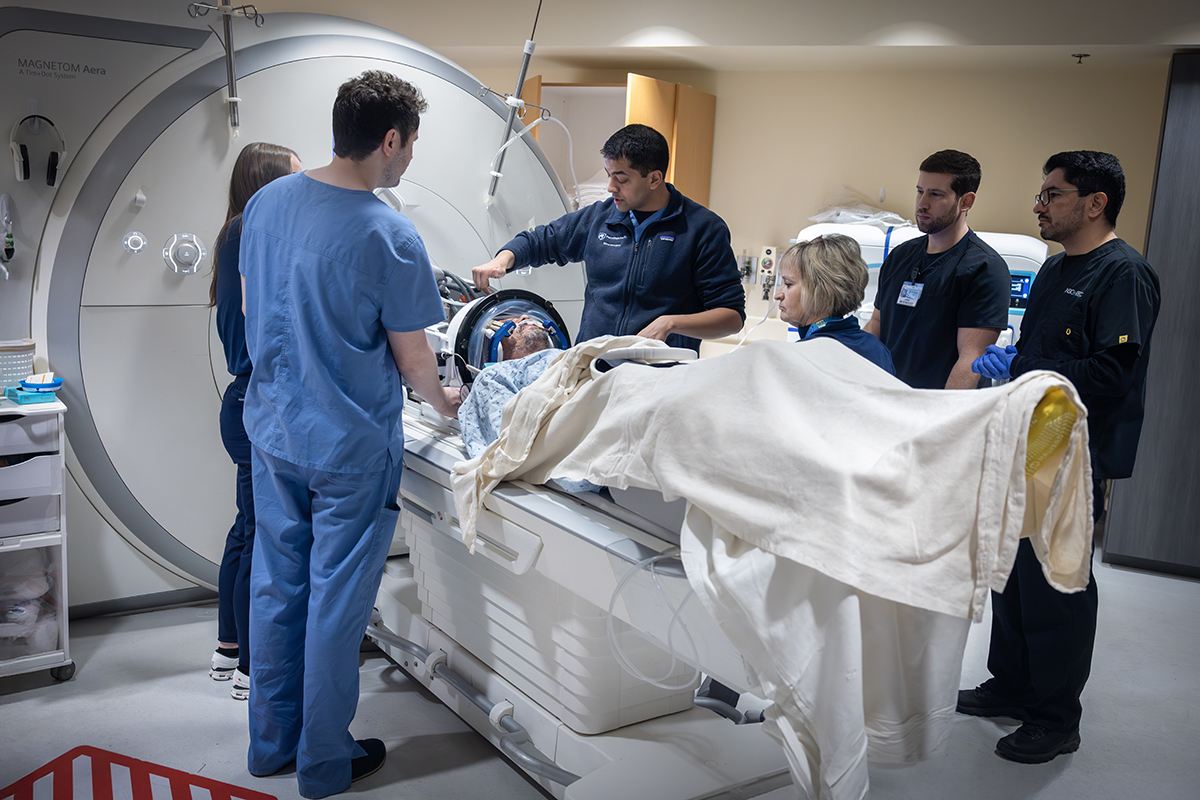
Dr. Pratik Talati, center, readies patient Jose Lopez for focused ultrasound therapy to treat essential tremor.
How is essential tremor treated?
There is no cure for this condition. The goal of essential tremor treatment is to reduce shaking that interferes with normal activities.
Treatment often starts with medication:
- Propranolol: This beta-blocker helps slow tremors by reducing stress-related signals in the brain.
- Primidone: This medication reduces tremors by calming overactive nerve signals in the brain.
If medication doesn’t help, patients can consider advanced treatments. Doctors may use brain imaging tests, such as CT or MRI, to plan these procedures. Advanced treatments include:
-
- Deep brain stimulation: Small wires are placed in specific areas of the brain through tiny incisions. A small device is placed under the skin on the chest. “We call it a pacemaker for the brain because it allows individuals to get targeted electricity or current to a specific brain region to help suppress tremors,” Talati said.
- Focused ultrasound: This newer treatment does not require a traditional surgery with incisions. Doctors use ultrasound beams to target and treat a small brain region involved in tremors. Patients remain awake during the procedure and often go home the same day.
Research published in Parkinsonism & Related Disorders suggests that focused ultrasound reduces tremor severity, reduces embarrassment from tremors, and improves cognition, function and quality of life. The results can last five years or more. Like any treatment, these procedures can have side effects, such as numbness, tingling, imbalance or weakness. For most people, these effects are mild and often temporary.
“It’s amazing to have patients who’ve had debilitating tremors for decades come in and, within hours, have a dramatic reduction in their tremor so that they can do the things that they love to do: eat, drink, bathe themselves, things that were previously so burdensome and so challenging,” Talati said.
Riggs underwent focused ultrasound in February. The first time she signed her name after the procedure, she was shocked. Her writing was legible again. She’s back to typing at the speed she remembers from her years as a medical secretary. And she’s looking forward to cross-stitching soon.
“I’m in a better frame of mind about so many things,” she said. “I can start enjoying my life again.”
Learn more about essential tremor.
Related Content:
- Milton S. Hershey Medical Center first in Pennsylvania to offer new Parkinson’s disease treatment
- Video: Deep Brain Stimulation: Expert Insights at Penn State Health
- McInerney reaches milestone of 900 deep brain stimulation device implants
The Medical Minute is a weekly health news feature produced by Penn State Health. Articles feature the expertise of faculty, physicians and staff, and are designed to offer timely, relevant health information of interest to a broad audience.
If you're having trouble accessing this content, or would like it in another format, please email Penn State Health Marketing & Communications.