
Heart health screenings deliver lifesaving impact
Penn State Health brings free cardiovascular checks directly to people who need it the most
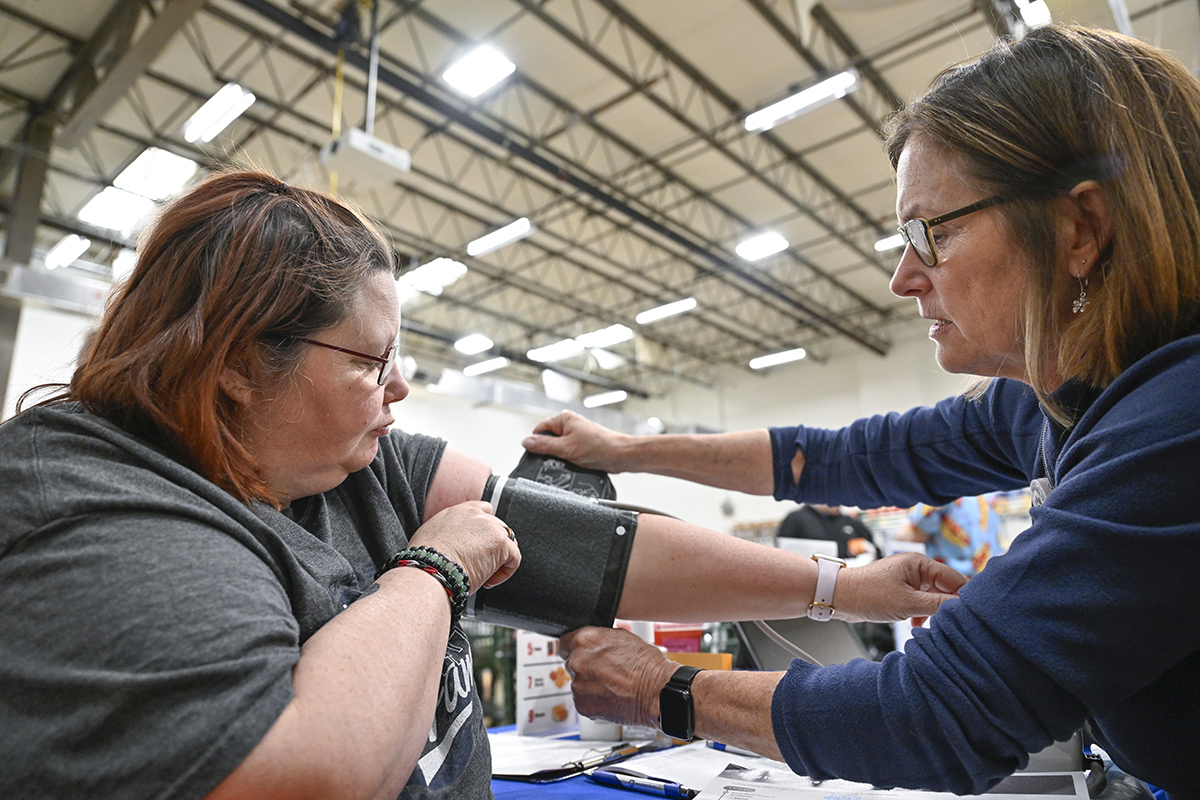
Two weeks after her father suffered a stroke, Courtney Barclay, 46, jumped at the chance to get a free blood pressure check while grocery shopping in Carlisle.
“With everything going on with my dad, I just want to make sure I don’t have high blood pressure,” she said.
Barclay sat down for a screening with Julie Groh, a community health nurse with Penn State Health, at Project SHARE, a local nonprofit that helps people facing food insecurity.
Penn State Health offers free cardiovascular screenings at community organizations and events across central Pennsylvania. The goal: bring heart health care to people who might not otherwise have access. Heart disease is the leading cause of death in Pennsylvania and nationwide. But early detection of risk factors like high blood pressure can help people live longer, healthier lives.
Barclay’s first reading showed she had high blood pressure. A second check two minutes later was lower but still elevated.
High blood pressure is a risk factor for strokes, and Barclay understands how devastating a stroke can be. She was the one who called 911 when her dad showed signs of a stroke. Now, he’s home from the hospital but unable to walk. Barclay has been helping her mother and sister care for him around the clock.
Groh gave Barclay a home blood pressure monitor to track her numbers and wrote down Barclay’s phone number to connect her with a free primary care provider. The Carlisle woman doesn’t have health insurance due to a paperwork issue and plans to reapply.
“I would recommend this screening to anyone,” Barclay said. “It’s the easiest process ever.”
Hold cursor over image below to reveal photo gallery controls.

Meeting people where they are
Penn State Health community health nurses screen about 1,800 people each year for high blood pressure, or hypertension.
“It’s amazing how many people are walking around with high blood pressure,” Groh said.
High blood pressure often has no symptoms, so many people don’t know they have it. Only about a quarter of Americans with hypertension have it under control, the American Heart Association says. The good news: it can often be managed with medications, quitting smoking and lifestyle changes like a healthy diet and exercise.
Visitors stop by Groh’s table for samples of heart-healthy food like freeze-dried fruit and low-sodium seasoning, then pick up educational materials to help improve their heart health.
Within minutes, Groh can also check their cholesterol and hemoglobin A1C – a measure of blood sugar – with a quick finger prick. She then walks participants through a cardiovascular risk calculator to estimate their chance of developing heart disease. If they need follow-up care, she connects them with free or low-cost providers.
“Cardiovascular disease can be complex, and very few patients have only one risk factor,” said Holly Roush, vice president of Penn State Health Heart and Vascular Services. “We offer the tools people need to understand their cardiovascular health and manage it.”
The screenings are supported by the health system’s Give from the Heart campaign, held each February during American Heart Month.
Turning numbers into understanding
Groh doesn’t simply tell people their results – she teaches them why the numbers matter.
“People often tell me that a doctor has never explained their blood pressure to them,” Groh said. “They thank me for taking time to help them understand it.”
Even for people who have health care access, these screenings can help them stay on track.
James Lippart Jr., 52, of Carlisle, sees a doctor for his high cholesterol and is working to improve his heart health. “I’m trying to be healthy and lose weight,” he said.
Lippart checked his risk factors with Groh at Project SHARE so he could show his doctor the numbers at his next appointment. Groh’s homework for Lippart: Keep taking your medication.
“This program is about sharing knowledge and enabling people to understand their disease processes and then change their health outcomes,” Roush said. “This is more than health care – it’s caring for people’s health.”
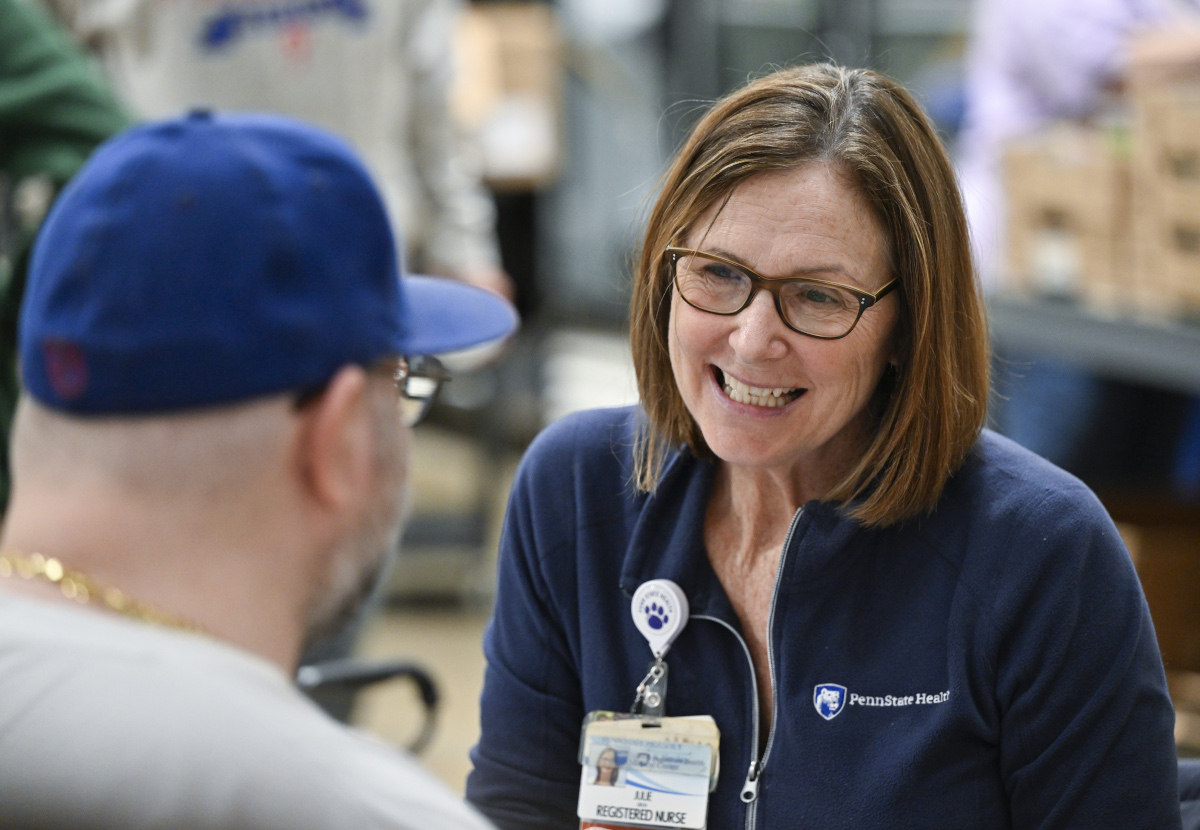
Julie Groh talks to James Lippart Jr. about his cholesterol during a heart health screening.
A consistent community presence
When people see Penn State Health at community events and organizations, some just browse the information table. Others go straight for screening. Over time, some return and even befriend nurses like Groh, who are part of the communities they serve. Community health nurses build trust and help people monitor and improve their health over time.
“These aren’t one-time screening events,” Roush said. “We have a consistent presence in the locations where we provide these services so we can continue to meet people where they are and give them resources to address their risk factors.”
Groh often sees entire families benefit from her services – whether they visit her table or hear about it from someone who did.
Before leaving with her new blood pressure monitor, Barclay turned to her sister.
“Maybe we should check Mom’s blood pressure when we get home,” she said.
Improving physical well-being is a key part of Penn State Health’s commitment to advancing health equity. Learn more in the Penn State Health Community Health Needs Assessment and Implementation Strategy.
If you're having trouble accessing this content, or would like it in another format, please email Penn State Health Marketing & Communications.