
Cancer education made simple – and fun
Penn State Cancer Institute and Penn State College of Medicine bring cancer awareness and screenings straight to your community
It’s Ladies Night Out in Millersburg. Between live rock music, karaoke, cardio drumming and a Kentucky Derby hat contest, the annual women’s health event launched something new this year: on-site cervical cancer screening.
Penn State Cancer Institute and Penn State College of Medicine, in partnership with the LION Mobile Clinic, are making cervical cancer screening more accessible by bringing it to community events like this one.
Cynthia Christiansen, 63, was the first participant.
“I’ve had regular Pap smears, but I haven’t had one in several years, so I was due,” she said. “This is a convenient way to get it done.”
This program is the latest in the Cancer Institute and Penn State College of Medicine’s innovative approach to closing gaps in cancer prevention. Through community outreach, education, screening events and research, they help people understand their risk factors and get checked early, when cancer is most treatable.
Cancer screenings, right to you
Penn State Cancer Institute and the College of Medicine offer a free, simple test for human papillomavirus (HPV), a virus that can cause cervical cancer. Women use a swab to collect their own sample in the restroom or the LION Mobile Clinic. The sample then goes to Penn State Health Milton S. Hershey Medical Center for testing. If results are positive for HPV infection, the Office of Community Outreach and Engagement at the Cancer Institute connects the patient with follow-up care.
The team plans to offer at least 100 free tests in 2026. The goal is to reach women who may not get routine preventive care due to lack of insurance or other barriers.

Those who don’t receive a test can still take home educational materials about cervical cancer, available in English and Spanish.
“About 30% of women in Pennsylvania are behind on cervical cancer screenings,” said William Calo, community engagement associate director at Penn State Cancer Institute. “In rural areas especially, women have fewer access points for screening, so we’re bringing the service to them through this unique partnership with the LION Mobile Clinic.”
Improving physical well-being is a key part of Penn State Health’s commitment to advancing health equity. Learn more in the Penn State Health Community Health Needs Assessment and Implementation Strategy.
Know your risks
Cancer awareness goes beyond screening. Rebecca Kline, 68, was one of nearly a dozen Ladies Night attendees to receive a free home radon test kit. Radon gas is the second-leading cause of lung cancer, and about 40% of tested Pennsylvania homes have high radon levels.
“I live in a farmhouse that’s over 100 years old, and the cellar is creek rock, so that might be a place where radon can enter,” said Kline. “A free test is appealing because my grandkids visit often, and I don’t want them to be exposed to radon.”
The Cancer Institute’s Breathe Easy project connects homeowners with radon testing and help navigating the next steps. Up to four low-income families will receive radon mitigation systems in 2026 through a grant from Penn State Health.
“Many people don’t know about radon or confuse it with carbon monoxide,” said Holly Dolan, Cancer Institute community education manager. “We help people understand that even those who have never smoked can get lung cancer from radon.”
Take part in cancer clinical trials at Penn State College of Medicine.
Bingo for cancer awareness
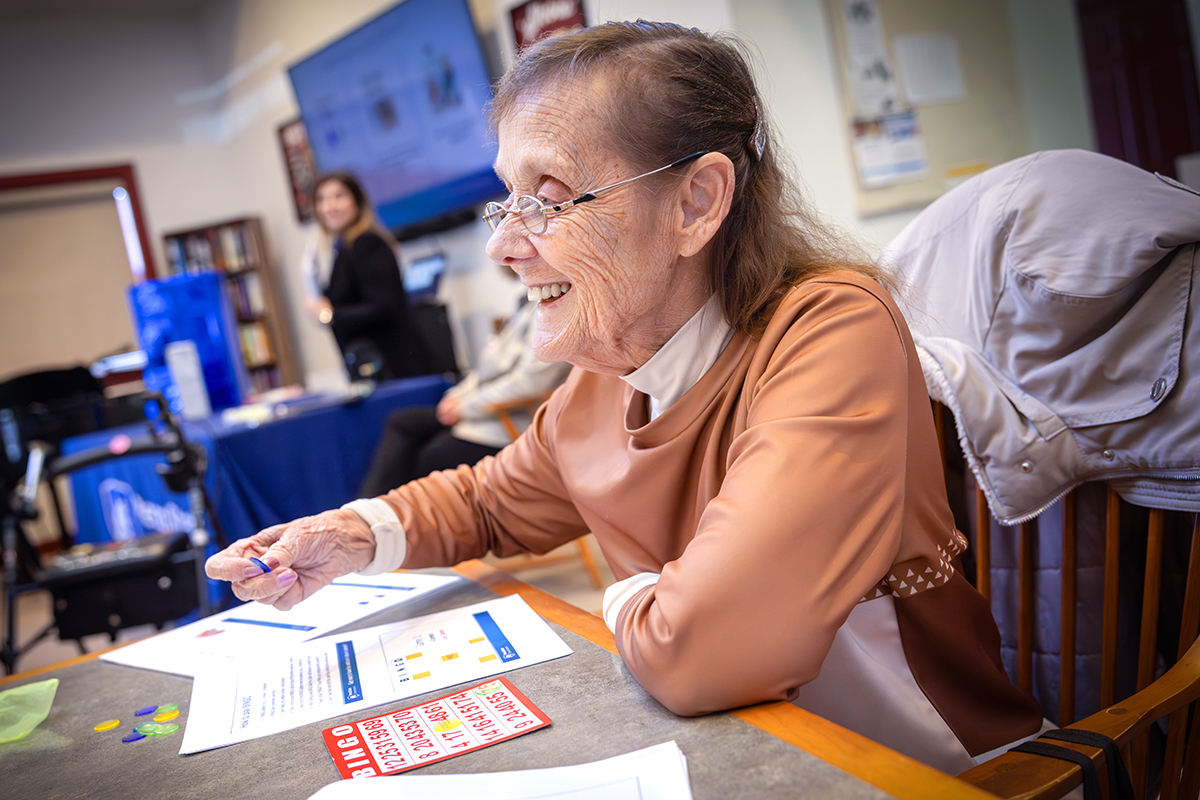
Dorothy Zeiber of Lebanon learns about the risk factors and symptoms of various types of cancer by playing the BINGO Against Cancer game.
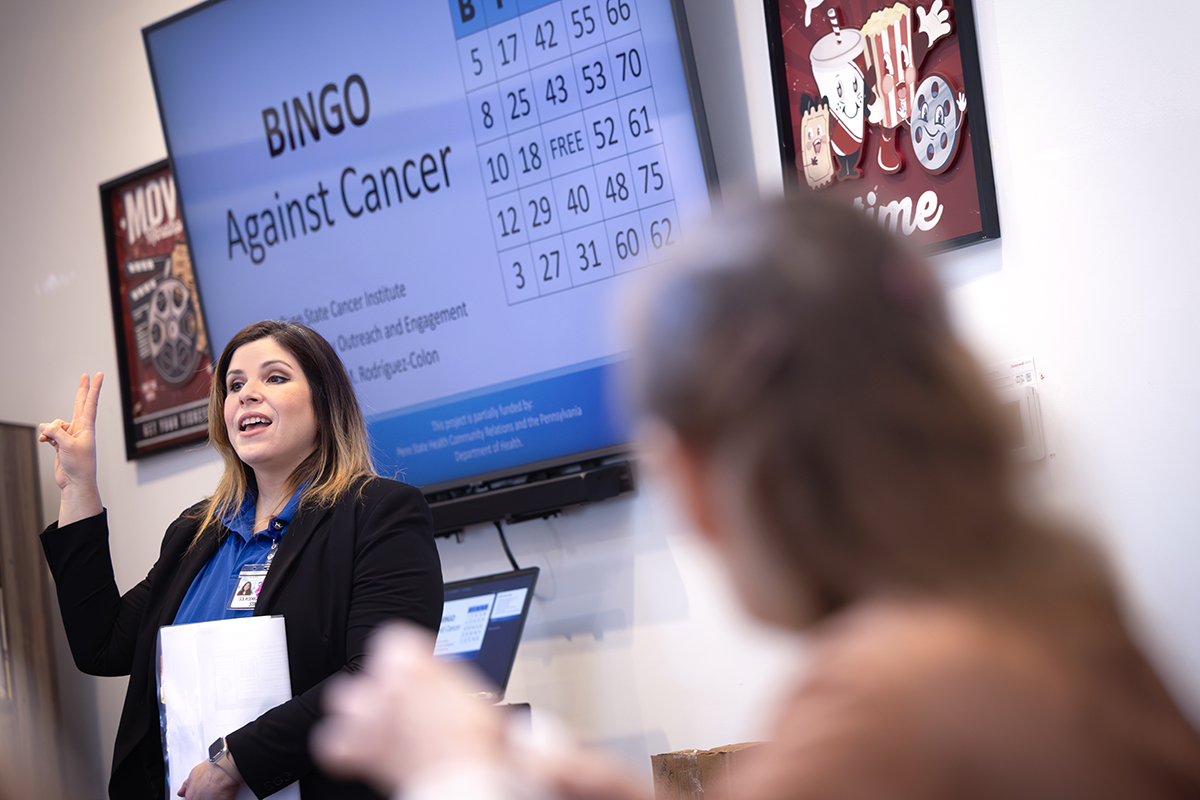
Learning about cancer can feel scary or overwhelming. The Cancer Institute’s community engagement team is changing that by sharing the facts in a relaxed, fun way: Bingo Against Cancer games.
In March, Dolan and community engagement manager Sol Rodríguez-Colón brought the program to Juniper Village, a senior living community in Lebanon. In a cozy meeting room, nearly a dozen residents marked their bingo squares while Rodríguez-Colón and Dolan described risk factors and symptoms of lung, breast, colorectal and HPV-related cancers.
“The whole idea is to get educated, and it’s never too late,” Rodríguez-Colón said. “Make sure you’re sharing this information with your family members, your friends, everybody.”
For Dorothy Zeiber, an 82-year-old retired nurse who has a history of colorectal cancer, the game was a good refresher.
“This was an easy way to learn new information,” she said.
She plans to share what she learned with her family and friends and keep urging them to practice healthy habits, like not smoking.
“What was most interesting is how cancer starts,” she said. “We’re all around so many of the things that can cause it.”
The Bingo Against Cancer program, funded in part by Penn State Health Community Relations, also offers free screening tests like a rapid fecal immunochemical test (FIT) kit for colorectal cancer and a radon kit. In addition, participants can learn about clinical trial opportunities at the Cancer Institute.
Community health, transformed
The community engagement teams at Penn State Cancer Institute, Penn State College of Medicine and Penn State Health aren’t just sharing knowledge – they’re also gathering feedback from participants to make their programs even better.
The success of the Bingo Against Cancer program has inspired research at the Cancer Institute, including a recently completed study exploring how these games can make clinical research more approachable for communities that are often left out and empower people to take a more active role in their health.
Penn State Cancer Institute receives support from the Pennsylvania Department of Health to deliver cancer education and screening to central Pennsylvanians.
If you're having trouble accessing this content, or would like it in another format, please email Penn State Health Marketing & Communications.