
The Medical Minute: New stroke guidance expands treatment window and saves lives

When Dr. Jeffrey Rajchel got up in the middle of the night to use the restroom in 2022, he never imagined he would have a stroke. At 72, he was in excellent physical shape – he didn’t smoke, maintained a healthy weight and was training to compete in a national-level seniors’ tennis tournament. But that night, he collapsed on the bathroom floor and couldn’t reach his phone to call his wife, a nurse.
By the time she found him in the morning, Rajchel had passed the then-standard 4.5-hour window for clot-busting medication. After being rushed to Penn State Health Milton S. Hershey Medical Center, he found the stroke had left him with a significant loss of movement and control on his dominant left side.
If you think you are experiencing a stroke, call 911.
He chose to get a vagus nerve stimulator implant, a device that sends mild electrical pulses to a nerve, strengthening the brain’s ability to rewire during rehabilitation. The nerve stimulator, paired with physical therapy, has helped him regain some hand function.
Looking back, Rajchel believes earlier treatment would have given him a better outcome.
“If I had been able to receive the [clot-busting] medication, I’d be living a very different life right now,” he says.
But starting in January 2026, patients who experience an acute ischemic stroke, as Rajchel did, now have a longer window of time to receive treatment for ischemic stroke, says Alicia Richardson, Penn State Health System stroke director. The 2026 Guideline for the Early Management of Patients with Acute Ischemic Stroke, published by the American Stroke Association, expands treatment options for a condition that affects more than 795,000 people in the U.S., according to the Centers for Disease Control and Prevention. Stroke remains the fourth-leading cause of death in this country.
May is National Stroke Awareness Month.
What is a Stroke?
An acute ischemic stroke happens when a blood clot blocks blood flow within the brain. Without oxygen, brain cells quickly begin to die.
A simple way to remember stroke symptoms is BEFAST:
B – Sudden loss of balance
E – Sudden eyesight changes
F – Facial drooping
A – Arm weakness
S – Speech difficulty, both understanding and speaking
T – Time to call 911
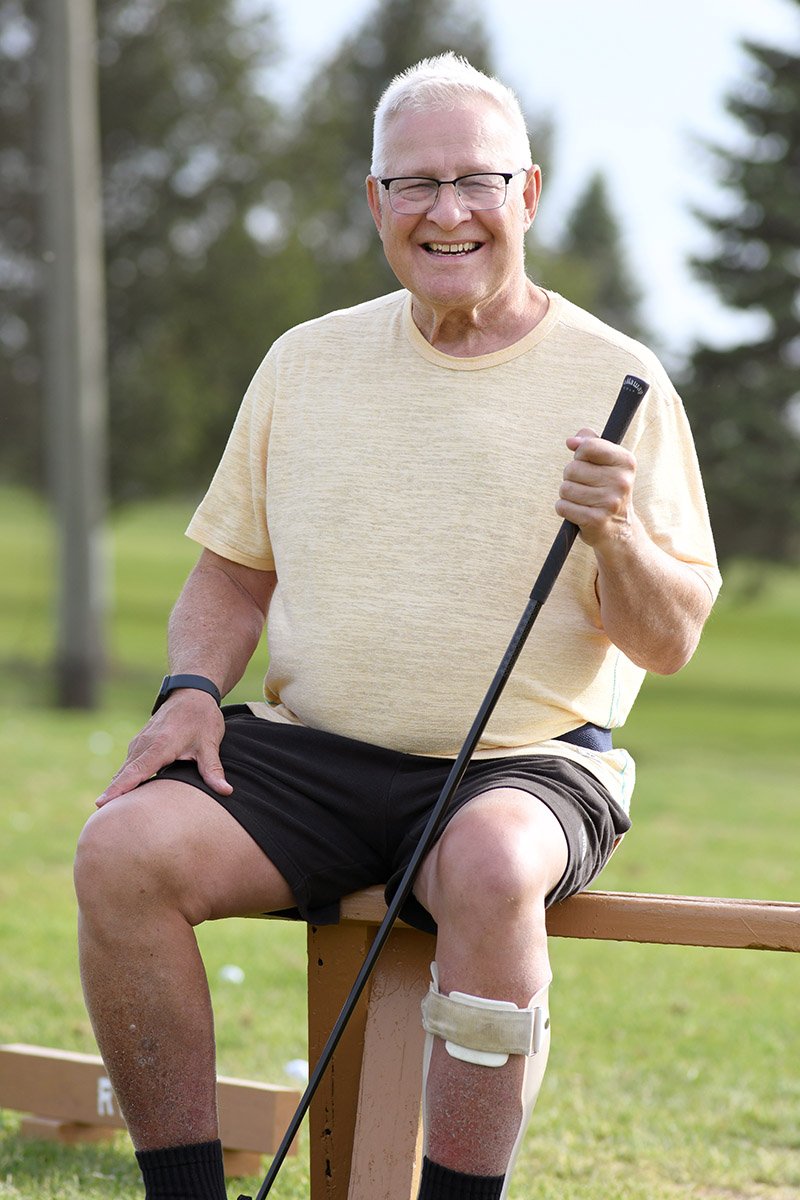
Dr. Jeffrey Rajchel takes a break after a day at the driving range. Physical therapy and a vagus nerve stimulator received at Penn State Health Milton S. Hershey Medical Center have helped him continue his active lifestyle.
Expanding Access to Proven Treatments
The update doesn’t introduce new treatments, but it expands access to existing ones based on advanced imaging, says Erin Cekovich, Penn State Health stroke program manager.
“We have treatments available that are very time sensitive, and the earlier you get treated, the better,” Cekovich says.
Under the updated guidance, stroke patients may now receive the clot-busting drug up to 24 hours after a stroke if imaging shows they have salvageable brain tissue. This especially benefits patients who have a stroke while asleep, like Rajchel. Previously, such cases were denied.
“An ischemic stroke is like a clogged pipe,” Cekovich says. “The goal of the medication is to unclog the pipe by dissolving the blockage.”
While clot-dissolving medications are very effective, their benefits diminish as time passes and risks increase. Even with the expanded time window, patients still need to arrive as soon as possible to determine if they are good candidates for the treatment.
Learn more about advanced stroke treatments at Penn State Health.
Time is Brain
Cekovich emphasizes that the larger treatment window doesn’t mean patients should wait to see a doctor. Anyone who suspects they’ve had a stroke should seek medical attention immediately.
For Rajchel, the new guidelines came too late for his own stroke – but he sees the potential impact for future patients, including shorter rehabilitation timelines. With the help of the vagus nerve stimulator and physical therapy, he has regained much of his left-sided motor function. Some of his favorite activities, like golf, require adjustments, such as using a gait belt. But with a friend’s support, he can still swing a club.
He continues working on his strength and dexterity.
“It’s a never-ending process. I keep doing physical therapy,” Rajchel says. “Obviously, I’m not able to return to work as a surgeon, but I have improved dramatically.”
Related content:
- Breakthrough stroke treatment at Penn State Health offers patients new hope
- The Medical Minute: Stroke: The women’s condition no one talks about
- Video: BE FAST – What is Stroke?
The Medical Minute is a weekly health news feature produced by Penn State Health. Articles feature the expertise of faculty, physicians and staff, and are designed to offer timely, relevant health information of interest to a broad audience.
If you're having trouble accessing this content, or would like it in another format, please email Penn State Health Marketing & Communications.