
The Medical Minute: Your teen’s first gynecological visit: A parent’s guide
Laura Laucks’ daughter was around 14 years old when her periods started disrupting her life.
Heavy bleeding, severe cramps and migraine headaches made her miss classes.
“She wasn’t comfortable sitting in school,” says Laucks, who lives in Lebanon. “She would have to go to the nurse a lot.”
At a primary care physician’s recommendation, Laucks brought her daughter to see
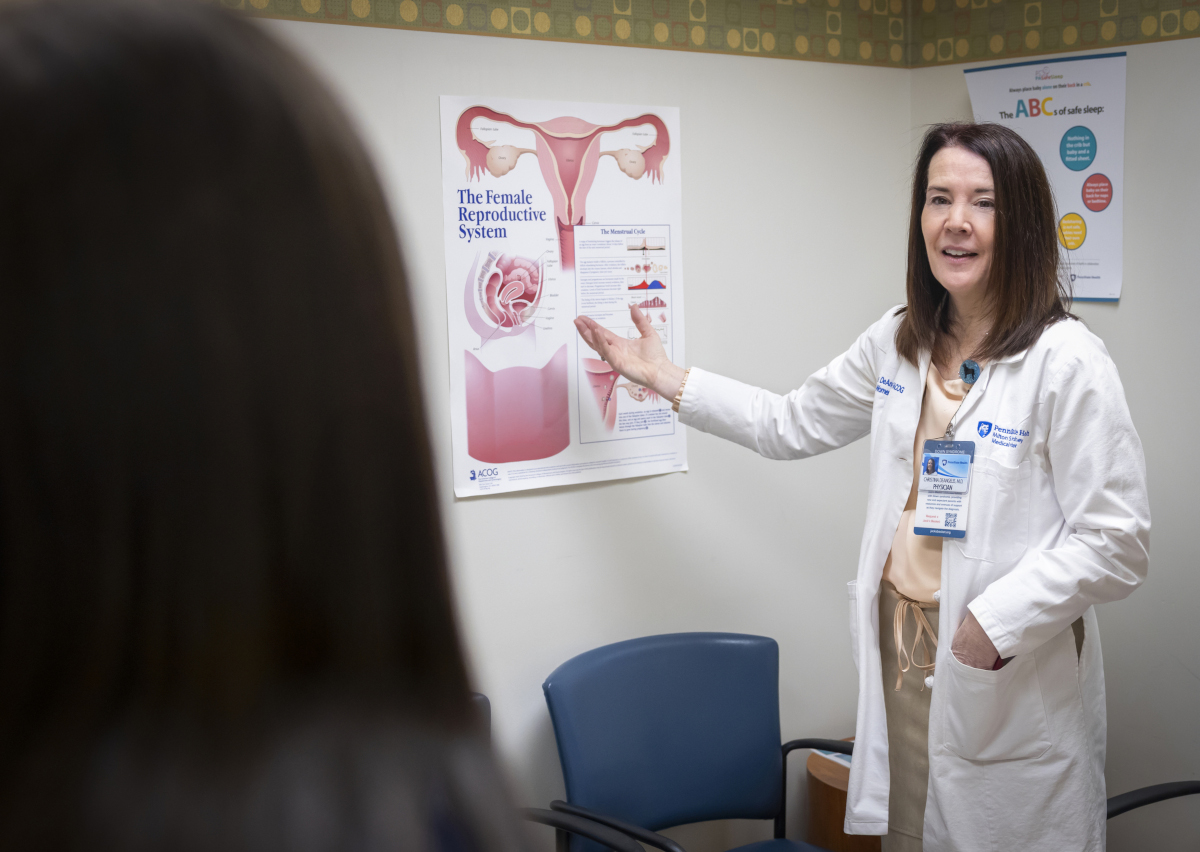
Dr. Christina DeAngelis, an obstetrician-gynecologist at Penn State Health Obstetrics and Gynecology.
“We often receive referrals for young women who have really heavy menstrual flow, painful periods or premenstrual syndrome (PMS) symptoms so severe that they affect their ability to enjoy time with their friends or function at school,” DeAngelis says.
Laucks wasn’t sure what to expect. She remembered her own first gynecologist visit, in her 20s. It felt abrupt and uncomfortable. Her daughter’s appointment was a different story.
“They went over things with her, asked her about herself and helped her feel comfortable,” Laucks says. “Their whole approach was so different from what I expected. It really put us both at ease.”
Here’s how to prepare for your teen’s first visit to the gynecologist.
When should my teen have their first gynecologist appointment?
It depends. Between ages 13 and 15, your child’s pediatrician or family medicine doctor should offer them a chance to talk one-on-one about puberty, menstruation and reproductive health. If that doesn’t happen or if you or your teen’s doctor identifies a concern, consider a visit to a gynecologist, DeAngelis says.
A gynecologist can treat:
- Heavy, absent, irregular or infrequent periods
- Painful periods
- PMS symptoms
- Breast abnormalities
- Ovarian cysts
- Pelvic pain
- Ovarian cysts
- Sexually transmitted infections (STIs)
- Yeast infections
- Bacterial vaginosis
- Endometriosis
How do I choose a gynecologist for my teen?
Ask your doctor for a referral. If you find a health care provider yourself, call the office and ask whether they see pediatric patients. Many treat adults only.
What happens at the first visit?
The first visit usually doesn’t require a pelvic exam. “The first thing I do when I walk in the room to see the patient is tell them that we’re just going to talk,” DeAngelis says.
Often, the focus is on preventive care and education. A gynecologist can teach your child the facts about puberty, menstruation, hygiene, sexual activity and contraception. They can also discuss cancer screening and prevention tools, such as the human papillomavirus (HPV) vaccine, which helps prevent cervical cancer.
If your daughter has symptoms such as abnormal bleeding, discharge or pain, a pelvic exam might be recommended. Sometimes a noninvasive abdominal ultrasound is used instead. It helps spot ovarian cysts or other causes of pelvic pain.
If your teen is sexually active, the doctor might share facts about birth control methods and recommend testing for sexually transmitted infections (STIs). A simple urine test can check for gonorrhea and chlamydia.
What questions can my teen ask a gynecologist?
Give your teen privacy to ask questions or share concerns without you in the room. “It’s important to have some one-on-one time because there are some things they just may not feel comfortable sharing otherwise,” DeAngelis says.
Many kids have questions about their bodies. They often wonder whether their anatomy is normal, DeAngelis says. They might feel embarrassed to bring up these subjects in front of their parents, but the doctor can share information that will help them stay healthy.
“Unintended pregnancies and STIs seem to be more common in situations where families aren’t receptive to discussing it or having the child be seen by a health care provider to discuss it,” she says.
Make sure these subjects are not taboo, she says. Let kids know they’re normal things to talk about.
“Most times when there are poor outcomes, it’s just because they got no support or didn’t have the right information,” DeAngelis says.
Minors can also consent to some medical tests and services, such as STI testing, under Pennsylvania law.
Laucks says she and her daughter both learned a lot from that first gynecology appointment. They talked about ways to manage periods. With treatment, her daughter now has lighter, more regular periods and misses fewer days of school.
They also learned other ways to support reproductive health, including healthy eating and regular physical activity.
“A lot of it I had never heard before,” Laucks says. “It was great that she was able to learn all of that at 14.”
Learn more about pediatric and adolescent gynecology services at Penn State Health.
Related content:
- The Medical Minute: Endometriosis – Beyond painful periods
- The Medical Minute: Finding the right OB-GYN
- The Medical Minute: Irregular periods, weight gain and facial hair? It could be PCOS
The Medical Minute is a weekly health news feature produced by Penn State Health. Articles feature the expertise of faculty, physicians and staff, and are designed to offer timely, relevant health information of interest to a broad audience.
If you're having trouble accessing this content, or would like it in another format, please email Penn State Health Marketing & Communications.