
Penn State Health Milton S. Hershey Medical Center adopts “Heart-in-a-Box” technology to expand reach of donor hearts
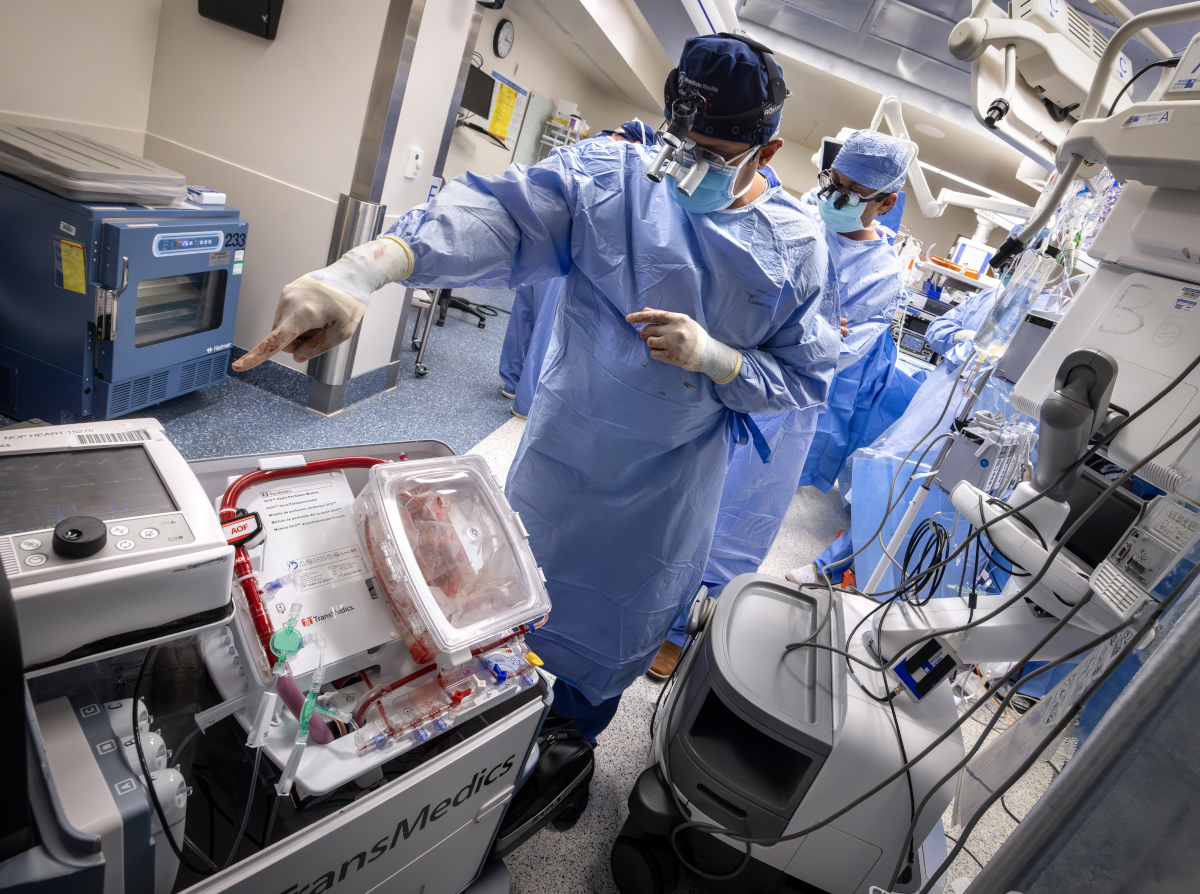
Penn State Health Milton S. Hershey Medical Center has performed its first heart transplant using a new cardiac preservation technology that keeps donor hearts pumping outside the body, marking a step forward in expanding donor availability and improving patient outcomes. The system, known as the TransMedics Organ Care System — or “Heart‑in‑a‑Box” — allows surgeons to maintain and assess the heart during transport, potentially increasing the number of viable transplants.
Unlike traditional cold storage, this technology allows donor hearts to be transported while beating and functioning outside the body. By maintaining the heart in a warm, oxygenated state, clinicians can better assess organ function and extend the time the heart is outside the body. With this device, Milton S. Hershey Medical Center can now evaluate and recover donor hearts from greater distances, increasing the number of organs available for patients waiting for a donor heart and reducing the likelihood that viable hearts are declined because of distance or time constraints.
Dr. Balakrishnan Mahesh, cardiac and transplant surgeon, performed the team’s first heart transplant using a donor heart procured with the Heart-in-a-Box on Marion Lehman, of Cogan Station, Pennsylvania, who is recovering well following the procedure. With this technology, the surgical team was able to extend the viable travel time for donor heart procurement to more than three hours.
The case also marked Milton S. Hershey Medical Center’s first donation after circulatory death (DCD), representing an important advancement in expanding the donor pool for patients with advanced heart failure. DCD heart donation involves recovering hearts after the heart stops and circulatory function has ceased. Advanced organ preservation technology, like Heart-in-a-Box, allows transplant teams to evaluate and preserve these donor hearts in new ways, creating additional opportunities for transplantation.

The heart transplant program at Milton S. Hershey Medical Center consistently ranks among the best in the country for observed and expected pre-transplant mortality and long-term survival outcomes. As the region’s only heart transplant center, adoption of this technology further reinforces the program’s commitment to bring innovative therapies to patients with advanced heart failure.
If you're having trouble accessing this content, or would like it in another format, please email Penn State Health Marketing & Communications.