
Global Health Exchange Program celebrates 10 years of cross-cultural learning
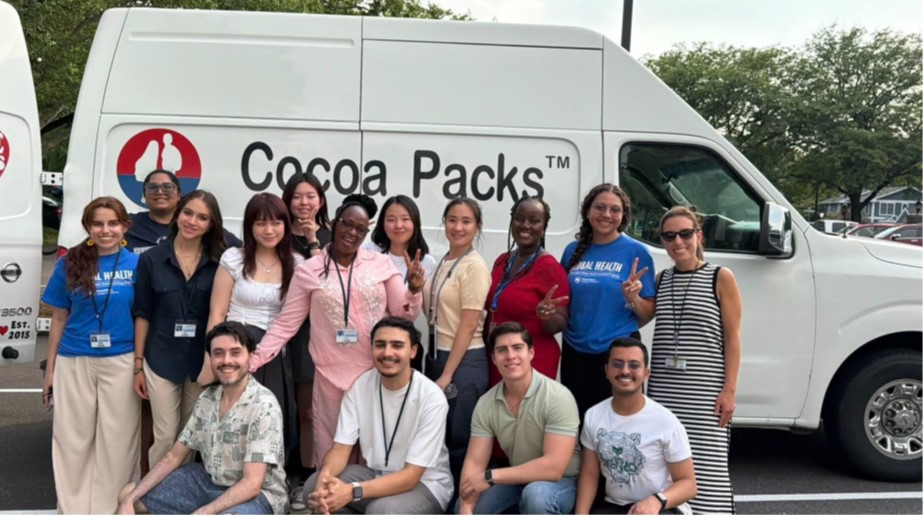
Penn State College of Medicine welcomed a diverse cohort of international learners to Hershey this July for the Global Health Exchange Program (GHEP), a two-week immersive academic and cultural experience designed to spark cross-continental dialogue, deepen understanding of public health systems and build lasting professional partnerships.
As GHEP celebrated the 10-year anniversary of its launch, program faculty reflected on a decade of fostering global connections and preparing future health leaders, even with a three-year pause during the COVID-19 pandemic.
“When we launched GHEP 10 years ago, we hoped to bring students from around the world together at Penn State to learn from one another. What we’ve built goes far beyond that,” said Kristin Sznajder, PhD, MPH, associate director of global health initiatives and assistant professor of public health sciences. “The program has created lasting relationships, provided hands-on global health learning opportunities and helped strengthen Penn State’s role in preparing the next generation of public health leaders worldwide.”
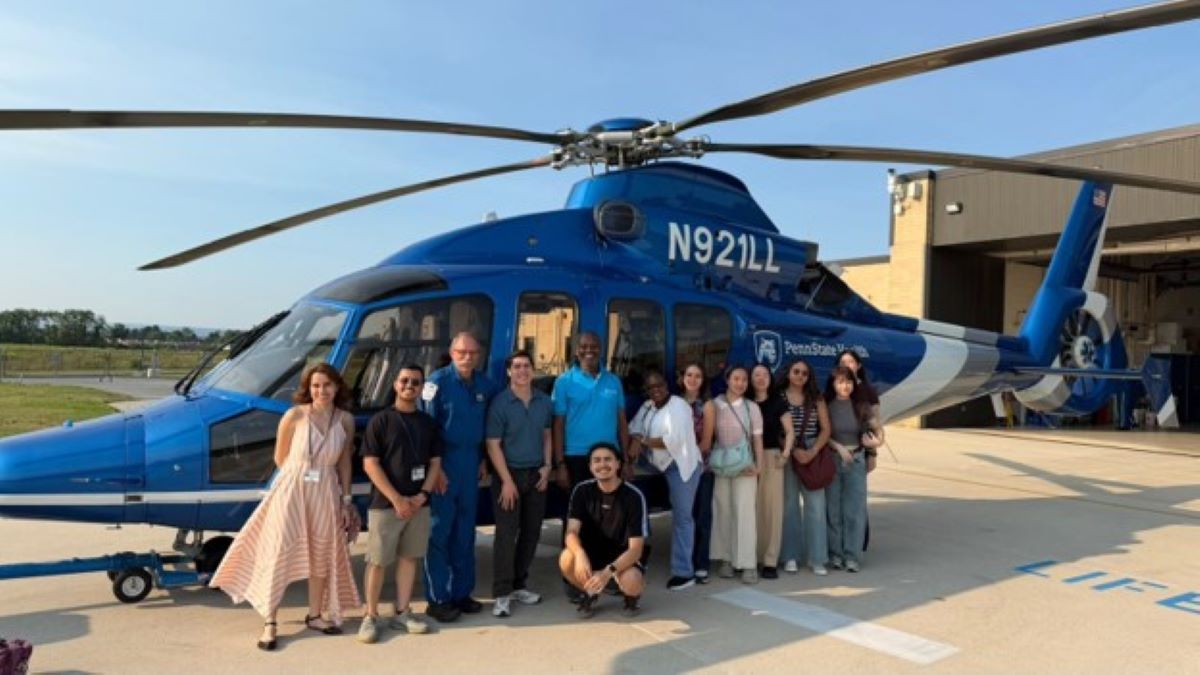
Students in the GHEP cohort also visited the Life Lion Hanger this summer.
Rooted in the program’s 2026 theme, “Health in Context: A Systems Perspective,” GHEP brought together students from Bahrain, Brazil, Ireland, Kenya, Mexico and Taiwan for an intensive exploration of how culture, policy and community shape health outcomes around the world. Over the course of the program, students engaged with Penn State faculty experts, state health leaders, community organizations and one another to examine public health challenges through a shared global lens.
The students embarked on a schedule that blended academic rigor with hands-on learning. Faculty-led sessions covered topics ranging from health policy and epidemiology to maternal and child health, biostatistics, health economics, qualitative methods and health systems science.
“Beyond the academic experience, I made friends from all over the world, immersed myself in American culture and healthcare, and gained a much deeper understanding of respect, cultural exchange and what it truly means to be part of an increasingly interconnected world.”
—Participating medical student from Brazil
To see how public health services are funded, organized and delivered, the GHEP cohort visited organizations such as Cocoa Packs, the Pennsylvania General Assembly, the College of Medicine’s Clinical Simulation Center and the Life Lion Hanger. The program also featured a full-day visit to the University Park campus, hosted by the Penn State Global Health Minor and Penn State Global, which included faculty panels, laboratory tours and a stop at the iconic Berkey Creamery.
“Global health is about more than understanding different diseases or healthcare systems – it requires understanding the people, cultures, policies and communities that shape health,” said Julie Lentes, director of the program and assistant professor of public health sciences. “GHEP was created to give students the opportunity to learn with and from one another, because the most meaningful solutions to global health challenges emerge when diverse perspectives come together.”
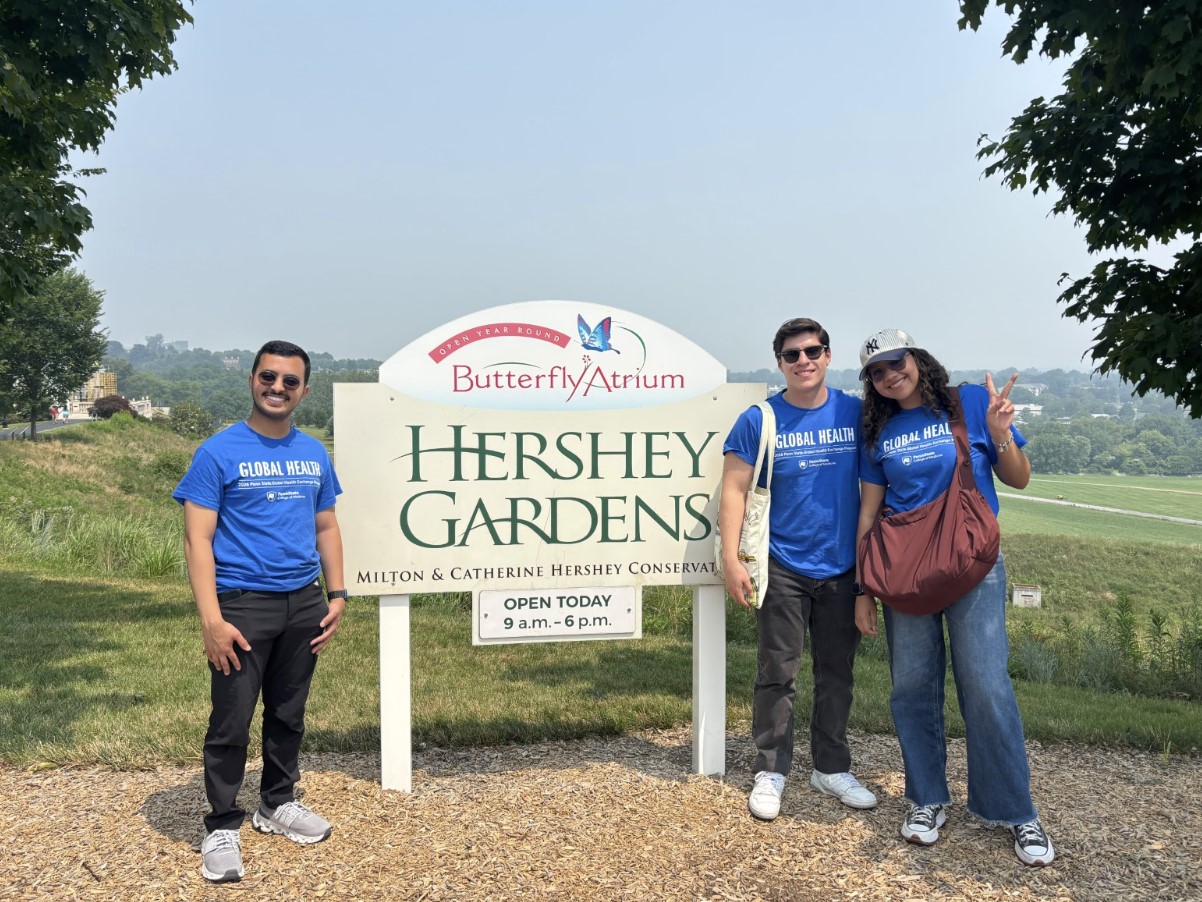
GHEP students were able to see other Hershey attractions as well, including the Hershey Gardens.
GHEP is intentionally designed as a bidirectional exchange. Students learn from Penn State faculty and Pennsylvania health leaders, but also from one another. This diversity creates a rich environment for exploring how cultural values, social norms and national policies influence health-seeking behaviors and trust in medical systems.
“The students displayed great zeal and were confident and engaging,” said Sylvester Osagie, associate director for Africa Partnerships and University Faculty Fulbright adviser. “In addition to their immersive experience during the program, they had the opportunity to compare the medical systems of their respective home countries and, through the process, learned that medical approaches do not conform to a single universal paradigm.”
Throughout the program, students completed structural reflection logs comparing their observations in the United States with health systems and cultural norms in their home countries. The reflections culminated in a final group presentation delivering a comparative public health assessment.
Participants consistently described the program as transformative.
“GHEP reaffirmed my commitment to thinking beyond the walls of the hospital – to view health through a global, interdisciplinary lens – and strengthened my aspiration to become not only a skilled physician, but also a thoughtful leader and advocate for health equity,” said a participating medical student from Bahrain.
Another medical student from Ireland agreed.
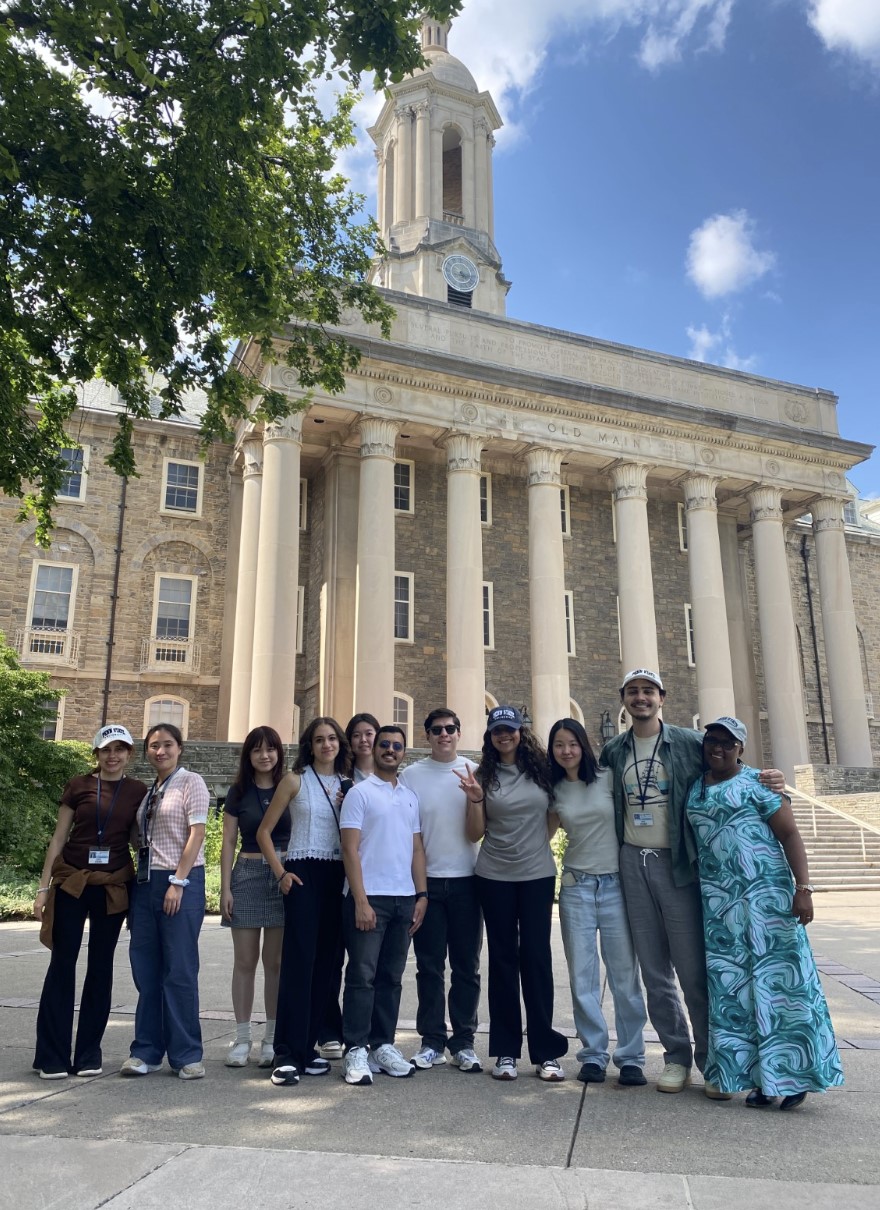
A highlight of this summer’s GHEP was a full-day visit to Penn State’s University Park campus, featuring faculty panels, laboratory tours and a visit to the Berkey Creamery.
“The greatest lesson from this program wasn’t just learning about different healthcare systems – it was realizing that despite coming from different countries and cultures, we have far more in common than we think,” the student said. “Those connections reminded me that global health is ultimately about people.”
The program’s collaborative nature extends to its partnerships within Penn State. Dana Naughton, director of the Penn State Global Health Minor, noted that working with GHEP has been a highlight of her time at the University.
“Its vision, goals leadership and reverberations for equity in global health education are unsurpassed,” Naughton said. “Getting to know and interact with young professionals and graduate students from around the world who are committed to addressing issues in global health is inspiring and very uplifting.”
As the program concluded on July 24 with student presentations and a farewell celebration, participants left with new analytical tools, cultural insights and global colleagues, ready to apply what they learned to strengthen health systems in their home countries.
“Each year, one of the most rewarding aspects of GHEP is watching students arrive as strangers and leave as colleagues and friends,” says Lentes. “They discover that while health systems may differ across countries, the commitment to improving health and serving communities is universal. Those relationships – and the perspectives they gain from one another – are the true legacy of this program.”
If you're having trouble accessing this content, or would like it in another format, please email Penn State Health Marketing & Communications.