
College of Medicine, Penn State students earn national recognition for global health solution
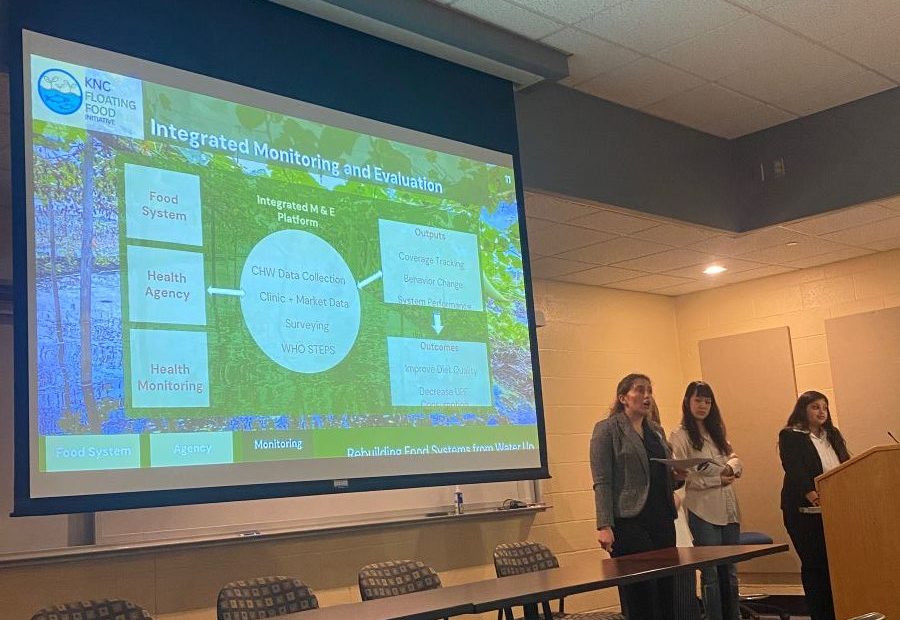
What began as a student challenge at one of the world’s premier global health case competitions will soon be presented on one of public health’s largest professional stages.
A multidisciplinary team of Penn State and Penn State College of Medicine students will present their innovative approach to climate-resilient food systems at the 2026 American Public Health Association (APHA) Annual Meeting in San Antonio, Texas, this November.
Their abstract, “A One Health Approach to Climate-Resilient Food Systems in Coastal and Lowland Regions,” was selected for a lightning session in the “Wild Side of One Health: Wildlife & Ecological Systems” category.
The presentation grew out of the team’s participation in the 2026 Emory Morningside Global Health Case Competition, marking the College of Medicine’s ninth consecutive year participating in the internationally recognized event. Hosted annually by Emory University, the competition brings together interdisciplinary student teams from universities around the world to develop innovative, evidence-based solutions to pressing global health challenges.
This year’s virtual competition featured the case “Beyond Calories: Rethinking Food Aid in Crisis,” challenging students to redesign food assistance for the fictional island nation of Kifaru, inspired by the unique climate vulnerabilities facing Pacific Island nations.
“Witnessing these students translate a complex case competition challenge into an actionable, real-world framework for climate-resilient food systems has been truly inspiring. Their selection for the APHA Annual Meeting demonstrates the impact of combining interdisciplinary perspectives with rigorous public health pedagogy,” said Julie Lentes, faculty advisor to the team and assistant professor of public health sciences.
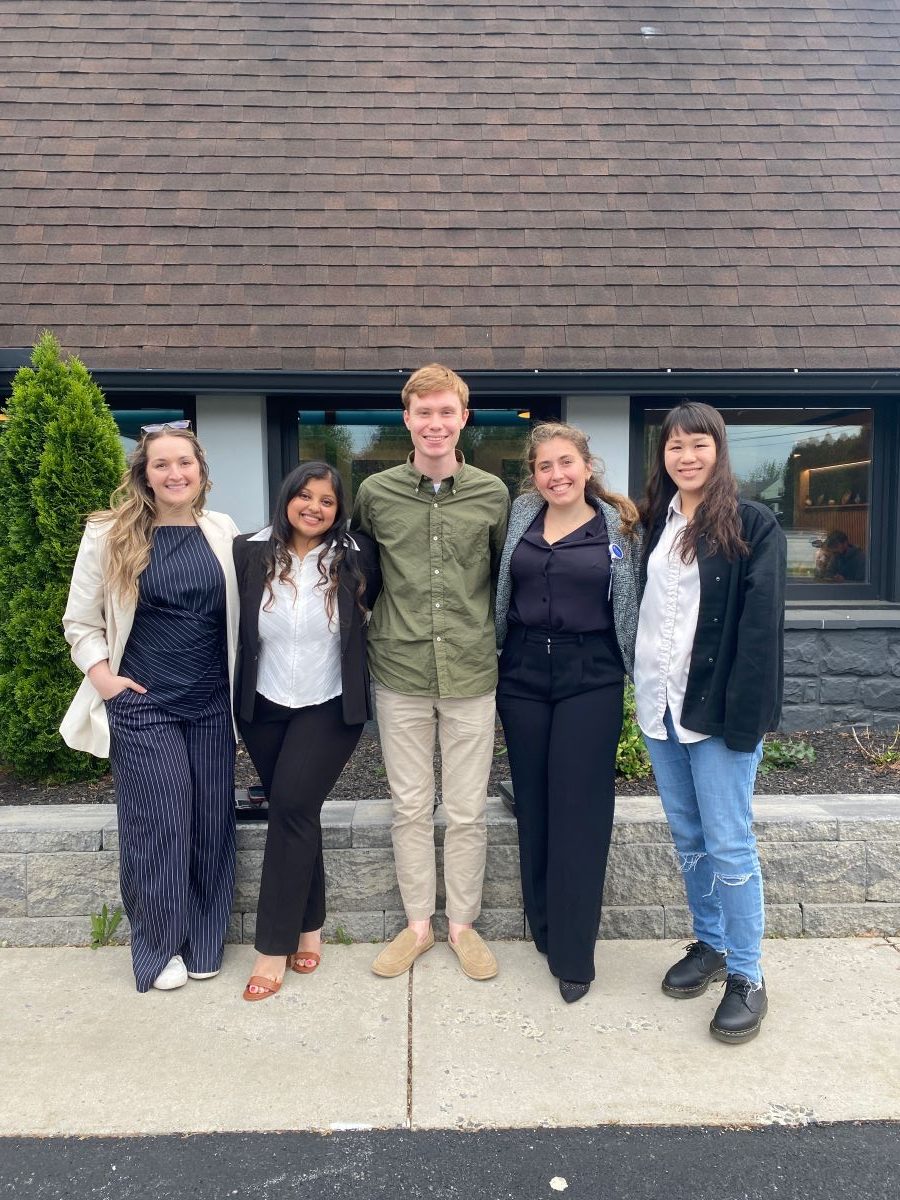
Sonya Fry, left, Navya Murugesan, Brady Dolan, Eva Eleftheriadis and Angel Chou.
Representing the College of Medicine and Penn State was a diverse team of learners whose varied backgrounds reflected the collaborative spirit of global health:
- Navya Murugesan, first-year medical student
- Sonya Fry, third-year medical student
- Eva Eleftheriadis, second-year medical student
- Brady Dolan, first-year medical student
- Angel Chou, PharmD/MPH student from Taipei Medical University completing her master of public health degree at Penn State
- Devika Bhavsar, psychology and pre-med undergraduate student
Rather than focusing solely on emergency food delivery, the team reimagined food aid through a One Health framework, which recognizes the interconnectedness of human health, environmental sustainability and agricultural systems.
Their proposal combined climate-adaptive farming strategies, including floating agriculture and integrated rice-aquaculture systems, with women-led agricultural cooperatives and community markets that serve as neighborhood wellness hubs. These hubs would not only distribute locally grown foods, but also provide nutrition education and preventive health screenings, strengthening both food security and community resilience in regions increasingly affected by climate change, flooding and salinization.
Rather than ending with the competition, the team continued to refine their proposal throughout the spring and summer. They were invited to present their work as featured speakers at the second annual Penn State College of Medicine Global Health Research Conference, where they shared their innovative One Health framework with faculty, students and global health researchers from across the Penn State.
Building on the feedback and momentum from that presentation, the students developed their work into the scholarly abstract that Fry will present at the APHA Annual Meeting this fall.
For the students, the experience extended well beyond developing a competitive proposal.
“The Global Health Case Competition was an engaging and fun way for me to get more involved in the field of global health, helping me learn more about other healthcare systems and better analyze our own system,” said Eleftheriadis. “Most importantly, I enjoyed working with like-minded individuals who are equally passionate about global health and learning from each other’s unique strengths and perspectives.”
Murugesan noted that the experience demonstrated how some of the most meaningful lessons in medicine happen outside the classroom.
“It was one of the most meaningful experiences of my first year of medical school because it challenged me to think about healthcare far beyond the walls of the hospital,” she said.
“Somewhere between the brainstorming sessions, late-night edits, shared excitement over breakthroughs and moments of uncertainty, we built far more than a presentation: We built trust, friendship and a deeper understanding of what collaboration in medicine can look like.”
The team’s journey demonstrates how experiential learning can evolve into meaningful scholarship with real-world impact, reflecting the College of Medicine and Penn State’s shared commitment to interdisciplinary education, collaborative problem-solving and preparing future leaders to address the complex global health challenges of tomorrow.
“Working alongside a diverse group of peers allowed me to integrate different perspectives, challenge assumptions and refine ideas into a cohesive, impactful solution,” Dolan said. “This experience strengthened my communication and teamwork skills while reinforcing my commitment to interdisciplinary collaboration to address complex challenges in healthcare and global health.”
If you're having trouble accessing this content, or would like it in another format, please email Penn State Health Marketing & Communications.