
The Medical Minute: Why are GI cancers rising in young adults?
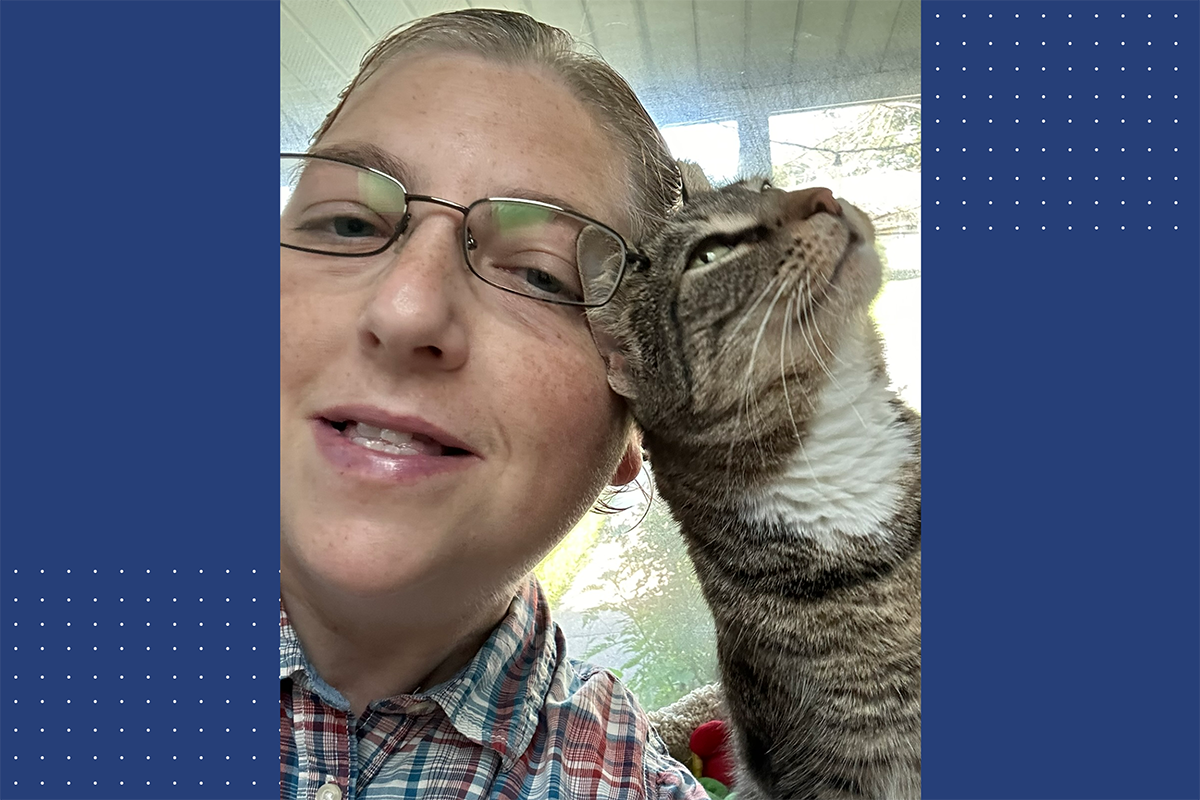
Forty-five is the new 60 – at least when it comes to colonoscopies. That may not be the party you look forward to, but it could save your life. According to the Cancer Research Institute, 1 in 5 colorectal cancers are diagnosed in patients under age 55, making what was once thought of as an older person’s disease one of the fastest-growing cancers in young people.
With gastrointestinal (GI) cancers, including colorectal cancer, on the rise in people under the age of 50, doctors and the U.S. Preventive Services Task Force now recommend that adults at average risk should begin colorectal cancer screening starting at age 45. This allows providers to detect and treat GI cancers early.
Test options include stool-based tests that check for hidden blood or abnormal DNA in the stool, or a colonoscopy, in which a doctor examines the colon and rectum for polyps and cancer.
Learn more about comprehensive cancer care at Penn State Cancer Institute.
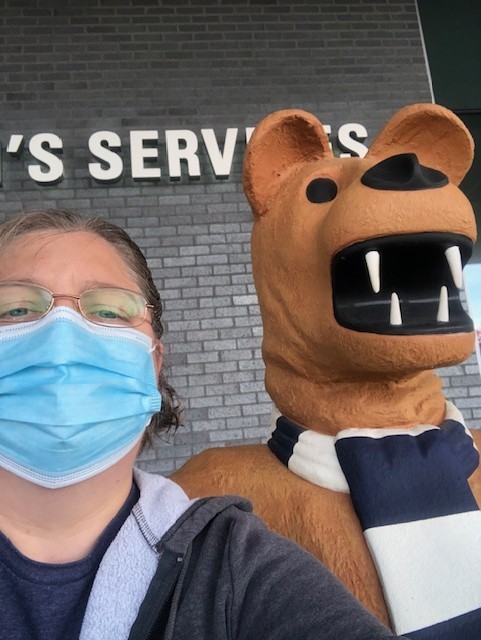
Since childhood, Chrystal D. has been treated for three different types of cancer at Penn State Health. Photo provided with permission.
Hard-to-Spot Symptoms
Dr. Yixing Jiang, an oncologist and co-director of GI medical oncology at Penn State Cancer Institute, says colorectal cancers can be hard to spot without a colonoscopy, but there are some warning signs.
“Colorectal cancer symptoms can be subtle, but one of the most obvious signs is blood in the stool,” says Jiang. “Many patients have such a small amount of bleeding that they may not notice it.”
If you don’t notice blood, Jiang says changes in bowel behaviors can be another tip-off. Constipation and diarrhea can be warning signs, especially if your bowel movements were regular in the past. Since many people don’t pay attention to their bowel regularity, these changes can be hard to recognize, even if they have symptoms.
“These symptoms are often ignored because everyone lives a busy life,” Jiang says. “Sometimes, they will notice it but not at the time. They will say, ‘Thinking back, I probably started having bowel issues a year ago.’ Many people want to deny these symptoms and attribute them to daily stress.”
The subtlety of the symptoms makes routine screening tests like colonoscopies even more important, says Jiang.
“Largely, colorectal cancers are found during a routine colonoscopy,” she says. “Many patients have no symptoms whatsoever.”
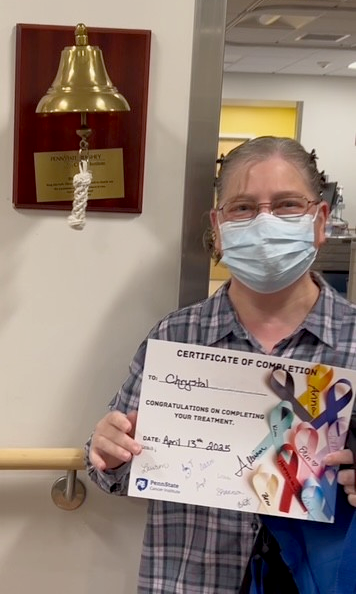
After six months and 12 chemotherapy sessions, Chrystal D. rang the bell to celebrate the completion of her colon cancer treatment. Photo provided with permission.
A Lifesaving Colonoscopy
Chrystal D., 46, is a perfect example. After surviving pediatric cancer, the Camp Hill resident was diagnosed with two breast cancers and kidney cancer in her early 40s. After treatment for those cancers, her providers at Penn State Health advised her to get a colonoscopy in 2024, even though she was still younger than the recommended screening age.
“They found several polyps and removed them, but they also found cancer,” Chrystal says. “They were concerned that there might be more cancer than what they could see on the scan, so they decided to remove part of my colon.”
Within a month of the scan, Chrystal was in the operating room to have a long section of her colon removed. She also received a port to administer a mix of in-hospital and at-home chemotherapy over the course of six months. As a cancer survivor, she says the chemotherapy for GI cancer was more difficult than the radiation she received for her breast and kidney cancers, but it was effective. She now goes in for routine scans and is due for another colonoscopy soon.
Chrystal’s case highlights the benefits of early detection and swift interventions. Jiang says treatment options have grown significantly in the past few years.
“Even stage 4 cancers have options, with better surgical techniques, more aggressive surgeries and chemotherapy. We’re able to cure about 30% of stage four cases,” Jiang says. “Some patients, especially stage four patients, including those with unique genetic backgrounds like microsatellite instability, are also very responsive to immunotherapy and can be potentially cured. That’s a huge step forward.”
Microsatellite instability (MSI), also known as mismatch repair deficiency, occurs when DNA bases don’t line up in the correct pairings, and the cell can’t correct the error on its own. MSI is common in GI cancers, and because these errors are easy to spot, immunotherapy is particularly effective.
Find a Penn State Health cancer expert near you.
Healthy Habits Lower Risk
Since GI cancers can easily grow undetected, Jiang says the best thing people can do to lower their risk is cultivate a healthy lifestyle, including eating a diet low in ultra-processed foods, exercising regularly and quitting smoking.
Scheduling a colonoscopy when you are eligible is another important step. Although preparing for a colonoscopy can be uncomfortable, Jiang says the procedure itself is painless and quick.
“Unfortunately, there’s no blood test that will reveal these cancers. You have to continue doing regular physical examinations, blood testing and cancer screening,” she says. “If you’re anemic or your bowel movements change, it’s worth talking to your doctor.”
Explore cancer clinical trials at Penn State College of Medicine.
Related content:
- The Medical Minute: It’s a bird…it’s a plane…it’s a colonoscopy
- The Medical Minute: The thyroid cancer symptoms you shouldn’t ignore
- Through their own lens: Childhood cancer survivors find healing with Photo Voice
The Medical Minute is a weekly health news feature produced by Penn State Health. Articles feature the expertise of faculty, physicians and staff, and are designed to offer timely, relevant health information of interest to a broad audience.
If you're having trouble accessing this content, or would like it in another format, please email Penn State Health Marketing & Communications.