
Layla’s Story: Surgery for rare vascular ring condition provides long-awaited relief
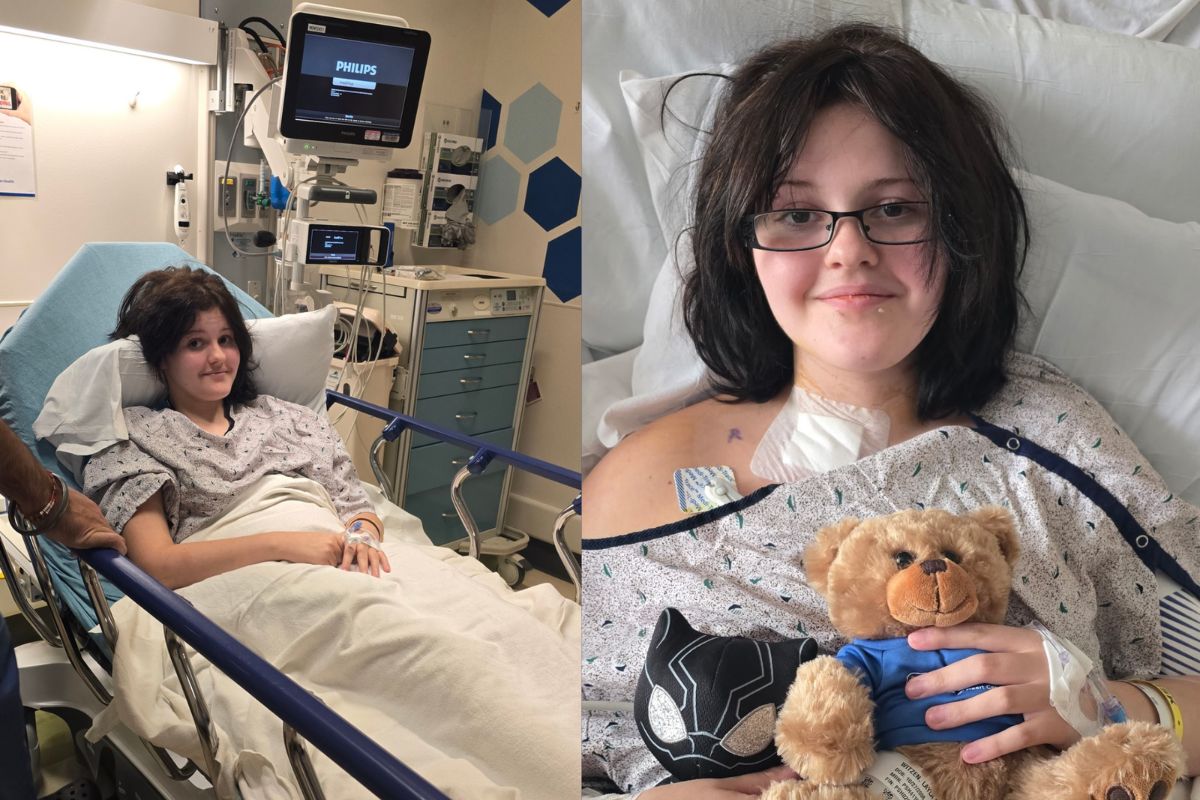
For nearly a decade, Layla Witzen lived with symptoms that made it hard to eat, breathe and enjoy everyday life. After finally receiving a diagnosis of a rare congenital condition called a vascular ring, she turned to Penn State Health, where a specialized surgery provided long-awaited relief.
A series of unexplained symptoms
A vascular ring is a rare congenital condition that develops before birth. It occurs when the aorta, the body’s main artery, or one of its branches forms differently than usual, creating a ring around the trachea, esophagus or both. While some people with the condition never experience symptoms, others develop problems during infancy, childhood or adulthood caused by the pressure the ring places on the trachea or esophagus.
At just 9 years old, Layla began complaining that swallowing felt painful.
“She would always say, ‘It feels like there is this hot rock when I swallow, a very jagged, hard hot rock,’” recalled her mother, Kristen Thomas.
Over time, the symptoms multiplied. Layla struggled to breathe and sleep, battled acid reflux and experienced frequent bouts of hiccups.
Growing physical and mental toll
Despite multiple visits to her pediatrician, no one could identify the cause. Thomas took her daughter from one specialist to another, hoping someone could explain what Layla was experiencing. Meanwhile, the physical and emotional toll continued to grow.
“She’s been in therapy for years and was on multiple medications,” Thomas said. “We were trying everything and getting multiple opinions, but her symptoms just kept getting worse.”
By the time Layla turned 18, anxiety began to shape her daily life. She avoided social events if food was involved, and a persistent pain in her back led her mother to wonder whether it could somehow be connected.
“I asked her pediatrician, ‘If you’re doing an MRI of her lower back, can you please have her upper back looked at, too?’” Thomas said. “That’s when they found the vascular ring.”
A long-awaited diagnosis
The finding provided an explanation after years of symptoms, but Thomas struggled to believe they had an answer.
“When we got the diagnosis, I asked, ‘Are you absolutely sure that’s what the imaging shows, because I don’t want to put Layla through anything more,” she said.
Once the diagnosis was confirmed, the family scheduled surgery at a hospital near their home in Cressona. But after setting a surgery date, they faced another setback when the surgeon left the health system and the procedure was canceled.
Rather than giving up, Thomas doubled down on her promise to her daughter.
“I told Layla, ‘We will get this done. I won’t stop,’” she said. “I will take you out of the state. Whatever it takes.”
Breathing easier at last
That determination eventually led the family to Dr. Brittany Potz, a Penn State Health pediatric cardiothoracic surgeon. Cases like Layla’s are one reason Potz is working to increase awareness of the vascular ring condition and help physicians recognize it sooner.
“Unfortunately, it’s pretty common for vascular rings to go undiagnosed,” said Potz. “For this specific anatomy, patients often live with symptoms into adulthood because people just aren’t picking up on it.”
After reviewing Layla’s records, Potz determined she could use a less invasive surgical approach than the one previously planned, reducing Layla’s expected hospital stay from more than three nights to just one.
“We felt Dr. Potz knew exactly how to do this,” Thomas said. “We were confident she was the right person to do it.”
In September, Layla had the surgery, and the results were almost immediate.
“She was able to breathe and eat more easily,” Potz said. “While the mental and physical toll will take time to recover, she is done with treatment.”
Now cleared to enjoy her senior year of high school, Layla is focused on experiences she once worried she might miss, including school dances, football games and planning for the future.
“I want to start in phlebotomy and then study to be a radiology technologist,” she said. “I feel like I can actually do it now instead of just hoping I can.”
If you're having trouble accessing this content, or would like it in another format, please email Penn State Health Marketing & Communications.