
From bedside to byline: College of Medicine student published in New England Journal of Medicine
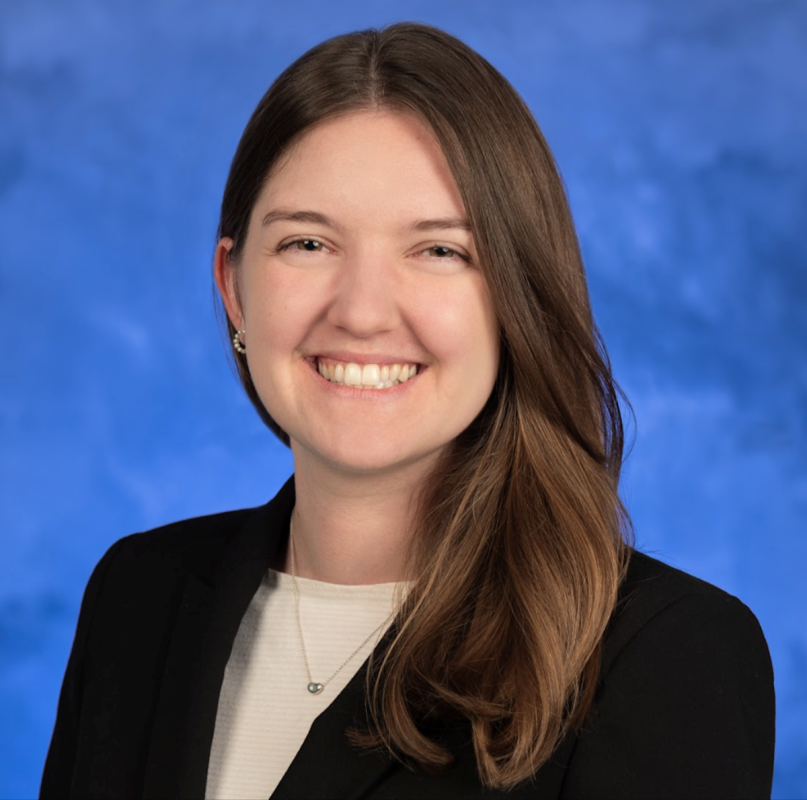
Lena Becker, a fourth-year medical student at Penn State College of Medicine, is gaining national recognition for a deeply personal reflection on patient care, loss and what it means to be a physician.
Becker’s essay, “Good Compressions,” was recently published in The New England Journal of Medicine, one of the most prestigious medical journals in the world.
The piece captures a pivotal moment in Becker’s training, as she reflects on performing chest compressions during a patient’s final moments and the emotional aftermath that followed.
“Though I had witnessed death before, each time I was previously witness to someone’s last hours, the story seemed a natural conclusion to a life fully lived,” Becker said. “In this scenario, not only was it the first resuscitation I was a part of, but the patient was also nearly my age. I couldn’t help but think, ‘In another world, this could have been my close friend or even me.’”
In the moment, Becker said she focused on the task at hand – but later, the emotional weight of the experience began to surface.
“I recall telling myself that I had practiced CPR for years, so that I was capable now that this patient needed me,” she said. “It wasn’t until I got home that I mourned for the patient … Writing this story helped me process emotions that were still there the whole time, just lying under the surface.”
Becker developed her writing through mentorship with Kimberly Myers, PhD, professor of humanities, medicine and ophthalmology and founder of the Penn State Health Physician Writers Group (PWG), as well as the Student Writers Group (SWG), which is modeled after it.
Founded to support physician well-being through reflection and storytelling, the writers groups provide a structured, confidential space for students, trainees and clinicians to explore their experiences through writing. Participants study a range of genres and workshop their pieces with peers, often going on to publish in leading medical journals.
For Dr. Myers, Becker’s essay stands out not only for its subject matter, but for how it draws readers into the experience itself.
“It’s not just what she tells, but how she tells it,” Dr. Myers said. “For me, what’s most striking is how Lena brings the reader into the room so that we experience the events and emotions as if we’re right there with her.”
Dr. Myers noted that the story reflects a universal challenge in medicine: the need to continue caring for patients while processing emotionally complex experiences.
“Trainees and clinicians have to compartmentalize in order to keep going,” she said. “Because of the sheer number of critical problems doctors must live with each day, it’s inevitable that some of the residue of those encounters gets buried … Writing provides a time for reflection.”
Becker’s work reflects a broader emphasis on humanities within the College of Medicine curriculum, a distinguishing feature that prepares students to be not only skilled clinicians, but also thoughtful, compassionate and self-aware physicians.
“Medical humanities education was integral to shaping my professional identity as a future physician,” Becker said. “At Penn State, I deeply enjoyed my time in a humanities class learning to observe before judge, communicate effectively and understand ethical dilemmas physicians face.”
Through programs like the PWG and SWG, students are given both the space and the tools to process experiences that extend far beyond clinical knowledge alone.
Dr. Myers emphasized that this work is not separate from the rigor of medical training, but rather an essential complement to it.
“Humanities is anything but ‘touchy feely,’” she said. “In fact, Humanities is rigorous, both psychologically and intellectually … Creative medical writing is a science unto itself – just as rigorous, in its disciplinary requirements, as biochemistry is in medicine.”
For Becker, “Good Compressions” is both a personal reflection and a lasting part of how she will carry forward her experiences in medicine.
“The SWG provided time, space and skills that helped me to understand this patient’s story, and my involvement in it,” she said. “I know this will strengthen my future patient care and advocacy.”
If you're having trouble accessing this content, or would like it in another format, please email Penn State Health Marketing & Communications.