
Penn State College of Medicine hosts national gathering of medicinal plant researchers
Experts from across the country convened in Hershey to explore the science of plants as medicine
What can a plant teach us about treating human diseases?
That question brought researchers, clinicians, students and industry professionals from across the country and around the world to Hershey this summer for the 14th annual conference of the American Council for Medicinally Active Plants (ACMAP), hosted by Penn State College of Medicine.

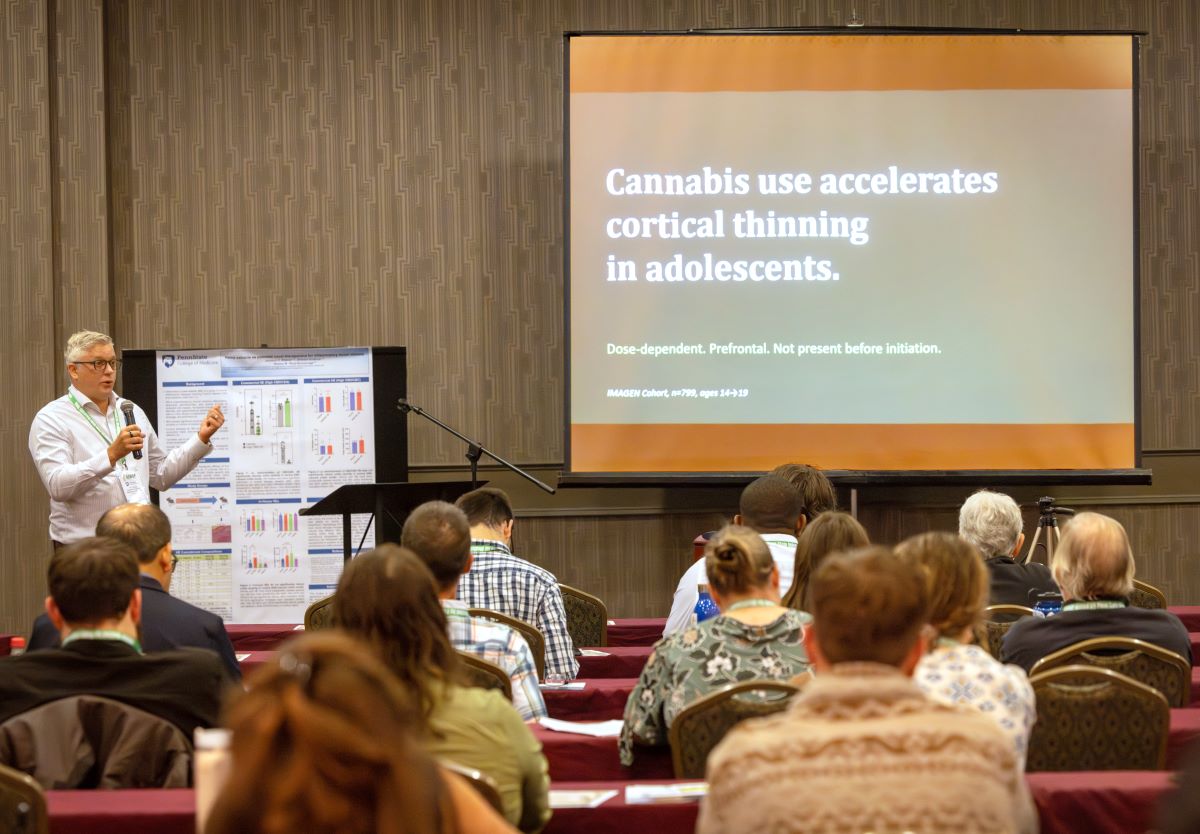
Attendees at the ACMAP conference listen to one of the presenters.
Over the course of three days, attendees explored everything from natural products being studied for Alzheimer’s disease, cancer, inflammatory diseases and other conditions to cannabis compounds and chronic pain. The conference also highlighted research aimed at moving promising plant compounds from the laboratory toward clinical care.
“Medicinal plants have been used throughout human history and continue to be an important source of modern medicines. At the same time, millions of people use herbal supplements and botanical products whose safety and efficacy are often not well understood,” said Wesley Raup-Konsavage, PhD, director of the Center for Cannabis and Natural Product Pharmaceutics (CCNPP) and assistant professor of neuroscience and experimental therapeutics. “Organizations like ACMAP help address those questions by supporting rigorous scientific research that evaluates these products using the same evidence-based approaches applied to any potential medicine.”
Equipped with modern technology, researchers are now able to identify promising plants, test extracts for therapeutic activity, isolate the compounds responsible and study them to determine not only whether they work, but how they work and whether they are safe.
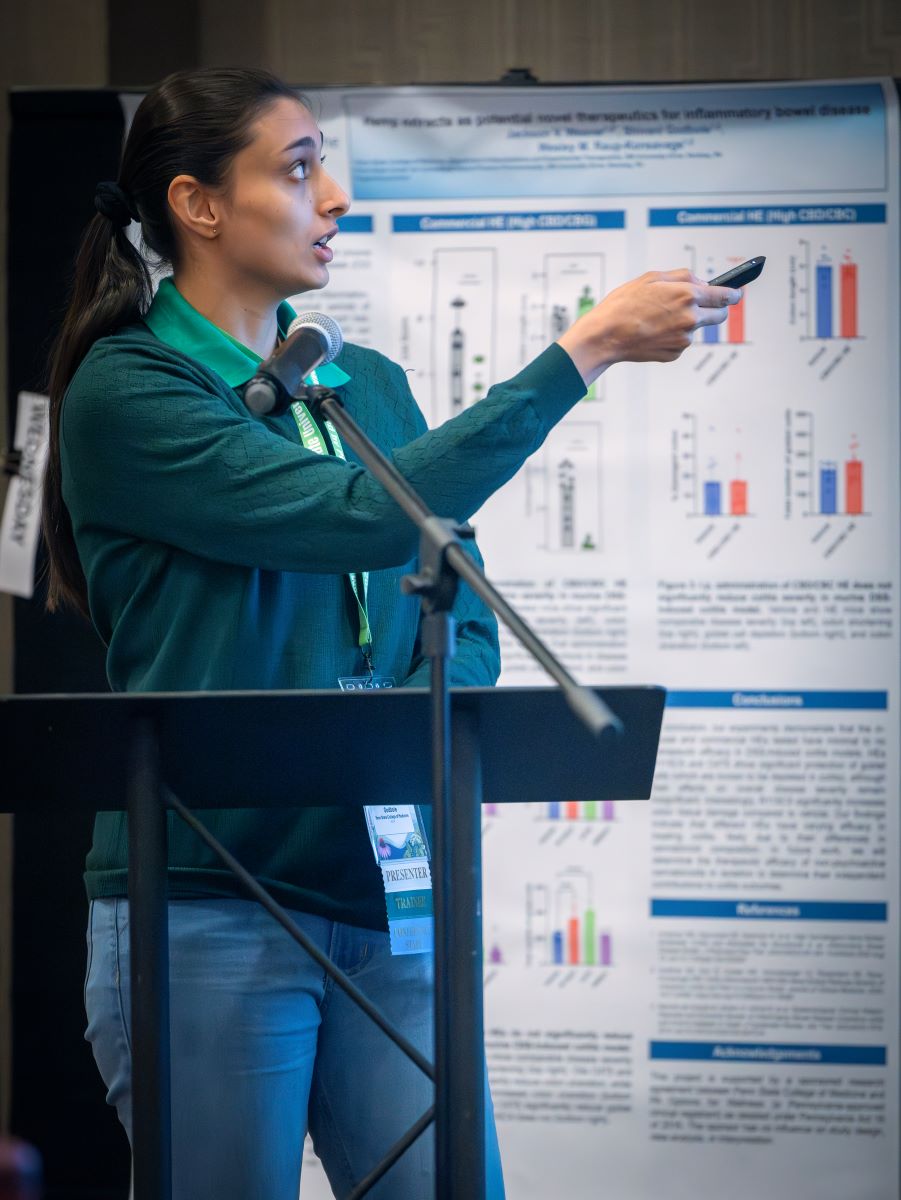
College of Medicine graduate student Shivani Godbole shares her research during the conference.
For College of Medicine researchers, the conference offered an opportunity to bring that rigorous work together in one place and share it with experts from across the field.
Dr. Raup-Konsavage presented Penn State research on minor cannabinoids, compounds in cannabis beyond THC and CBD, as potential tools for pain management. Stephen Sandelich, MD, assistant professor of emergency medicine and pediatrics, discussed cannabis and the adolescent brain, while graduate student Shivani Godbole presented research on oral cannabinoids for ulcerative colitis. Monika Joshi, MD, Endowed Professor in Cancer Clinical Investigation in the Department of Medicine, shared Phase I clinical trial data on a Korean Angelica herbal supplement being studied in prostate cancer patients.
Hosting the conference was a natural fit for Penn State and the College of Medicine, where medicinal plant research has expanded significantly. The CCNPP was established in 2023, building on the College’s Medicinal Marijuana Academic Clinical Research Center that was created in 2018, and has grown to support research across a broad range of medicinal plants and natural products.
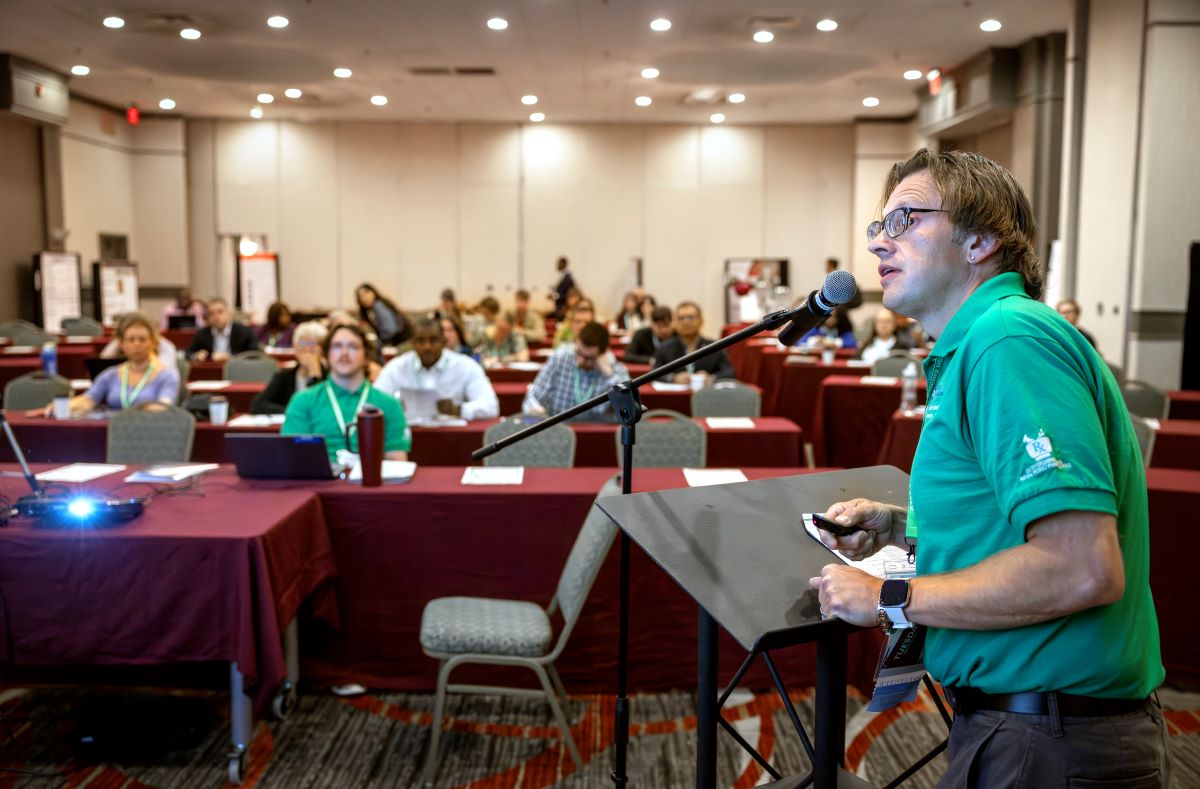
Wesley Raup-Konsavage, PhD, CCNPP director and assistant professor of neuroscience and experimental therapeutics, discusses research on minor cannabinoids for pain management at the ACMAP conference.
Hershey was an ideal conference site for another reason, too.
“Hershey has a unique historical connection to medicinal plants through Theobroma cacao, better known as the cocoa tree, whose seeds are used to produce chocolate,” Dr. Raup-Konsavage said.
In addition to showcasing the College of Medicine’s growing expertise in the field, the conference also put a spotlight on the next generation of scientists. Seven early-career researchers participated in a lightning round of student talks, while students and postdoctoral researchers presented throughout the oral and poster sessions.
“Student and postdoctoral researchers are essential to the future of medicinal plant research,” said Dr. Raup-Konsavage. “Their enthusiasm, creativity and high-quality science demonstrate that the next generation is well prepared to tackle important questions in drug discovery and natural product research.”
LEARN MORE ABOUT MEDICINAL PLANT RESEARCH AT THE COM
If you're having trouble accessing this content, or would like it in another format, please email Penn State Health Marketing & Communications.