
College of Medicine researcher receives $3.1M grant from NIH to study development of stomach cancer
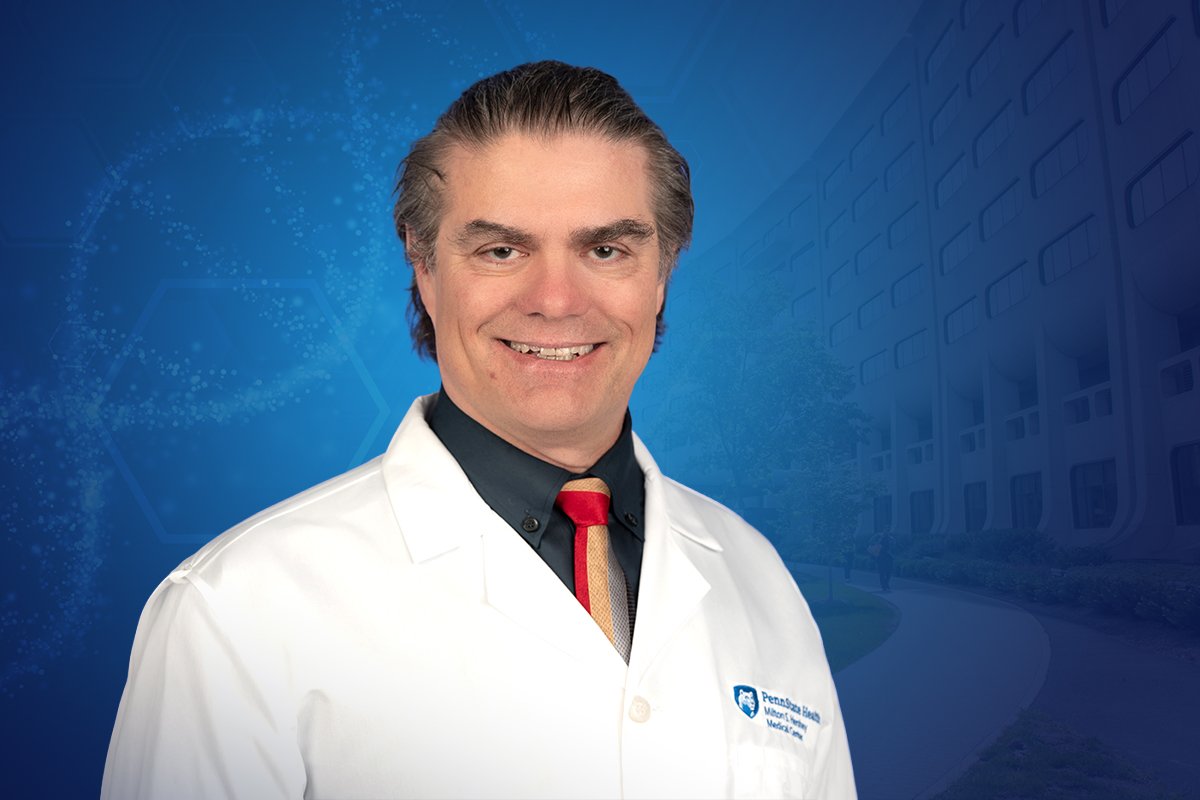
Five-year National Cancer Institute grant will support research into biological processes that may drive precancerous changes in stomach
Jason Mills, MD, PhD, professor and chair of the Department of Molecular and Precision Medicine at Penn State College of Medicine, has received a $3.1 million award from the National Cancer Institute (NCI), part of the National Institutes of Health (NIH), to investigate how precancerous changes in the stomach develop and potentially progress to cancer.
Dr. Mills and his lab received the five-year R01 award in September for a project titled “Mechanisms Underlying Emergence and Progression of Gastric Intestinal Metaplasia.” The research will examine the biological processes involved in gastric intestinal metaplasia, a condition associated with an increased risk of stomach cancer, and identify potential ways to prevent or reverse its progression.
Intestinal metaplasia occurs when the lining of the stomach begins to take on characteristics of the intestine. Although researchers do not fully understand why it develops, one theory is that it represents the stomach lining’s response to certain types of long-term or recurring injury.
Dr. Mills and his team developed a genetically modified mouse model that develops intestinal metaplasia as the mice age, providing a new way to investigate how the condition emerges and changes over time.
The model grew out of the lab’s research into how stem cells in the stomach develop into acid-producing cells. After modifying the mice to disrupt a gene critical to that process, researchers observed unusual, proliferating cells in younger animals. When they examined the mice again months later, they found that some of those cells had begun taking on characteristics of intestinal cells.
“That was when we knew we had a great new system to study how intestinal metaplasia occurs,” Dr. Mills said.
The discovery could help address a major limitation in studying the condition. Previously, the team relied on fixed human stomach tissue, which provides a snapshot of the tissue at a single point in time but does not allow researchers to follow disease progression or experimentally test what influences it.
With the new mouse model, researchers can investigate how changes in the stomach environment contribute to intestinal metaplasia. One hypothesis is that the loss of acid-producing cells allows potentially harmful bacteria to grow, causing inflammation and injury to the stomach lining. Bile that flows backward from the small intestine into the stomach may contribute to that damage.
The team will test these ideas in mice and use organoids, or three-dimensional models grown from human patient tissue, to examine individual components of the process and assess how well the findings reflect human biology. Sarah To, PhD, assistant professor of molecular and precision medicine, will contribute to some of the experiments.
The research could also help identify potential approaches to interrupting disease progression. For example, the team plans to investigate whether targeting bacteria associated with intestinal metaplasia, altering bile-related processes or pursuing other strategies could stop or reverse the condition.
“Thus, for example, by treating the bacteria that lead to the metaplasia or changing or blocking the bile involved or by other approaches we don’t know yet, we might be able to reverse or stop the metaplasia,” said Dr. Mills.
Further research will be needed to determine whether any findings can be translated into strategies for preventing stomach cancer in people. However, the ability to study the condition over time and test potential interventions could help researchers better understand the mechanisms underlying its development.
Dr. Mills explained that the stomach remains an understudied organ despite its role in a wide range of diseases, from heartburn and ulcers to cancer, and he hopes the research will also contribute to a better understanding of how factors such as diet and medications may influence the stem cells that maintain the stomach lining.
The project is supported by the NCI and NIH under award 1R01CA304170-01A1.
If you're having trouble accessing this content, or would like it in another format, please email Penn State Health Marketing & Communications.