
Penn State College of Medicine welcomes MD Class of 2030 at White Coat Ceremony
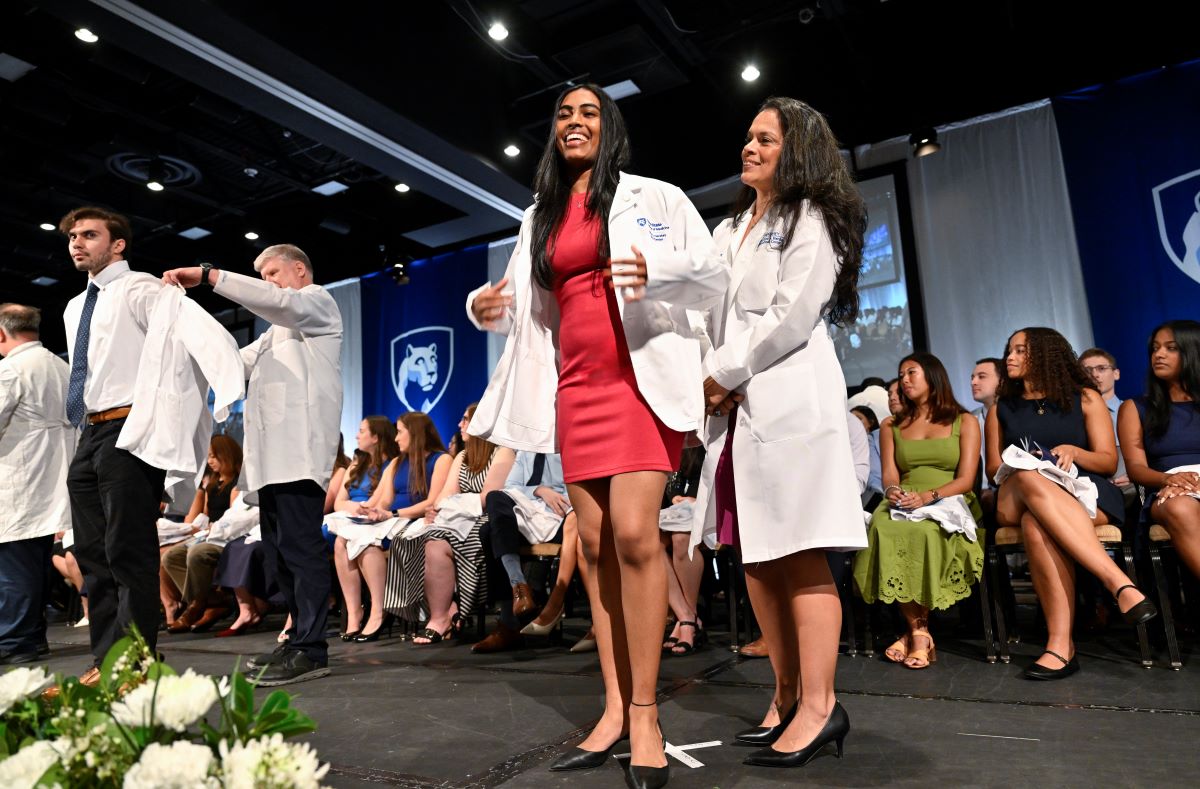
Penn State College of Medicine marked the start of a new medical journey for 146 first-year MD students on Friday, July 31, during the 31st annual White Coat Ceremony.
The ceremony is a rite of passage for the incoming medical students, who received their first white coat as a symbol of their entrance into the medical profession. Students were also gifted a custom stethoscope engraved with the Penn State lion shield and the words “We Are Penn State” and recited the Hippocratic Oath, committing to practice medicine with professionalism and compassion.
“Today marks an important milestone in the lives of our newest medical students. The white coat is a recognizable symbol of the medical profession, but it also represents the compassion, integrity and responsibility that our students will carry with them throughout their careers, and the hope they will provide to those in need,” said Kevin Black, MD, interim vice dean for educational affairs. “The MD Class of 2030 brings remarkable talent, diverse experiences and a shared commitment to improving the lives of others, and we are honored to welcome them to our College of Medicine community.”
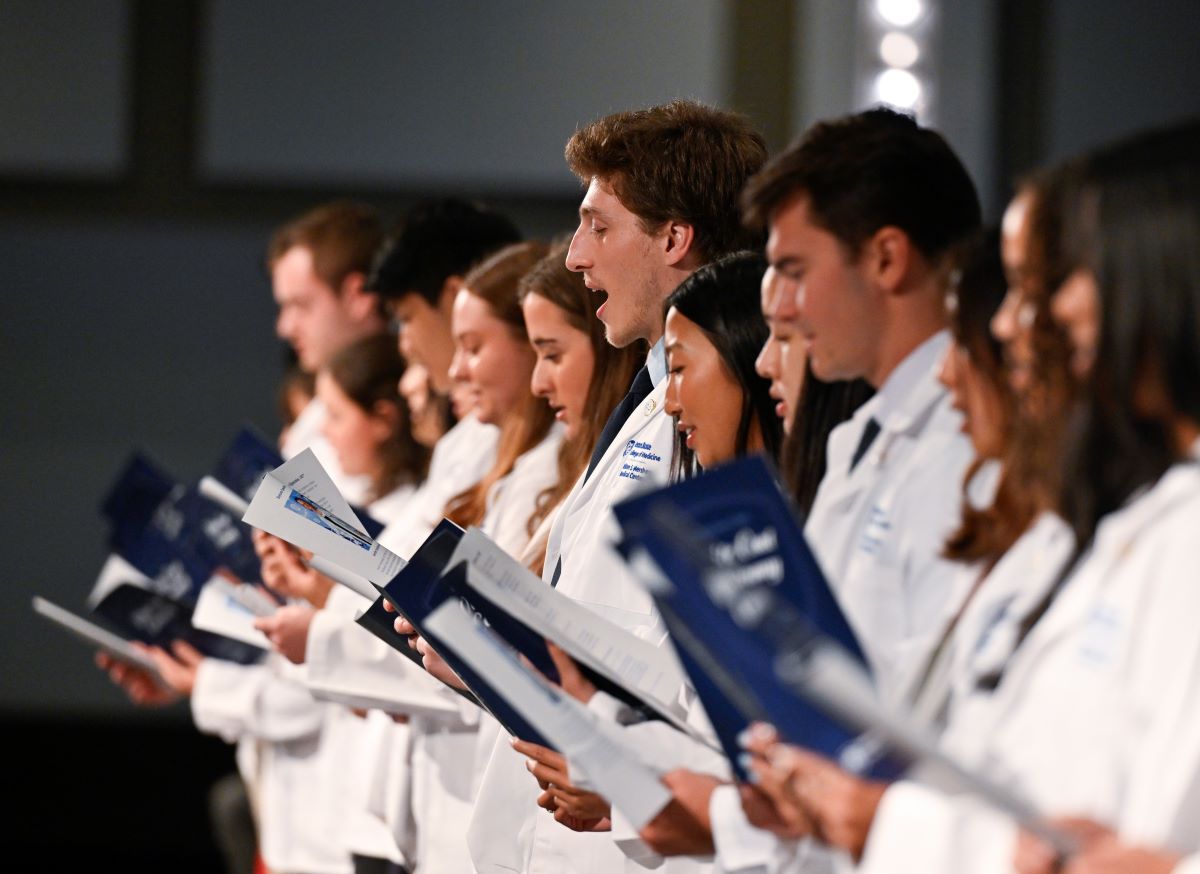
Medical students recite the Hippocratic Oath during the White Coat Ceremony on Friday, July 31.
Selected from a competitive pool of more than 16,000 applicants, the entering MD class of 88 women and 58 men includes four MD/PhD students and nine pursuing the University Park curriculum, with 67 Pennsylvania residents and 79 students from more than 20 other states stretching from New Jersey and New York to California and Hawaii. Collectively fluent in more than 20 languages and seasoned by service as EMTs, medical scribes, certified nursing assistants, hospice volunteers, crisis counselors and community volunteers through organizations like THON and Habitat for Humanity, the Class of 2030 brings both global perspective and deep local commitment to the College of Medicine. Their talents extend well beyond the classroom, with the class counting among its members musicians, dancers, Division I and Ivy League athletes, entrepreneurs and a classically trained opera singer.
As they begin their medical education, the students join a community dedicated to four pillars of medical education: health humanities, biomedical sciences, clinical sciences and health systems science.
By offering a four-pillar model rather than the traditional two – medical science and clinical care – the College of Medicine’s MD program provides a more comprehensive education that trains humanistic, systems-ready physicians who are prepared to advance health through discovery, service and clinical care across Pennsylvania and beyond.
LEARN MORE ABOUT THE MD PROGRAM
If you're having trouble accessing this content, or would like it in another format, please email Penn State Health Marketing & Communications.