
The Medical Minute: Is BMI telling the whole story?
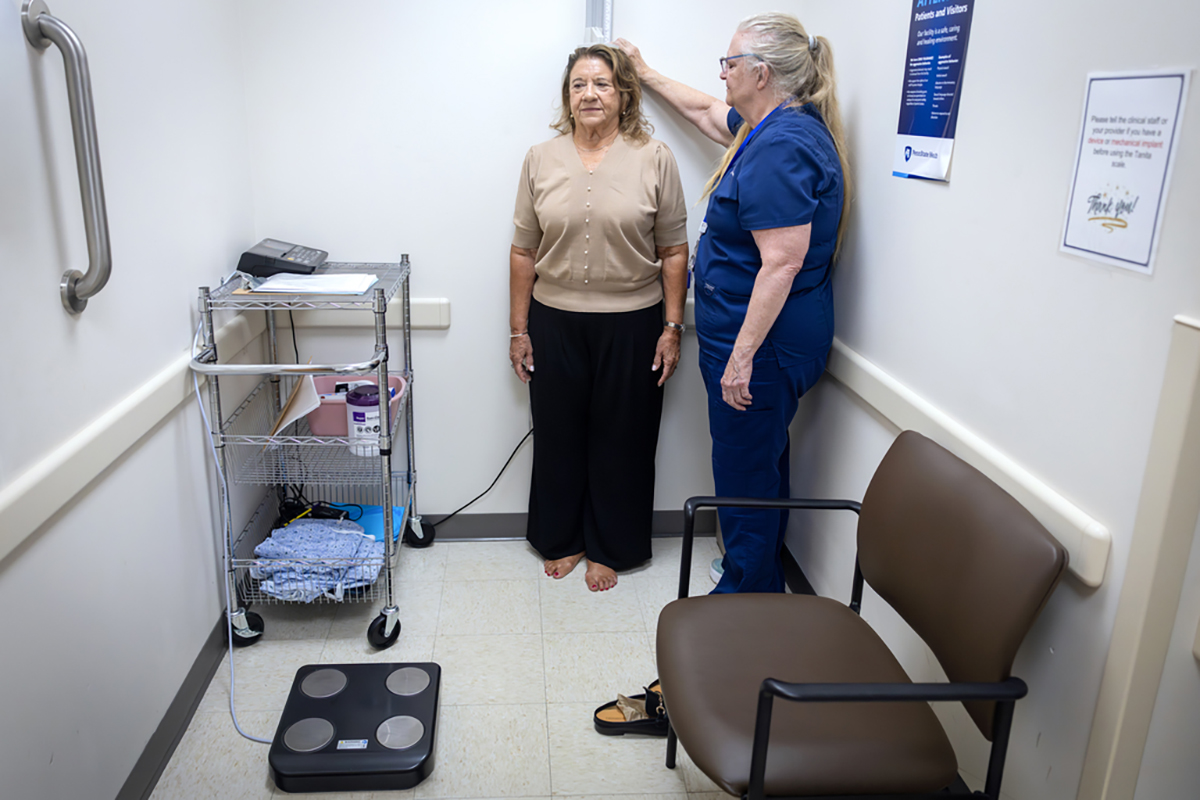
Losing 73 pounds in 15 months is cause for celebration – but according to the body mass index (BMI) calculations, Deborah Dunn would still meet the BMI criteria for obesity.
After years of following the rules of a popular weight loss program, the nurse from Mechanicsburg hit a wall when she gained significant fat around her midsection during menopause. Now 73, she has lost enough weight to reverse her type 2 diabetes, ease her joint pain and enjoy the gym again.
“It’s frustrating that after losing all this weight, I’m still considered to have obesity,” says Dunn. “I’m from Pennsylvania Dutch stock. I have muscular legs, thighs and hips. We realize people’s body shapes are different, and we shouldn’t all be treated with the same metrics, right?”
Dunn’s story illustrates new guidelines using BMI as only one measure of the weight/health relationship, says Dr. Taraneh Soleymani, director of obesity medicine at Penn State Health. Nearly 41% of American adults have a BMI of 30 or higher, which is classified as obesity. In Pennsylvania, 34.2% have obesity.

Deborah Dunn of Mechanicsburg is shown before and after losing 73 pounds in 15 months. Photos provided with permission.
BMI Only Tells Part of the Story
While BMI has been used as the litmus test for healthy weight for decades, it tells only part of the story, according to recent research and Soleymani. Because BMI is calculated using a weight-to-height ratio, it can miss other indicators of health.
“Accurately assessing obesity requires going beyond BMI and should include evaluating fat distribution, especially around the waist and hip area, and assessing for illnesses caused by obesity like joint pain or diabetes,” Soleymani says. “Under this newer approach, an individual may be diagnosed with preclinical obesity or clinical obesity, categories that reflect the presence and impact of obesity-related health complications rather than BMI alone and can help guide treatment decisions.”
Instead, Soleymani says measuring waist circumference, waist-to-hip and waist-to-height ratios along with BMI provides a more accurate picture of how weight affects a person’s health. DEXA scan is another tool to assess fat distribution, identifying areas where fat is more likely to impact metabolic health. Visceral fat, which wraps around internal organs, releases inflammatory substances that contribute to diabetes, heart disease and fatty liver. Measuring this specific fat should be a part of assessing obesity.
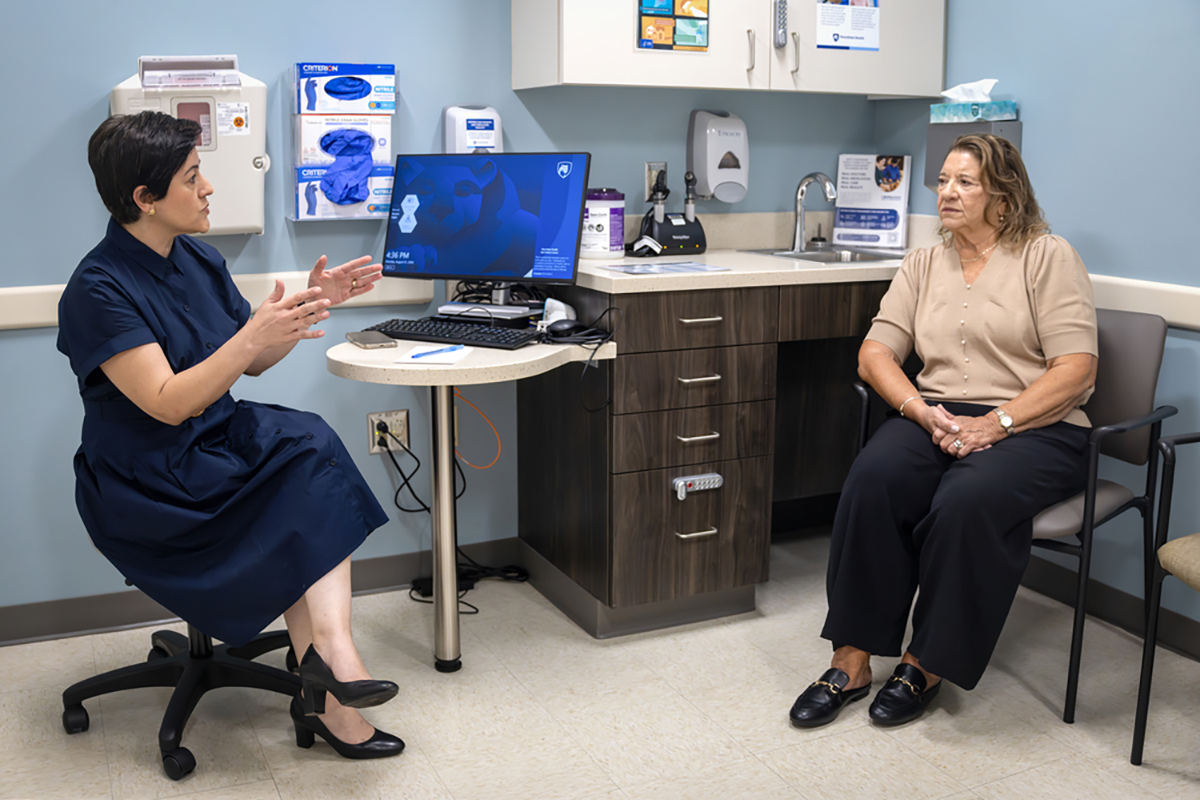
Dr. Taraneh Soleymani, left, director of obesity medicine at Penn State Health, talks to Deborah Dunn about her recent weight loss progress.
Obesity Is More Than Lack of Willpower
Dunn says that although the WeightWatchers rules worked for her for years, things changed in her body composition when she entered menopause. Suddenly, she faced increased weight around her waist area, rising A1C levels and a constant struggle with the scale. She asked her primary care provider for a referral to Penn State Health’s COMMpanion Weight Management program.
The program takes a comprehensive approach to obesity care, combining visits with an obesity medicine specialist, U.S. Food and Drug Administration (FDA)-approved medications when appropriate, and personalized coaching to help patients develop sustainable nutrition, physical activity and behavioral strategies.
Rather than simply slashing calories, Dunn says Soleymani identified her major roadblock – insulin resistance brought on by menopausal hormonal changes. Dunn met with Alicia Fanelli, a registered dietitian, who helped her create an eating plan that prioritizes protein and fiber, along with regular exercise. Dunn tracks her progress with regular body composition scans to see how her body changes over time.
“As a society, we’ve always viewed obesity as a lack of willpower, but we now know that it’s a real disease, with its own pathophysiology,” Soleymani says. “You can’t ask a patient to rewire their brain pathways that regulate hunger and fullness or overcome the hormonal and metabolic changes that drive obesity. Medication can help address those factors.”
Learn about the COMMpanion Weight Management program powered by Penn State Health.
New Weapons for Weight Loss
For some people, reducing calories and increasing exercise may be enough, but for most people, that formula is easier on paper than in real life. Soleymani says expecting people to lose a significant amount of weight without obesity medications is like asking someone to wage war without a weapon. Recently, the weapons have become more advanced.
GLP-1 medications, such as Wegovy and Zepbound, help control cravings and increase feelings of fullness and are one tool Soleymani and her team employ. She notes that medications and bariatric surgery aren’t one-time solutions. Obesity is a chronic disease and requires ongoing treatment. This includes medications, along with lifestyle changes and bariatric surgery when appropriate.
“Our goal isn’t short-term weight loss, nor is it simply prescribing medication,” Soleymani says. “We combine FDA-approved obesity medications with comprehensive lifestyle support to empower our patients to make sustainable changes for long-term health.”
Explore clinical trials on obesity and weight management at Penn State College of Medicine.
Related content:
- The Medical Minute: What to know about Ozempic and weight loss drugs
- A fresh start: Penn State Health’s Veggie Rx program offers a recipe for wellness
- Video: Who qualifies for surgical weight loss surgery?
The Medical Minute is a weekly health news feature produced by Penn State Health. Articles feature the expertise of faculty, physicians and staff, and are designed to offer timely, relevant health information of interest to a broad audience.
If you're having trouble accessing this content, or would like it in another format, please email Penn State Health Marketing & Communications.