
The Medical Minute: Living well with heart failure

If you saw Stephen McNamara on the tennis court today, you would never guess he has heart failure. Yet in 2023, the active 56-year-old started experiencing symptoms that were hard to ignore – getting tired easily, shortness of breath, gastrointestinal pain and extreme trouble sleeping. After seeing his doctor and getting blood work, he was scheduled for a stress test and chest X-ray the following Monday.
His doctor told him to go to the emergency department immediately if he felt dizzy. Following a weekend of sleepless nights, the Lancaster resident woke his wife and asked her to drive him to Penn State Health Lancaster Medical Center.
“After running several tests, they told me I had chronic heart failure and blood clots in my heart and lungs,” McNamara says. “They did an echocardiogram and determined that my ejection fraction was 17. A normal ejection fraction is 55 to 65. I was in transplant range.”
Recognizing heart failure symptoms
Dr. Nandini Nair, a cardiologist and medical director of the Ventricular Assist Device and Heart Transplant programs at Penn State Health Heart and Vascular,
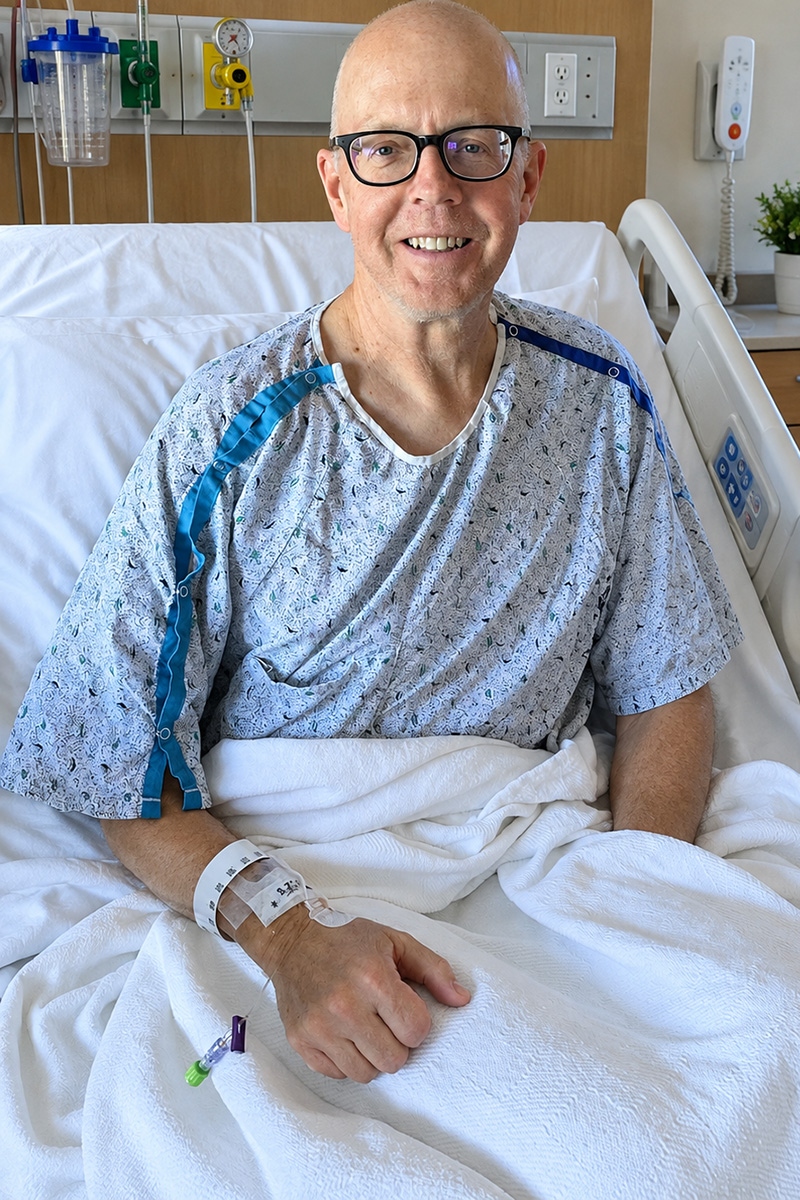
McNamara discovered he had heart failure when emergency department physicians at Penn State Health Lancaster Medical Center discovered blood clots in his heart and lungs. Provided photo.
explains that ejection fraction measures how much blood the heart pumps out with each contraction. It is one of several factors used to evaluate heart failure.
“Heart failure is when the heart isn’t providing enough circulation or enough blood to the other organs,” Nair says. “It can be due to a squeeze problem where the function is going down, or it can be that the walls of the heart are stiff – they’re not relaxing, and so they’re not filling enough.”
McNamara experienced some of the warning signs of heart failure: shortness of breath and overall fatigue. The American Heart Association says patients may also experience:
- Coughing or congestion
- Swelling in the legs, feet, ankles or belly
- Confusion
- Sudden weight changes
- Heart palpitations
- Lack of appetite or nausea
Call 9-1-1 if you have signs and symptoms of a heart failure emergency.
Heart failure can result from three common types of heart disease, Nair says, including coronary artery disease, which can lead to heart attacks, heart rhythm disorders and cardiomyopathy, a condition that weakens the heart muscle. Some people are genetically predisposed to heart disease, but high stress leading to high blood pressure and lifestyle factors like smoking, drinking excessive amounts of alcohol, an unhealthy diet and lack of exercise can increase the risk. Viral infections can also cause it, which McNamara believes was most likely the case for him.
Heart failure treatment options
Although heart failure is a serious condition, Nair says many patients can improve their health and quality of life with a combination of medication, lifestyle changes and, in some cases, surgery.
“Heart failure is no longer a death sentence the way it was in the past, especially if you catch it early,” Nair says.
After his diagnosis, McNamara wore a LifeVest, a cardioverter-defibrillator that continuously monitors heart rhythm, for several months before receiving an implantable cardioverter-defibrillator (ICD) in 2024. The device coordinates the heart chambers to pump blood more efficiently and can deliver an electrical shock to restore a normal rhythm if it detects a life-threatening arrhythmia. He also takes eight medications daily to improve his heart function, reduce fluid retention and lower blood pressure.
Nair says most patients with a low ejection fraction like McNamara’s are prescribed what cardiologists call the “four pillars” of heart medications: beta blockers, ACE inhibitors, aldosterone receptor blockers and SGLT2 inhibitors. Each medication works on a different biochemical pathway, or process in the body, to help the heart function better and reduce the risk of complications.
She also prescribes lifestyle modifications, including regular physical activity such as weight-bearing exercise, a reduced-sodium diet, adequate sleep and cutting out tobacco and excessive alcohol use. Some patients need more advanced treatments, such as an ICD like McNamara’s or, for those with end-stage heart failure, a left ventricular assist device, which pump blood through the body, or a heart transplant. Nair says patients who require more invasive treatments can still have a good quality of life, particularly when they make healthy lifestyle choices.
Learn more about Penn State Health’s heart failure care.
Treating the whole person
While most people think of heart failure as a heart issue, Nair says it also affects a patient’s brain, kidneys and liver. Reduced blood flow to the brain is common, and many heart failure patients experience brain fog.
The physical limitations that come with progressive heart failure can also lead to depression.
“We have a psychology team, and our patients are periodically counseled to look for any psychosocial or psychosomatic problems,” Nair says.
Her team also emphasizes hope and optimism when working with patients.
“We aim for a positive, encouraging conversation with each patient,” Nair says. “In any part of medicine, positive thinking reinforces healthy behaviors and may have a positive effect on health outcomes, even in the most terminal cases.”
For McNamara, positivity is bearing out. He’s back to golfing several times a week and playing tennis regularly. He breaks up his workday with short walks and eats a healthy diet. Although he will remain on his medications, he says life feels normal again.
“Sometimes it takes an episode like this to make you more mindful about the things that can build up and the changes you can make to be better health-wise,” he says.
Explore clinical trials for heart failure at Penn State College of Medicine.
Related content:
- Lancaster man’s life transformed by new heart failure program at Penn State Health Lime Spring Outpatient Center
- The Medical Minute: Can you have a heart attack and not know it?
- Video: Generations at Heart – Heart Transplant Recipients
The Medical Minute is a weekly health news feature produced by Penn State Health. Articles feature the expertise of faculty, physicians and staff, and are designed to offer timely, relevant health information of interest to a broad audience.
If you're having trouble accessing this content, or would like it in another format, please email Penn State Health Marketing & Communications.