
The Medical Minute: Newborn intensive care: What parents need to know
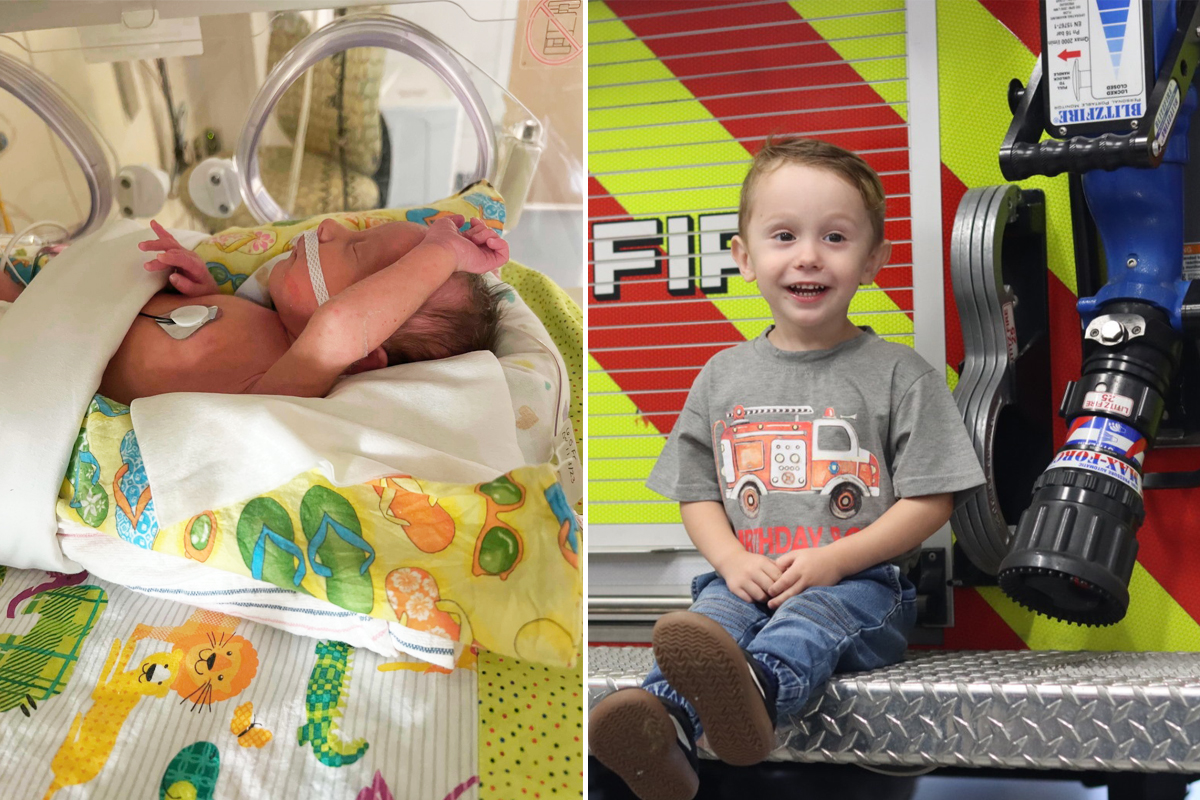
Lyndsay Gardner was enjoying a normal, healthy pregnancy until her water broke at 31 weeks. Due around Christmas in 2023, she gave birth to her son just before Halloween instead.
Born nine weeks early, little Maximus Coelho couldn’t go home to Lititz with his mother, father and three older siblings right away. He spent nearly four weeks in the neonatal intensive care unit (NICU) at Golisano Children’s Hospital at Penn State Health Milton S. Hershey Medical Center first.
“He needed help breathing, eating, fighting off infections and developing before he could come home with us,” Gardner said.
Learning that your newborn baby needs extra medical care in the hospital can be scary and overwhelming. The NICU provides specialized care to support babies’ health and development.
“A team of doctors, nurses, occupational therapists, physical therapists and other experts care for the baby and support parents during what can be a stressful time,” said Dr. Dennis Mujsce, a neonatologist at Penn State Health Golisano Children’s Hospital and interim chief of neonatal-perinatal medicine at Penn State College of Medicine.
Premature birth is the most common reason babies are admitted to the NICU, Mujsce said. A normal pregnancy lasts about 40 weeks. Babies born early need extra support while their lungs, digestive system and other organs mature. NICUs also treat full-term newborns with complex medical conditions.
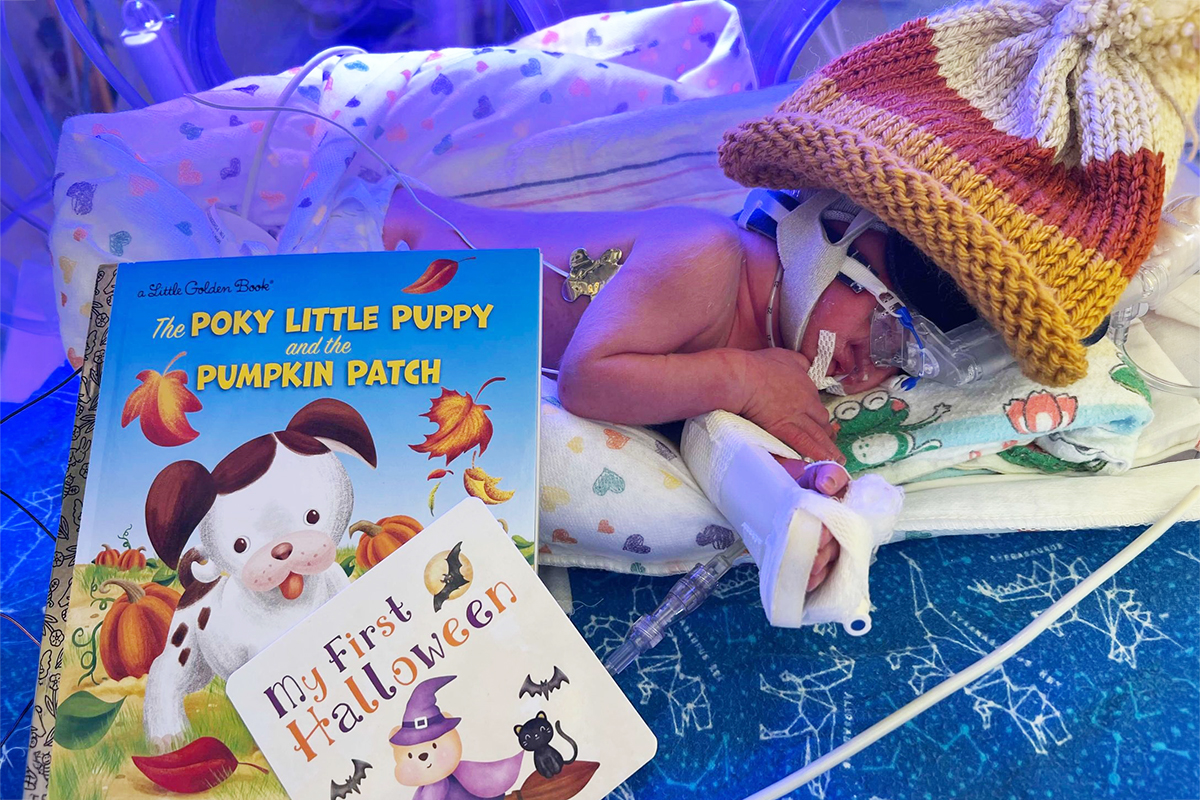
After his premature birth, Maximus Coelho received respiratory and feeding support, jaundice treatment and other specialized care in the NICU to help him grow and develop. Photo provided with permission.
WHEN BABIES ARRIVE EARLY
The majority of premature babies admitted to the NICU are born between 34 and 37 weeks. However, a level IV NICU can care for infants born as early as 22 weeks, some weighing less than a pound. The earlier a baby is born, the more medical support they need.
“One of the first things somebody has to do when they are born is start breathing,” Mujsce said. “A very preterm baby’s lungs are underdeveloped and usually not ready to do the work of breathing.”
The NICU team helps babies breathe with breathing tubes, ventilators or medication. Care may also include an incubator to maintain body temperature or intravenous (IV) nutrition when an infant can’t safely eat or digest food.
NICUs treat critically ill infants with conditions such as intestinal abnormalities, urinary tract problems, narrowed airways, heart defects, fluid buildup in the brain, problems breaking down nutrients, birth injuries and infections.
LEVELS OF NICU CARE
NICUs provide four different levels of newborn care:
- Level I, Newborn nursery: Basic care for healthy infants
- Level II NICU or Special Care Nursery: Care for stable or moderately ill newborns, often born between 32 and 40 weeks
- Level III NICU: Advanced care for smaller babies born under 32 weeks and newborns with medical conditions
- Level IV NICU: Highest level of care for the most critically ill newborns, including advanced specialists and surgical care
WHAT PARENTS CAN EXPECT IN THE NICU
Having a baby in the NICU can be a roller coaster of emotions and uncertainty. Many NICUs offer psychologists, social workers and care coordinators who help parents navigate the experience.
Gardner and Maximus’s father, Nate Coelho, spent as much time as they could each day with their son in the NICU, while balancing responsibilities at work and home.
“We definitely felt the push and pull of having three kids at home who needed us and a premature infant who needed us,” Gardner said.
When doctors manage a condition that requires NICU care, they meet with the parents to answer common questions, such as:
- How long will my baby need to stay in the NICU
The average stay is about three weeks, Mujsce said, though some infants need care for three to six months. Before going home, babies must be able to maintain their body temperature, breathe with little or no support and feed well enough to keep growing.
- Can I breastfeed my baby during a NICU stay?
“The baby’s mother’s milk is one of the best sources of food and nutrients for the baby,” Mujsce said.
If an infant can’t suck or swallow to breastfeed normally, the mother can pump her milk for feeding through a tube. Lactation consultants offer help with feeding questions. The NICU at Penn State Health Golisano Children’s Hospital has a Milk Lab where parents can drop off pumped breast milk to be safely stored for their babies.
- How can I bond with my baby in the NICU?
“We encourage parents to be involved in the care of their infant,” Mujsce said. “A lot of parents are afraid to touch their babies if they’re in incubators or have IVs, so we guide them toward the best way to interact with their child for their development.”Skin-to-skin snuggle time, reading, talking or singing to their baby and participating in feedings and daily care helps strengthen the parent-child bond.“The Child Life team at the hospital not only supported us, but they embraced our three older children and helped them read to Maximus, bathe him and make crafts for him,” Gardner said. “They made it special and helped our bigger kids bond with their brother.” - How do we prepare to go home?
Many hospitals offer transition rooms where parents and babies can stay together before discharge. Care coordinators help schedule follow-up appointments and provide instructions for how to care for the baby at home, including who to call for questions or concerns.
Learn more about Children’s Miracle Network at Penn State Health Golisano Children’s Hospital.

Lindsay Gardner and Nate Coelho hold their son, Maximus. Photo provided with permission.
HAPPY, HEALTHY AND HOME
Maximus went home on Thanksgiving Day. For the next two years, his parents took him to the NICU Neurodevelopmental Follow-Up Clinic to make sure his development was on track. Now 3, he is a healthy, happy boy who loves fire trucks. This Halloween, he picked a firefighter costume.
“He has no chronic health problems and is just as perfect as perfect can be,” Gardner said.
Learn more about Penn State Health Women and Babies Centers:
-
- Golisano Children’s Hospital at Milton S. Hershey Medical Center – Level IV NICU
- Hampden Medical Center – Level II Special Care Nursery
- St. Joseph Medical Center – Level II NICU
- Lancaster Medical Center – Level II NICU, opening Oct. 31, 2026
Related content:
- Video: Saving the Smallest Lives
- Bryson’s story: Penn State Health delivers coordinated care for Lancaster family
- Video: Penn State Health Golisano Children’s Hospital’s Level IV NICU
The Medical Minute is a weekly health news feature produced by Penn State Health. Articles feature the expertise of faculty, physicians and staff, and are designed to offer timely, relevant health information of interest to a broad audience.
If you're having trouble accessing this content, or would like it in another format, please email Penn State Health Marketing & Communications.