
Food As Medicine: Changing the recipe for better health
From community gardens and fridges to innovative research, Penn State Health and Penn State College of Medicine are helping more people access healthy food
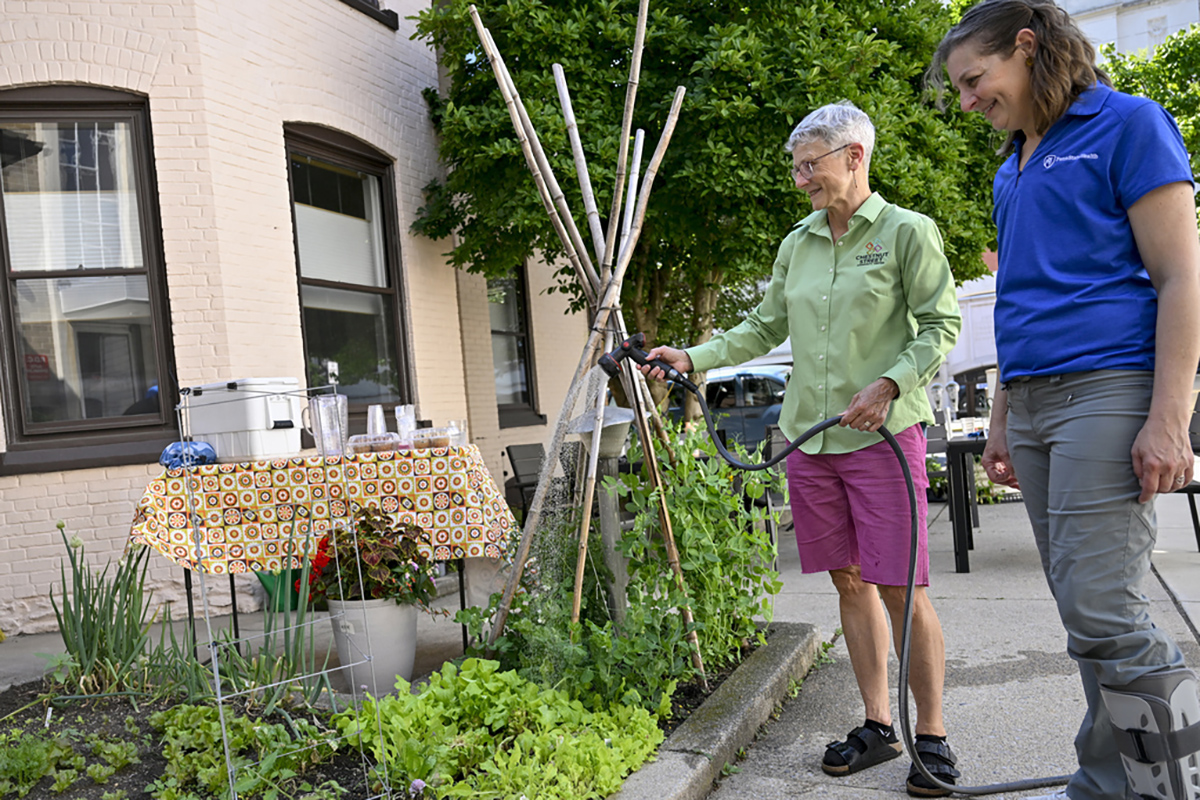
When the Chestnut Street Community Center in Lebanon opened a garden and community fridge with free, healthy food, neighbor Angela Brownstein, 52, started volunteering by picking vegetables and stocking the fridge.
“In the beginning, we were putting food in,” Brownstein said. “Now we take food out, due to an income change, the high cost of living and a need for food.”
Brownstein visits the community fridge every few days to pick up fresh produce, like tomatoes and cucumbers, for her nine-person household. The fridge is supported by Penn State Health and Penn State College of Medicine’s Food As Medicine Initiative.
“It’s helped out a lot,” she said. “We’ve been eating healthier with the greens we get from the fridge.”
The Food As Medicine Initiative offers a coordinated network of food access, nutrition and education programs that connect people with healthy food and skills to prevent and manage diet-related chronic disease such as diabetes or heart disease.
A Growing Movement with Lasting Benefits
Food As Medicine is a growing movement in health care across the country. Programs may include produce prescriptions, medically tailored groceries or meals, and nutrition and culinary education.
At Penn State Health and the College of Medicine, the Food As Medicine Initiative brings together community programs, clinical care, education and research to help people live healthier today and build evidence to improve future care. For instance, the health system supports 24 gardens and six community fridges across six counties, working with more than 100 community partners to provide nutritious food to those who need it.
“We’re not just planting gardens,” said Laurie Crawford, program manager for food access at Penn State Health. “We’re creating a network of food access points and sustainable food options with our community partners.”
Community gardens, produce programs, cooking classes and other efforts meet immediate community needs while researchers study their impact.
“Food As Medicine builds healthier individuals, families and communities,” said Amber Coleman, director of community health at Penn State Health. “Our strength is not simply in delivering community-based programs or conducting research, it’s in connecting the two to improve health and generate evidence for what works.”
Penn State Health also makes nutrition and health education accessible through its Pantries and Wellness Support program, in which community health nurses offer health screenings at food pantries and other convenient locations.
“We layer services in the places people already visit to expand our impact,” Coleman said.
Learn more about what Penn State Health is doing to improve food access in our communities.
[Hover over image below to reveal photo gallery controls.]

Cooking Up Better Health
Getting healthy food into people’s hands is just the first step. People also need the skills and confidence to prepare it. That’s why Food As Medicine includes hands-on nutrition and culinary education for patients, community members and health care professionals.
At a June culinary medicine class, health care providers and residents learned cooking skills to share with patients.
“We teach practical skills that help people prepare affordable, healthy meals that fit into their busy lives,” said Susan Veldheer, an associate professor of family and community medicine and public health sciences at the College of Medicine.
Hillary Amici, an education program specialist, showed the class how to make a healthy dessert charcuterie board with nuts, fruit, whole-grain crackers and dark chocolate. She also demonstrated recipes for lentil burgers, cucumber salad and tropical fruit salad before the students paired up to make them.
Jen Curry, a pediatric oncology nurse specialist at Penn State Health Golisano Children’s Hospital, attended to learn more ways to help patients and families eat well during cancer treatment.
“Many kids already have food aversions, and then chemotherapy changes their taste buds,” Curry said. “It can be difficult to find healthy foods that taste good.”
Now, Curry has more ideas to share, such as blending fruits and vegetables into smoothies and creating colorful, appetizing rainbows of produce.
For patients with urgent food needs, the Food As Medicine Initiative provides emergency food boxes across 22 primary care and Penn State Cancer Institute sites.
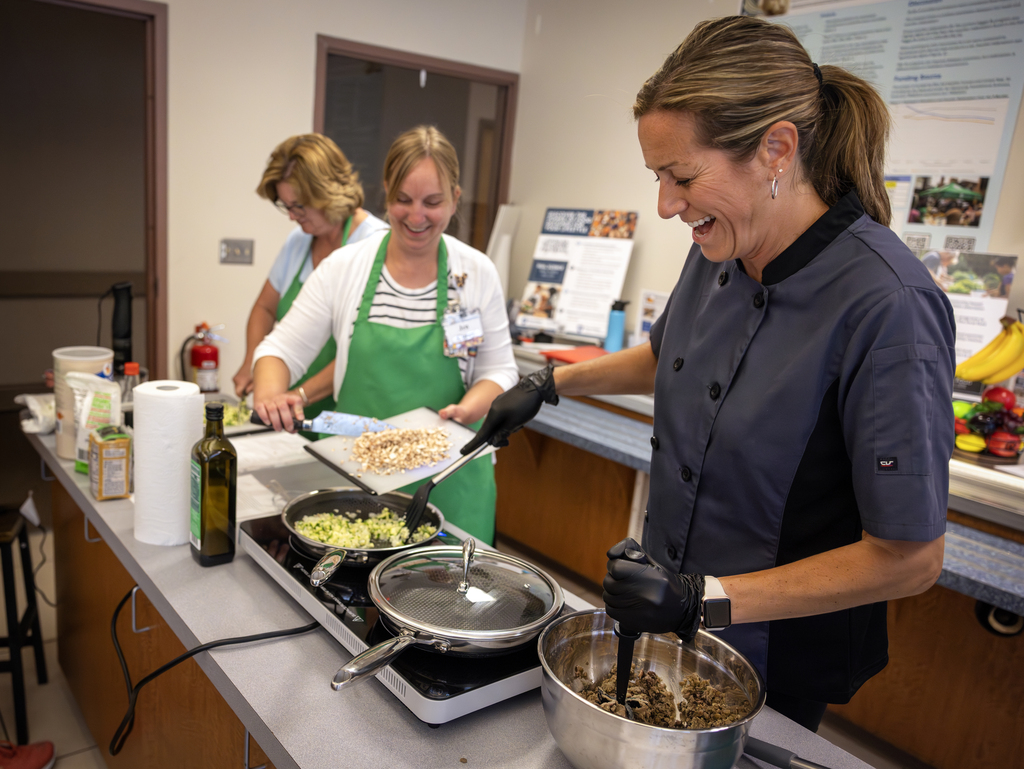
Hillary Amici, right, an education program specialist at Penn State College of Medicine, shows how to make healthy recipes during the class “From Clinic to Kitchen: Culinary Medicine for Healthcare Professionals.”
Researching the Power of Food
Researchers at Penn State College of Medicine are studying which Food As Medicine approaches work best to improve health, who benefits most and how programs can be strengthened and expanded.
For example, Veldheer leads studies examining whether produce prescriptions, nutrition education and gardening programs can improve health outcomes and help prevent and manage chronic disease. One study evaluates the impact of combining diabetes education with produce prescriptions on blood sugar management. Other researchers are studying how these programs affect the health of children and families and how nutrition can support the health of cancer survivors.
Through Food As Medicine, researchers, health care professionals and community members are helping people access and prepare nutritious food and live healthier lives.
For Brownstein, it’s a community effort. She still volunteers at the Chestnut Street Community Center, unloading food donations, picking vegetables with her grandchildren and stocking the fridge to help others.
“Together with Penn State Health, we’re building relationships that make the whole community healthier,” said Laurie Funk, community center founder.
Improving food and nutrition security is a key part of Penn State Health’s commitment to advancing health equity. Explore the Penn State Health Community Health Needs Assessment and Implementation Strategy.
If you're having trouble accessing this content, or would like it in another format, please email Penn State Health Marketing & Communications.