
Newest facility dogs bring a ‘beary’ special kind of comfort to Milton S. Hershey Medical Center
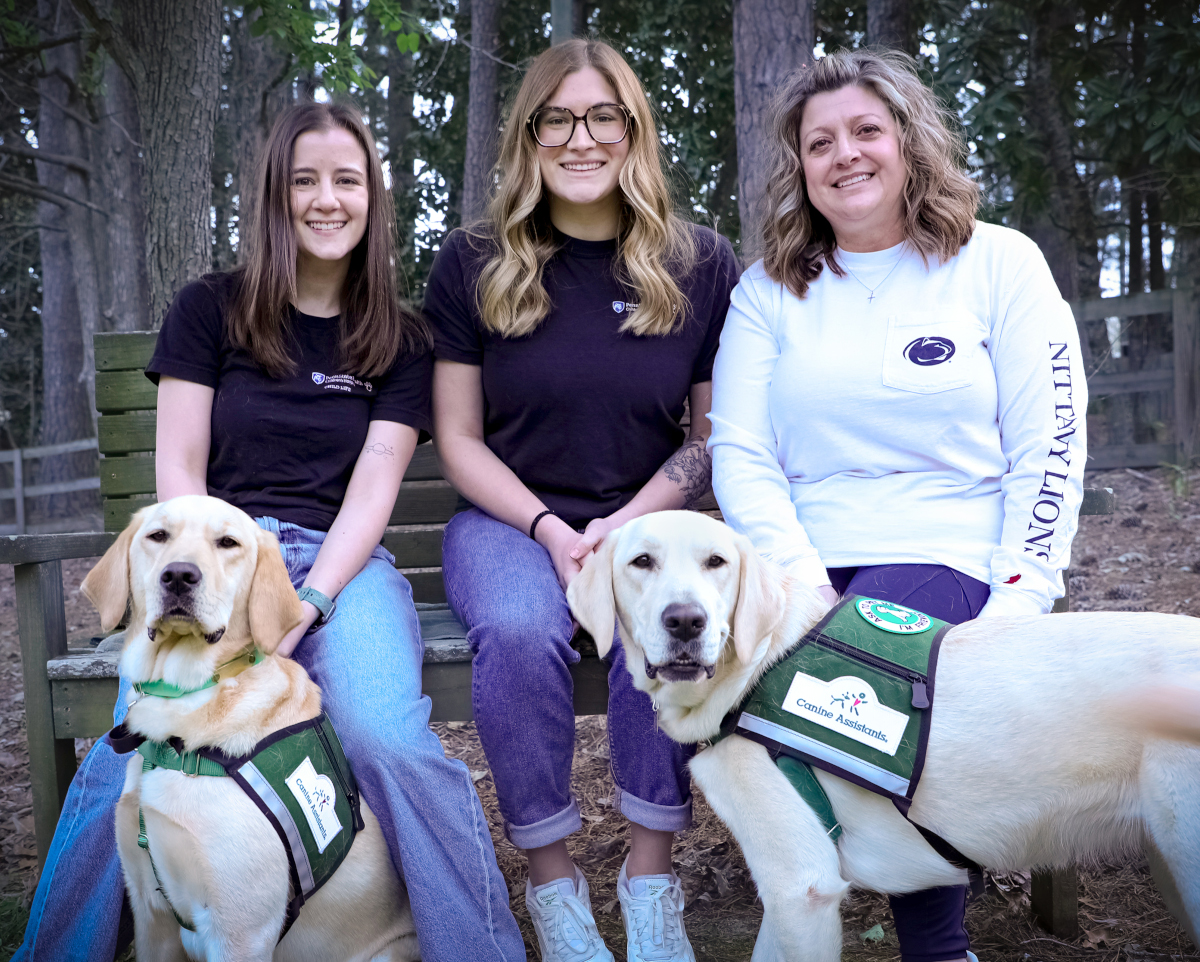
Ursa and Yona bring a calming, supportive presence to patient care
Two new four-legged caregivers have arrived at Penn State Health Milton S. Hershey Medical Center. Ursa and Yona, sisters born in June 2024, are the newest additions to Milton S. Hershey Medical Center’s facility dog program. Named for the constellation Ursa Major — the Great Bear — and the Cherokee word for bear, the golden lab pair is specially trained to work in health care settings and support patient care.
Ursa works directly with her primary handler, Erin Palm, and secondary handler, Addie Snyder – both certified child life specialists at Penn State Health Golisano Children’s Hospital. She will spend most of her time tending to patients in the Pediatric Surgical Care Unit and the Pediatric Intensive Care Unit.
Yona will support adult critical care patients with her primary handler, Pam Martin, a certified therapeutic recreation specialist. She is the first facility dog within the program to work in this area.
Hold cursor over image below to reveal photo gallery controls.

Ursa and Yona were raised and trained by Canine Assistants in Georgia using the bond-based choice teaching approach. This approach focuses on building a bond between humans and canines where love and respect are the methods of teaching. The dogs are trained for the first 14-24 months of their lives before being placed. Each handler also goes through a training camp once partnered with a dog to learn the bond-based teaching method.
The facility dog program at Milton S. Hershey Medical Center was established in 2016 when a golden retriever named Kaia became the first facility dog ever in a Pennsylvania children’s hospital. Since then, the team has grown to include golden retrievers Skye, Captain, Thor and Baron. Each dog is a full-time employee of Milton S. Hershey Medical Center and the Children’s Hospital working in different specialized areas to enhance patient care. They spend 40 hours a week at work with their primary handlers, with time allowed for downtime, naps and walks. They have their own Instagram channel dedicated to educating the public on the purpose of the facility dog program and the work they do to support patients, families and staff.
The facility dog program is separate from the Pet Therapy Program, which continues to have an important presence in both the Children’s Hospital and the adult hospital. The two programs have different kinds of training and help patients in different ways. Facility dogs undergo extensive training to work in a health care environment and provide emotional support, as well as learn specific tasks to help patients cope with major and minor hospital procedures. Pet therapy dogs offer companionship and a calming and therapeutic influence for patients.
The facility dog program is sustained by ongoing funding from many donors, including the inaugural anonymously funded Kelso Facility Dog Endowment and named endowments from HOPE in the AIR and the Bilbrey, Dashiell, Gazzillo and Simpson families. These invested funds provide support across the program in perpetuity to cover the cost of caring for the dogs and their eventual retirement.
If you're having trouble accessing this content, or would like it in another format, please email Penn State Health Marketing & Communications.