
The Medical Minute: Preserving fertility for the future: What are my options?

Keira Woods doesn’t know if she wants kids. After all, as a 20-year-old student at Penn State, she’s more focused on midterms, her THON activities and what she plans to do over the summer. But as a pediatric cancer survivor, she had to think about the future much earlier than most people. The fertility preservation program at Penn State Health gave her the latitude to ponder motherhood on her own terms.
Woods was diagnosed with double transcript chronic myeloid leukemia at age 12 – a rare genetic variation of a cancer normally seen in adults over 60. After a complex medical journey, she found that her best course of action was a bone marrow transplant, and her sister, Kendall, provided a perfect match.
While this genetic lottery was worth celebrating, a bone marrow transplant meant intensive chemotherapy, which could severely limit her future reproductive options. Fortunately, Dr. Samantha Butts, chief of Reproductive Endocrinology and Infertility and an obstetrician-gynecologist at Penn State Health, recommended freezing her eggs, even if plans for parenthood were a bit hazy at age 17. Because Keira is a Four Diamonds survivor, the cost of this care was covered by Four Diamonds as part of their commitment to comprehensive care for eligible childhood cancer patients, made possible by donations from the community.
National Infertility Awareness Week is April 19-25.
Fertility Freezing Explained
Butts and her team care for a wide variety of patients – from heterosexual couples struggling with infertility to single people wishing to build a family on their
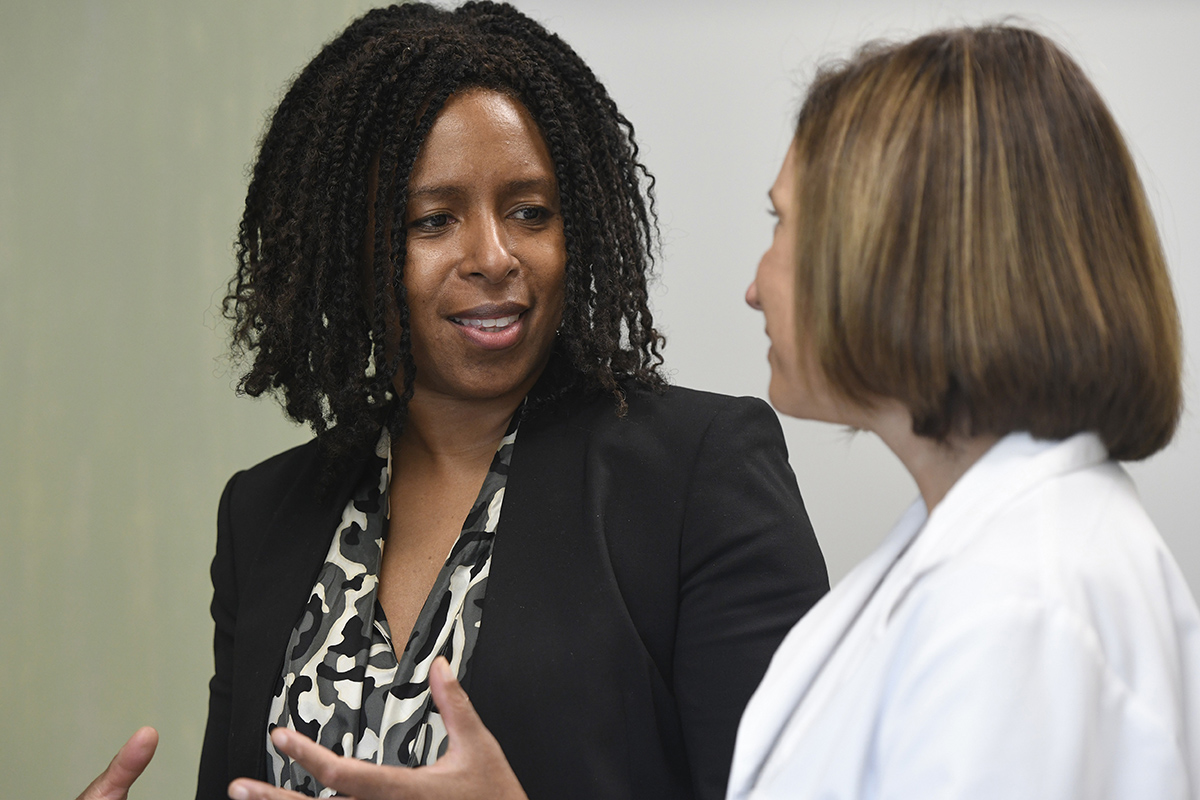
Dr. Samantha Butts, left, chief of Reproductive Endocrinology and Infertility at Penn State Health, talks to Michele Munch, a nurse practitioner specializing in reproductive endocrinology.
own, as well as same-sex couples using donor eggs or sperm. Beyond those actively trying to have a baby, the program also offers fertility preservation for both men and women, frequently because of situations like Woods’.
“We often get called to talk to young adults about a cancer diagnosis where the treatment could make them unable to build a family after they’re cured,” Butts says. “We’re very lucky to partner with Four Diamonds, which supports these patients.”
Cancer isn’t the only reason to freeze eggs or sperm. Butts says fibroids, endometriosis, certain autoimmune diseases and premature ovarian insufficiency – a significant loss of eggs before age 40 – are all common reasons for fertility preservation. Some patients want to secure younger sperm or eggs for future in vitro fertilization, while others simply aren’t ready for parenthood.
The program works with both male and female patients. Freezing sperm is a much simpler process, Butts says, with samples collected, analyzed for viability and then cryopreserved. The analysis is an important part of the process, as high fever or inflammation can reduce sperm production or quality. With this data in hand, the clinical team can decide whether to continue collecting additional samples.
Find a Penn State Health fertility preservation expert near you.
The process of freezing eggs is more involved, as Woods can attest. It starts with stimulating the ovaries to release more eggs than normal using injectable hormonal medications. During this time, patients are seen every other day for two weeks. Transvaginal ultrasound and blood work help the team monitor egg
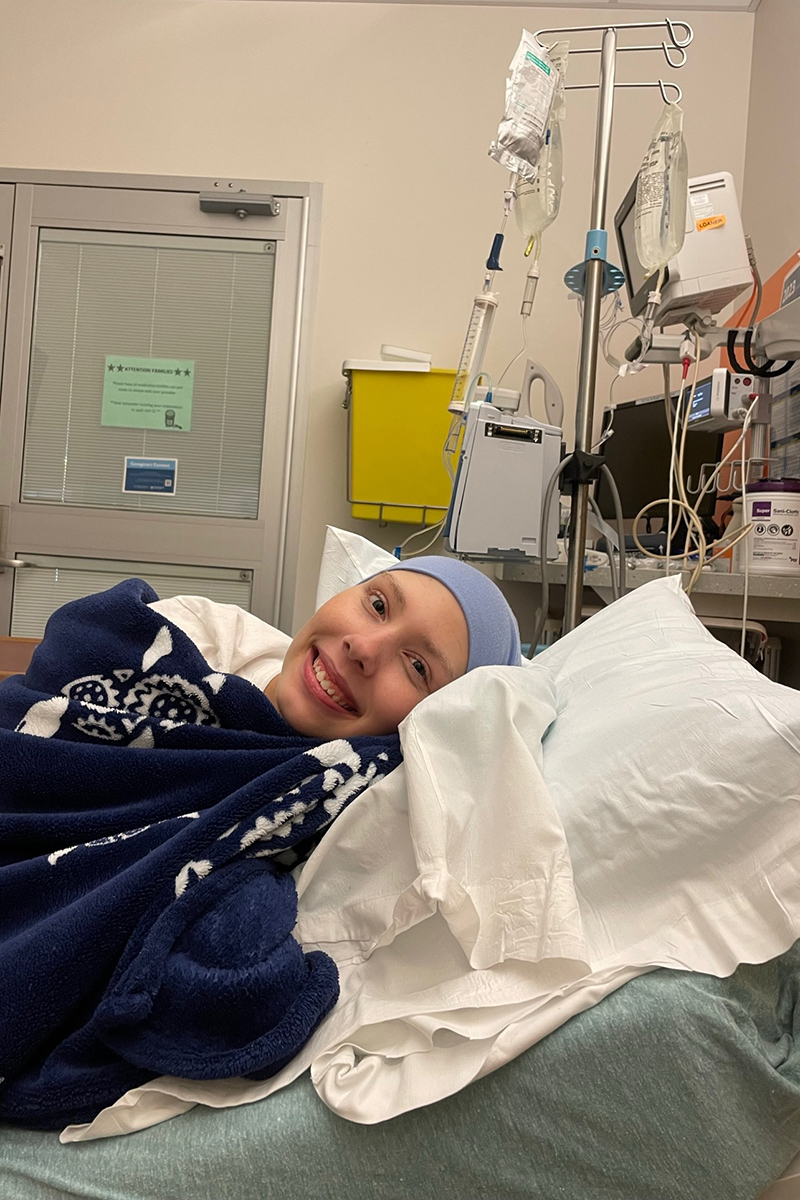
Keira Woods smiles after having her central line – a thin tube used to give medications and nutrition – removed following treatment of a rare type of leukemia at Penn State Health Milton S. Hershey Medical Center in 2023. (Submitted photo)
development.
Once several eggs are ready, they are retrieved during a 20-minute outpatient procedure. The eggs are then immediately analyzed in the embryology laboratory to assess their number and quality. Healthy eggs are preserved using ultra-rapid freezing, or vitrification, which minimizes ice crystal formation.
Keeping Options Open
For cancer patients, the timing of this process is crucial. A fertility preservation nurse navigator helps coordinate between Butts and the oncology team to align care, especially in cases like Woods’. With a bone marrow transplant looming, time was limited for collecting the eggs before her last round of chemotherapy began. After her egg retrieval, she received six months of chemo in just one week to prepare for her bone marrow transplant. The transplant was successful, but the chemo damaged her ovaries, so she now takes supplemental estrogen and progesterone.
Facing cancer and decisions about future motherhood can be overwhelming for a 17-year-old. Woods says her mother and father helped her decide to freeze her eggs.
“I didn’t want kids. I still don’t know if I want kids, but my parents recommended this,” Woods says. “I’m happy with my decision.”
While freezing eggs and sperm are good proactive steps to take, there is still no guarantee they will produce a viable pregnancy later on. Butts and her team are also working to offer ovarian tissue cryopreservation, which involves freezing ovarian tissue that can later produce eggs, rather than freezing the eggs themselves. She hopes to have the program in place later in 2026.
Becoming a parent is a big decision – and preserving your eggs or sperm allows you to make that decision on your own terms, when the time is right.
Learn more about fertility preservation for children, adolescents and young adults.
Related content
- The Medical Minute: Family on your timeline: Latest trends in family planning, fertility treatments and preservation
- Video: Exploring Fertility Preservation During Cancer Treatment: Expert Insights from Penn State Health
- Through their own lens: Childhood cancer survivors find healing with Photo Voice
The Medical Minute is a weekly health news feature produced by Penn State Health. Articles feature the expertise of faculty, physicians and staff, and are designed to offer timely, relevant health information of interest to a broad audience.
If you're having trouble accessing this content, or would like it in another format, please email Penn State Health Marketing & Communications.