Jul 14, 2022
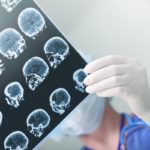
Young stroke patients who have a seizure following their diagnosis are at greater risk of developing dementia than patients who don’t experience seizures, according to a College of Medicine study.
Jun 30, 2022
Penn State College of Medicine promoted and/or awarded tenure to several faculty members effective July 1, 2022.
Newborns in eastern Africa are nearly five times more likely to have a neural tube defect compared to those in the United States.
May 3, 2022
In a new study, recent Black immigrants and those who had been in the U.S. for 15 years or longer were less likely to die from cardiovascular disease than Black adults born in the U.S.
Mar 14, 2022
College of Medicine researchers have joined Penn State's Geroscience and Dementia Prevention Consortium in order to accelerate research into preventing or delaying age-related neurodegeneration.
Feb 17, 2022
Penn State awarded Richard Mailman, professor of pharmacology and neurology at Penn State College of Medicine, the title of Distinguished Professor.
Nov 23, 2021
Epilepsy, affecting some 3.5 million children and adults in the U.S., is a brain disorder characterized by recurring seizures. With a combination of the right medical care and a healthy lifestyle, most patients can effectively manage their epilepsy and enjoy a high quality of life.
Oct 29, 2021
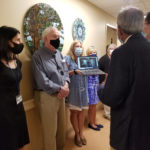
Center Stage Arts in Health, part of the Penn State College of Medicine Department of Humanities, joined with the Penn State Health ALS Clinic to collaborate on a process of choosing new artwork for space.
Sep 9, 2021
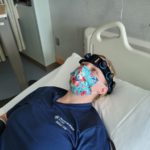
Chrissy Kushlick, a St. Joseph Medical Center critical care nurse, demonstrates how the Ceribell Rapid Response Electroencephalogram (EEG) system is worn.
Sep 3, 2021
All Penn State faculty, staff, trainees and students interested in cancer research careers are invited to attend the fourth annual Cancer Research Day online conference, taking place Saturday, Oct. 2, from 9 a.m. to 2:30 p.m. on Zoom.